
Athangudi Tile Designs for Living Spaces: Modern Ideas for Your Home
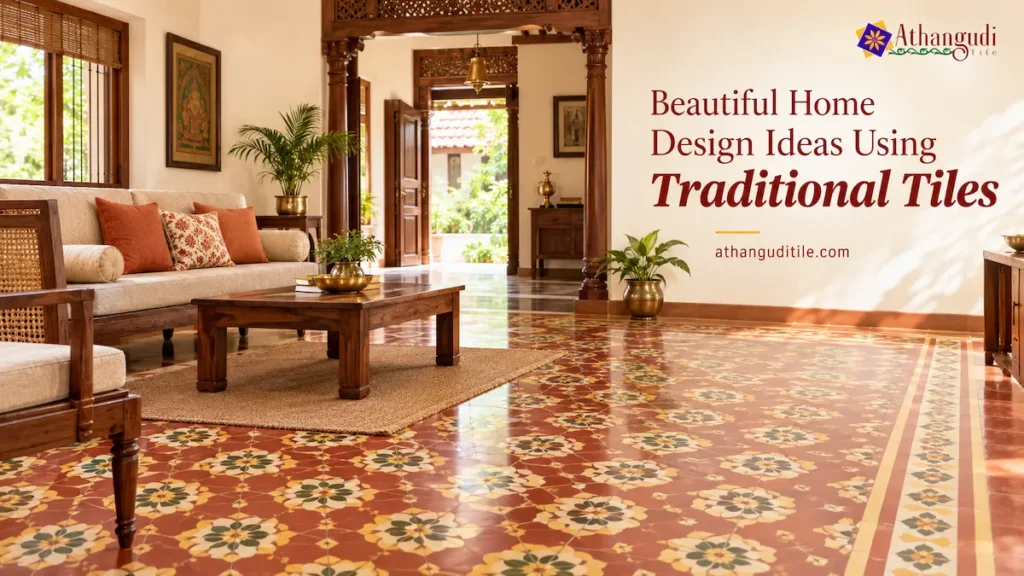
Introduction Athangudi tiles are made by hand. That means there’s something very charming and rustic about their appearance. Because they are handmade they feel quite at home in a traditional or modern space. Handmade Athangudi tiles have a very detailed appearance that makes them suitable for use as decorative accents in a small space as well as for lining floorings. Using these tiles introduces pattern variation into your space without bothering to change any aspect of the existing interior design. These tiles are available in various styles, from classic Indian motifs to abstract geometric patterns to minimal aesthetics or even floral designs. If you like tactile and textured materials that are made by hand, then handmade Athangudi tiles are a beautiful way to bring a little of the outdoors in. What Makes Athangudi Tile Designs Unique? All Athangudi tiles are hand made and each tile is unique therefore, natural variation of color and pattern in the tiles will be visible on each floor. Each tile is different, and no two floors are the same, even factory produced ones. This variation is what adds to the character of a handmade tile. In most cases this looks better than laying a floor that looks like a clean, new, ‘dry’ floor. Instead, there are subtle variations, and the character of the floor can be enhanced. You may opt for traditional motifs, striking geometries, or intricate designs based on the mood you want to set and the space you would like to occupy (space capacity, furniture, ambient lighting, theme of the interiors etc.). In the simpler rooms, a very detailed pattern could be the decor of the room, in the decorated rooms, a calmer pattern can provide a pleasing contrast. Popular Athangudi Tile Designs for Living Spaces Living spaces offer plenty of scope for experimenting with patterned flooring. The right Athangudi tile designs can become part of the room’s overall character rather than simply functioning as a flooring material. Floral Athangudi Tile Patterns An amazing floral Athangudi flooring design adds a natural and cozy feeling to a room. Botanical and floral designs tend to be ideal for spaces that are left more minimal with their furniture and other design features. A floral-inspired floor can go well with the warm tones of timber furniture, lots of greenery around the house, neutral walls, and natural textiles. In a larger sitting area, a floral pattern can act as a really bold anchor point, although smaller floral patterns are also perfect for smaller rooms. The pattern’s colors can be echoed elsewhere throughout the house in cushions, artworks, curtains and the like. Geometric Athangudi Tile Designs Bold and Structured A geometric design can be a perfect way to add a more bold or structured look to a space. Choosing repeating lines and shapes can create a clear visual statement to a flooring design, particularly in a room that is otherwise fairly stripped back. Particularly with open living spaces, grouping a geometric patterned flooring design with more subdued aesthetics elsewhere can help it to stand out. Neutral furniture and décor with simple walls can do the trick. A pattern like this can also be used to create a division between two zones in an open plan layout. Traditional and Heritage Inspired Patterns They’re also very suitable for using an authentic craftsman-like feel in a traditional interior. Combine them with solid wood furniture, traditional furnishings, polished brass details, and natural fabric, matched with warm light. Alternatively, they can also be used without regard to traditional color schemes. A paved heritage pattern floor could equally be the feature of a clean-lined design scheme with minimal furniture and architecture: “Traditional motifs provide a feeling of history, but they can seamlessly slip into modern interiors with a lot of thought.” Subtle Patterns for Minimal Interiors If you have other decorative objects in the room, more muted designs and quieter compositions give a more balanced feel. Athangudi work that is refined or subtle can provide a textural feature without overpowering the space. These are often paired with neutral wall finishes, plain furniture, comfortable fabrics, and few accents. Which makes them appropriate for those who desire the character of their handmade flooring without having a very busy interior. Athangudi Flooring Ideas for Modern Homes If Athangudi tiles were not used in your traditional home, you can still use them as feature walls in a modern look with combined rustic and modern furniture, neutral walls, modern architecture, furniture, and accessories. Warm natural wood, minimal accessories, and lighting! That is how you introduce traditional craftsmanship to the modern home without making it look cluttered and busy! You could also focus on your Athangudi tiles as a feature on the floor or wall in your home and keep the other surfaces clean and understated. Motif floors can be matched with simple walls and furniture to produce the illusion that the house itself is serving homage to both the old and new languages of design. This is when you could make use of Athangudi flooring. The Athangudi flooring style will always be great in helping you set the theme of the room and make it all the more linked up. For example, you could choose the same color family and patterned tiles and lay them out in the appropriate places, like between the living room and the dining room. Choosing the Right Athangudi Tile Colour Pick the color of the tile to suit the size of the room, the amount of light, existing furniture, wall colors, etc. Traditional Athangudi ranges in color from cream, yellow to green, blue, red, brown, etc., and other shades and bright colors. Imagine them with the furniture and lights before you decide on the color. A bright color combination would look good in a big room and an airy one in a small room. Think about how the color will look at different times of the day under different lights and with different wall colors and furniture. How to Choose the Right Athangudi Tile