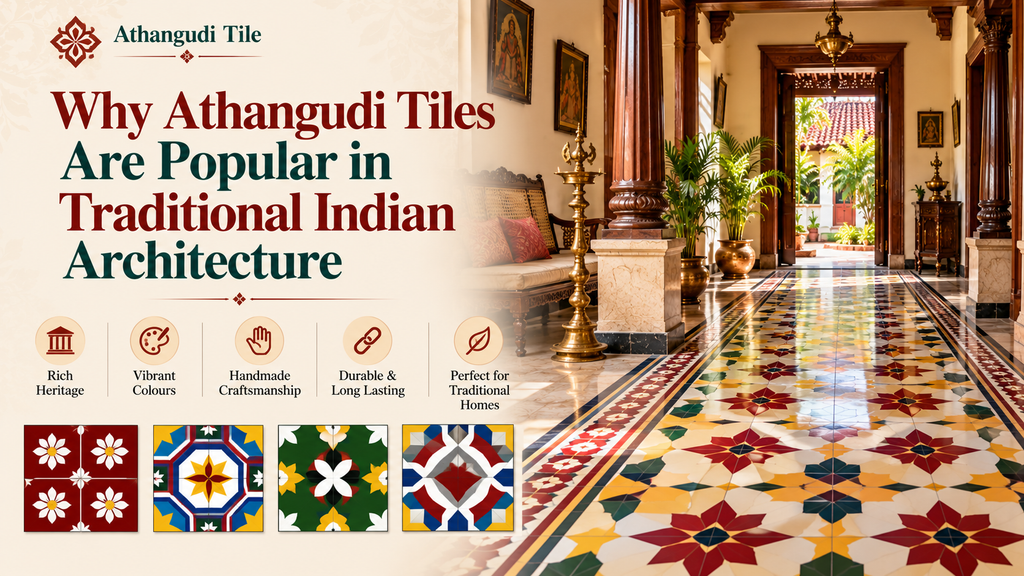
Why Athangudi Tiles Are Popular in Traditional Indian Architecture
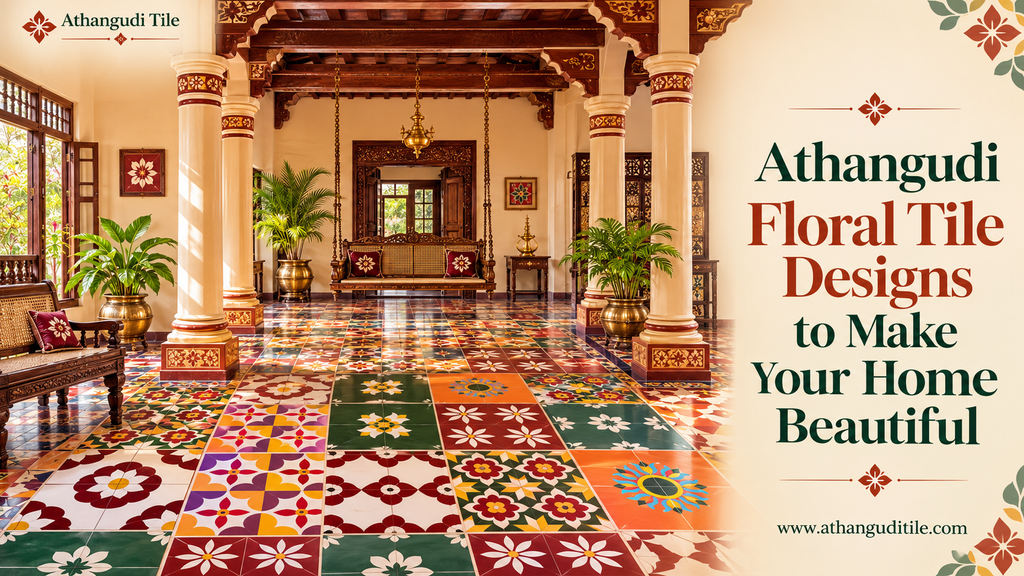
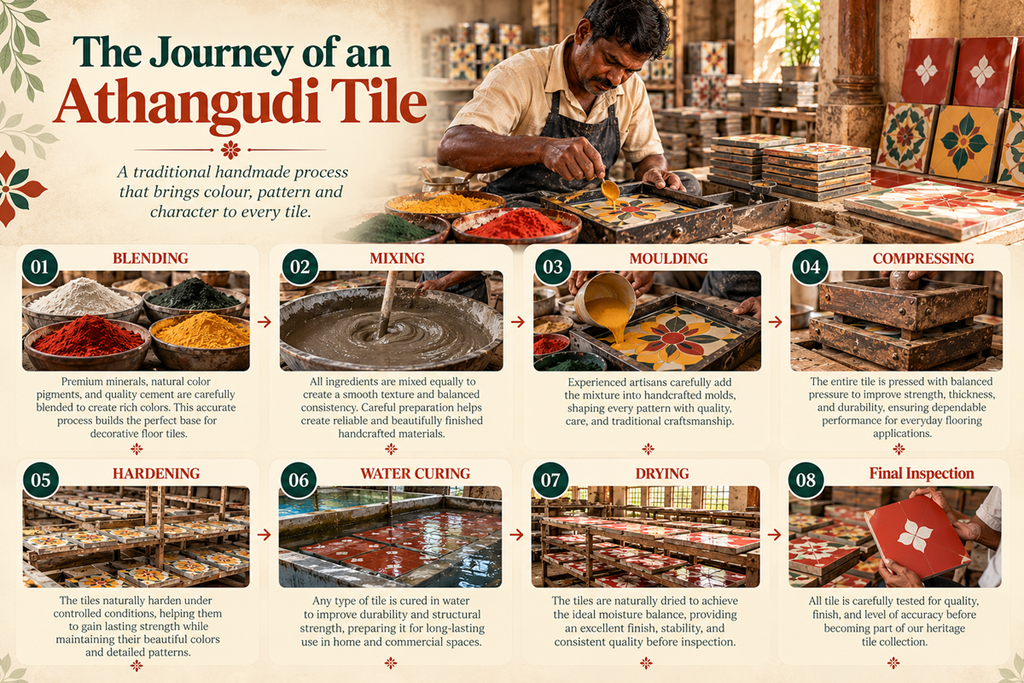
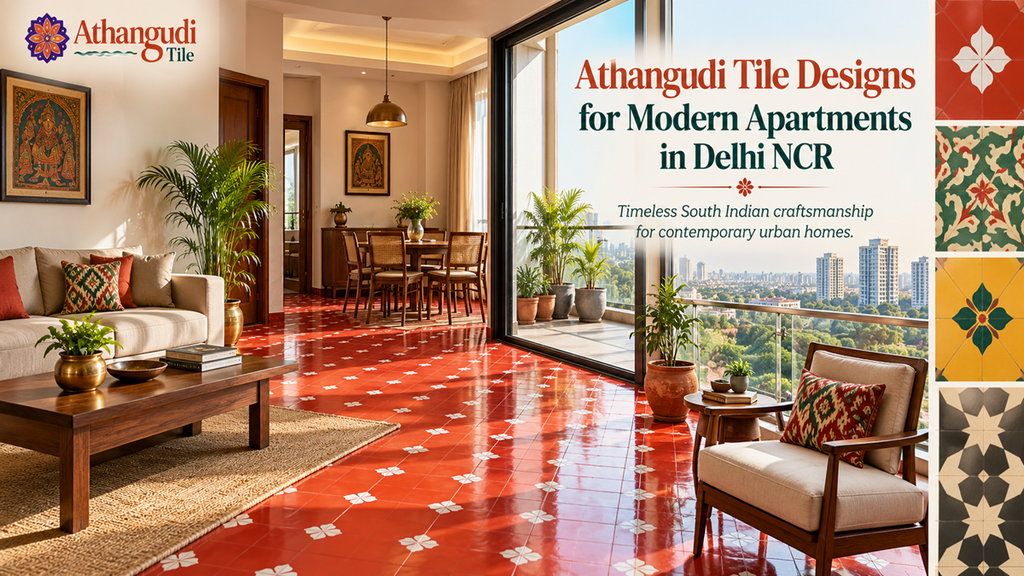
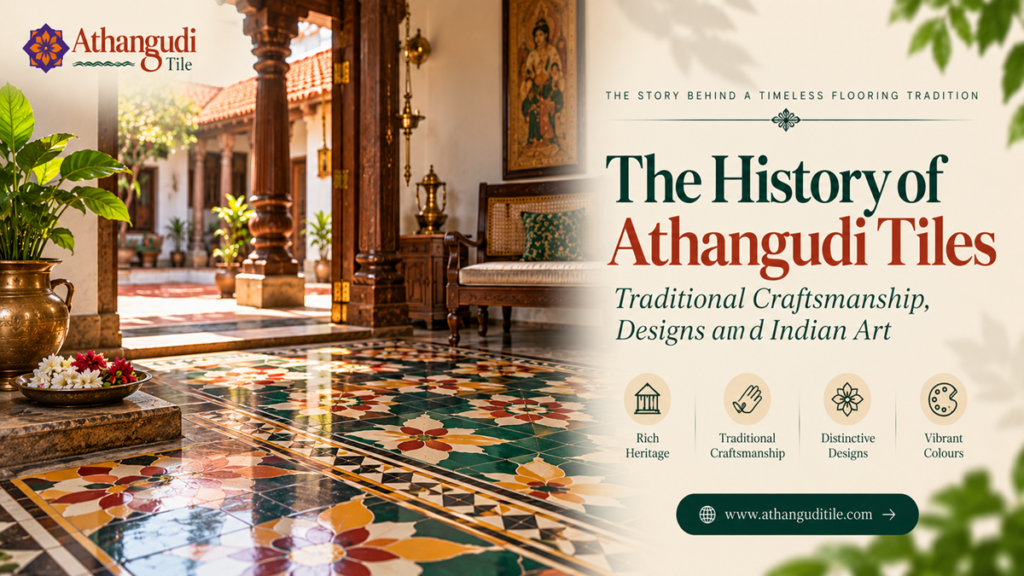
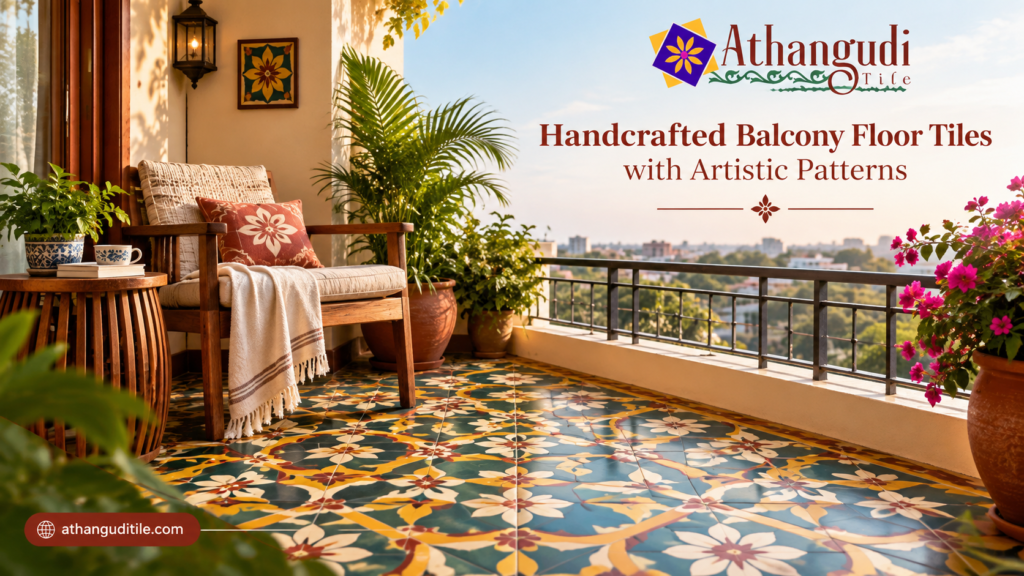
Indian home architecture has consistently embraced a lovely harmony between expression, culture, and life. Wooden doors with intricate carvings, vibrant courtyards, and decorated floors all narrate tales of the architects who created these beautiful spaces. Of all the unique components that come together to make a traditional house special, Athangudi tiles are one of the most cherished. With a rich colour palette, the best patterns, and artisanal character, they make each house unique. Tiles made of Athangudi are famous for their local colour. Athangudi tiles from the Chettinad region of Tamil Nadu have earned a considerable following among those who love interior design with a traditional South Indian touch. More than the style, they have caught the collective imagination because every tile encompasses a tradition. A lot of these traditional Athangudi tiles are now being used in heritage renovations, upscale modern homes and apartments, boutique hotels, and stylish commercial spaces. Athangudi tiles work well in both old and new buildings and are perfect for anyone who loves the look of real materials and thoughtful design. 1. The Rich Heritage Behind Traditional Athangudi Tiles The great legacy of traditional Athangudi tiles plays a role in the rich architectural history of the Chettinad region in Tamil Nadu. Their large, old family homes—magnificent structures with huge grounds, detailed woodwork, and beautiful interiors—are a fundamental regional influence. The architecture of these houses was based on symmetry and intricacy. Chettinad’s still-popular handmade cement tiles, which made their way into Athangudi and beyond, started creating their own unique cement tiles, which slowly made inroads into Chettinad homes and other indigenous structures. The tiles proved to be a welcome addition for injecting colour and ornamentation into floors, while remaining, nonetheless, in sync with traditional skills. One could see floral patterns, geometric formations, and well-balanced borders lining the floors of these homes. The most special thing about the heritage is that it is made by human craftsmanship. Instead of copying pattern tiles on a large scale, the traditional methods use moulds, colour combinations, and labour-intensive methods in creating the tiles. The resulting products have a charming quality that is strongly human in nature. If the house folk is craving true authenticity, then Athangudi tiles are not merely a design element. They are a physical reminder of the architectural history of Tamil Nadu. Putting them in a project lets the owners recognize local craftsmanship. 2. How Chettinad Architecture Influenced Athangudi Tile Designs Chettinad architecture is characterized by open-plan living with spacious layouts, long hallways, soaring ceilings, massive atriums, and lavishly carved interiors. This type of architecture incorporates the influences of imported oriental decorative motifs, as well as the indigenous architecture in the form of village farmhouses. This fusion of elements created a unique style, without being out of touch with life itself. It is also the flooring that embodies this architectural character. Patterned tiles in a large Chettinad house link rooms visually and define each space’s character, while allowing one to flow into the next. A thoughtfully designed floor can lead the eye down a hall, frame a court, or match the intricate carving in a doorway. And traditional Athangudi tiles are extremely suitable for such versatile environments because they can be designed to suit any architectural arrangement. Repetitive patterns establish rhythm across vast expanses of flooring, while borders delineate transitions. The flooring becomes an integral part of the architecture, not an afterthought. Yet, this connection between the scheme of tiles and the planning of the building persists to this day. A contemporary residence which has an open-plan living space, a courtyard in the centre or a long passage at the entrance can now take inspiration from Chettinad interior schemes without the attempt to imitate a traditional building. A hint of tradition, through selective tiled flooring, can be brought in. What this means is a delicate compromise of traditional design and modern-day comfort, and flooring plays the integral role of bridging that gap. 3. The Beauty of Traditional Athangudi Tile Patterns and Colours One of the big reasons behind Athangudi tiles’ popularity is their mind-boggling array of patterns and colour combinations. Instead of a simple floor that acts as the background to our lives, Athangudi tiles can take centre stage in the form of intricate patterns, geometric shapes, or border features, and so on. If your home has a comfortable and cosy vibe, then floral motifs may be what you’re looking for. Their smooth contours are great at neutralising the harsh lines of a space and are amazing when paired with wooden furniture, old brass fittings, and fabric textiles. If you want to give your home a more modern look, you can go for geometric designs. Let’s start with colour, it also plays an important role in the end. Using a mixture of red, green, yellow, blue, cream or black could make the space a vibrant traditional space or a more subtle reference to vintage style. The ultimate effect will depend on the lighting, wall colours and furniture used in the room. Borders and repeating motifs are another way to individualise a floor. Borders can be used to border a room, and repeats can be used to create flow between adjoining rooms. Looking at your whole interior before deciding which Athangudi tile style you want for your home is another way to help guide you in your decision. Where possible, the best combinations are those that echo the structure of the building, add visual harmony, and capture your individuality. 4. Handmade Craftsmanship That Makes Every Tile Special What’s special about the Athangudi tiles is not just the designs but the execution. Before laying Athangudi tiles, artisans carefully prepare each one by mixing colours, forming the surface, shaping the tile, and allowing it to dry. This traditional process takes time, patience, and skill. The colours and patterns on handmade Athangudi tiles are incorporated into the tile rather than added on like a digital print. The outcome is a truly unique decorative finish with texture and personality that would be