
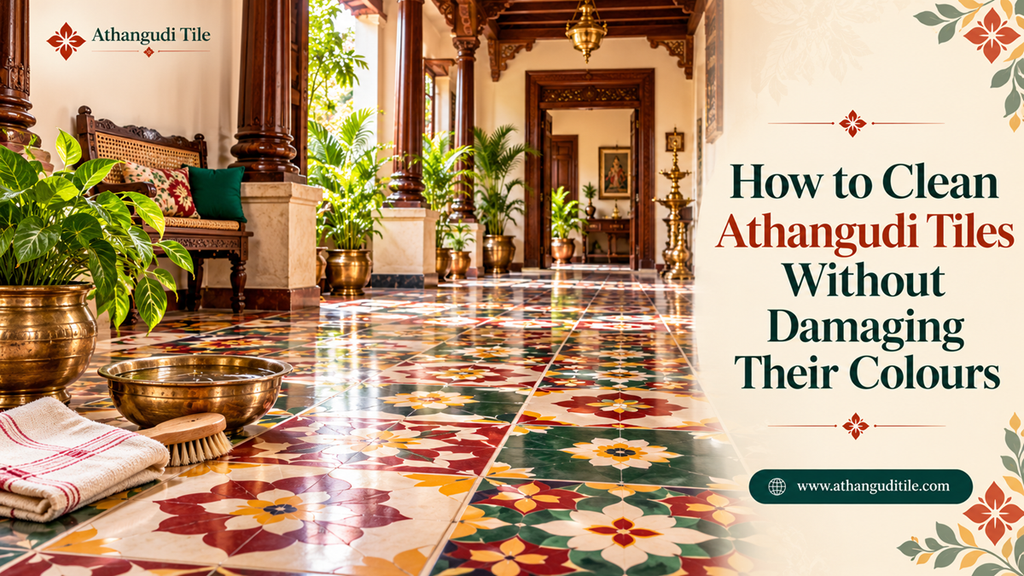
Athangudi tiles are a popular choice for homes. You can use these handcrafted Athangudi tiles in the entryway, living room, kitchen, or even the courtyard, and they’ll add warmth and character wherever they go. Just like other flooring options, these require some special maintenance to ensure their longevity.
Once you know how to clean Athangudi tiles, it can save your floor surface from getting scratched, stained, or dulled. Fortunately, it really doesn’t take much to keep Athangudi floors in tip-top condition. A soft broom, mop, clean water, and a mild cleaning product can do the trick.
The key point is that you should not use strong cleaning methods that will not work on the finish of the tiles. Here in this guide, we mention the safe methods to clean it, products to be used cautiously, mistakes to steer clear of and simple procedures to preserve Athangudi Tiles.
“Clean gently, care consistently, and let your Athangudi tiles shine naturally.”
1. Understand Your Athangudi Tiles Before Cleaning
Before we get into cleaning, let’s take a moment to understand the types of Athangudi tiles available. Traditional Athangudi tiles are clay tiles made from decorative cement, with elements of Tamil Nadu’s Chettinad culture. They are manufactured by a traditional process of colouring the patterns.
The fact that the tile surface, composition, finishing, installation, and any finishes applied to it all differ can mean you need to use different cleaning products on certain tiles. Certain tiles may even need special attention regarding staining, surface rubbing, and moisture.
Beginning with the care instructions of your supplier or installer is a great first step. If you are not sure if your tiles are sealed or conditioned, ask prior to using a new surface or cleaning product.
You might also want to see how the flooring responds to standard cleaning. If you observe dullness, persistent stains, discolouration, or roughness, do not polish or scrub; consult with a professional.
Knowing the type of tiles you have allows you to select a cleaning plan that will preserve their look and surface finish. It is wise to give the tiles a little protection from the start by avoiding the use of unsuitable products.
Begin by using the care guide supplied by your supplier or installer. Inquire if the tiles have been sealed or conditioned prior to trying another surface or cleaner.
See how the floor looks after you try cleaning it with traditional methods. If it looks dull, stained, discoloured, or rough in any way, do not polish or scrub the floor – seek advice from a professional.
By understanding what type of tiles you’ve got, you can choose the optimum cleaning approach to prevent erosion and ensure your tiles retain their appearance and level of finish. A good idea is to ‘protect’ them to some extent from the outset and steer clear of the wrong products.
2. How to Clean Athangudi Tiles for Everyday Maintenance
Any time of year is sufficient to keep the Athangudi tiles looking new by cleaning. In fact, within a day, dust, sand, and dirt can accumulate around entry points, cookeries, and more circulated areas in the house.
Use a soft-bristled broom or vacuum, ideally with a brush attachment, to sweep the floor first. Remove any debris from the Athangudi tiles so that the particles don’t scratch the floor when you mop.
Repeat mop the floor with the mop from the water is a little wet in clean water. Plain water may be enough for dust and dirt. If you need to wash a gentle product which is proven to be compatible with the kind of Athangudi tiles.
Mop gently to avoid soaking the floor. Mop with a mop that will pick up the dirt, but not soak the Athangudi tiles with water. Leave the floor to dry in the air when you are done mopping.
In a family, a quick daily dust and sweep may suffice. When necessary, reinforce the regular cleaning with a deep damp clean as the accumulation of dirt demands.
You need not scrub the Athangudi tiles daily. You only need to dust lightly often so that the dust does not settle on the floor. It is better to dust the floor frequently than scrub.
3. Choose Safe Cleaning Products for Athangudi Tiles
The products you use are vital, too, even if you are using the correct technique. Some products may have the right effect on the flooring, but they may not be suitable for the type of cement tiles in question.
For regular maintenance, begin with a damp mop and clean water. For periods when cleaning needs to be done with a cleaning solution, select a neutral, gentle abrasive cleaner which your supplier or manufacturer has proven to be appropriate for your tiles and finishes.
Don’t use harsh household chemicals just because they say they are good cleaners. Some acid-based or other harsh chemicals may damage some.
Cement-based surfaces, coating sealants, or grout. It is also necessary to stay away from bleach and chemical cleaning agents that are highly potent unless they are recommended by the manufacturer of your tiling.
Don’t assume natural cleaning ingredients are safe. For example, vinegar may not be friendly to cement-based tiles. Powdery abrasives can also etch or scratch a surface.
Always test any new products on a hidden corner or underside for a few hours or days as per the product instructions. Observe if there is any colour, sheen, or texture change.
Buy your products from your supplier for advice specific to the product. Always choose the right cleaner to help you avoid damaging your flooring.
4. How to Remove Spills and Stains from Athangudi Tiles
Spills happen all the time in kitchens, dining rooms, and places where the family gathers. The smart thing to do is clean them up. If you wait, the liquid or food can soak in. Become harder to remove.
For spills, like tea, coffee, juice, oil, or food, start by blotting or wiping with a clean, soft cloth. Don’t. Push the mess around. The goal is to lift the spill without spreading it.
After you’ve removed most of the liquid or residue, use clean water to wipe the area. If needed, add a tile cleaner. Make sure it’s made for your kind of tile.
Avoid using a scouring pad or strong cleaners immediately. They will. Damage the tiled surface. It’s more considerate to be gentle, so you won’t be harming your tile.
Avoid too vigorous cleaning to prevent erasing the mark. If the mark persists, first confirm instructions from the manufacturer before proceeding with other cleaning procedures. The appropriate treatment will depend upon the type of mark, the finish of the tile, and if a protective treatment has been applied.
If the marks are stubborn and the colour is discoloured and seems to be embedded in the surface, the best course of action is to seek professional advice.
Active cleaning with patience can stop many common spills from becoming permanent stains. Keep a soft cloth handy for easy cleaning.
5. Common Cleaning Mistakes That Can Damage Athangudi Tiles
With the best of intentions, sometimes cleaning actually creates more problems than it solves. One area where this can be a problem is with acid cleaning products. These are best avoided on cement-based floors unless the products are known to be safe from the manufacturer.
Another common error is applying too much force while cleaning. Hard brushes, steel wool, and even abrasive scrub pads can scratch and damage the finish. If you have a stain that is a little stubborn, scrubbing aggressively can actually bring it out more.
Overwatering: Avoid excess water. Damp mopping is effective, but unwanted puddles or leaving the floor flooded is risky, as it can cause issues depending on what the floor is installed on and what surrounds it.
Others might even use a polish, wax, sealant, or some type of protective product without checking that it’s the right decision for your tiles. This product could alter the way your floor looks or cause more issues when cleaning later on.
Never try to combine several cleaning products into one to create a more powerful solution. This can be dangerous and harmful to the flooring.
Always try a gentle approach first. If regular cleaning isn’t working, consider the root of the issue before escalating to a stronger remedy.
6. How to Preserve the Colours and Finish of Athangudi Tiles
The colours and patterns are some of the attractive aspects of Athangudi tiles, and keeping that look is an important part of caring for these tiles. The exact rules may differ from one tile to another and from one finish to another. A few simple habits can help a lot in preventing damage. First and foremost, clear away dust and grit on a regular basis.
If a surface is walked on over and over again, tiny grit and particles will eventually lead to damage. Entrance mats can lower the dirt being brought in, provided they’re suitable for flooring. Second, wipe up spills immediately. Do not leave bits of food, oils, or other stains on the surface. Instead, opt for methods other than harsh chemicals that could impact the finish.
Third, guard against physical damage to the flooring. Use of furniture pads can help prevent scratches from chairs and tables. Whenever possible, lift objects instead of dragging them across the flooring. Refrain from applying any sealant or other treatment you have installed as directed by the supplier. Do not think that each Athangudi floor needs this kind of treatment or that a shine will add to its appeal.
Lastly if the flooring wears out with an appearance, surface scarring or strange staining set an appointment. A qualified assessment will determine if it needs cleaning, repair, or other treatment.
7. A Simple Athangudi Tile Cleaning Routine for Every Home
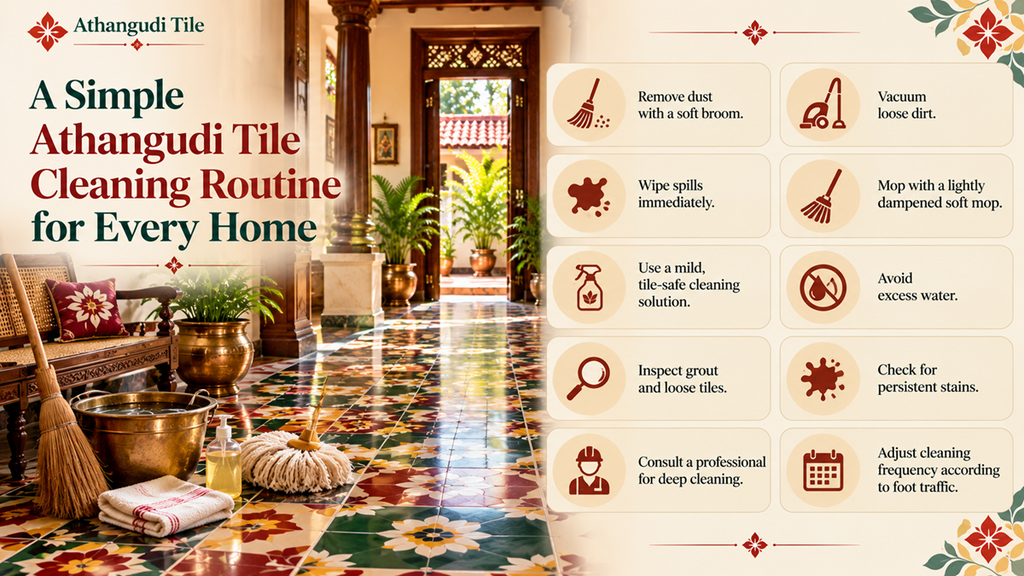
A practical routine makes it easier to maintain your flooring without spending unnecessary time or using too many cleaning products.
Daily or as needed: Remove dust and loose dirt with a soft broom or a suitable vacuum cleaner. Wipe up spills as soon as possible, particularly in kitchens and dining areas.
During regular cleaning: Use a lightly dampened soft mop. If plain water is not enough, select a mild cleaning solution confirmed as suitable for your tiles. Avoid leaving excess water on the surface.
Periodically: Check areas that receive heavy foot traffic, including entrances, corridors, and spaces near kitchen worktops. Look for persistent stains, damaged grout, loose tiles, or changes in appearance that may require attention.
When necessary: Ask your tile supplier or a qualified professional about deeper cleaning, stain removal, or protective treatments. This is particularly important if you do not know how the floor was finished or sealed.
The ideal frequency depends on the household, the amount of foot traffic, and the location of the flooring. A busy kitchen may need more frequent attention than a rarely used room.
By following a consistent routine, you can keep your Athangudi tiles clean while avoiding unnecessary scrubbing, chemical exposure, and maintenance costs.
“A little care today keeps the timeless beauty of Athangudi tiles shining for years to come.”
Conclusion: Keep Your Athangudi Tiles Beautiful with the Right Care
When you learn how to clean Athangudi tiles, you will discover that the key is to adopt cleaning techniques. Choose the cleaning products and also do spot cleaning and dusting for a few minutes on and off.
To maintain the colour of Athangudi tiles, dust, wet mop and spot clean the surface.
Do not use cleaners or abrasive tools, overuse water or use unapproved polishing treatments on clean Athangudi tiles.
For stains or alterations to the surface finish, make sure to speak to your tile supplier before undertaking intensive cleaning on clean Athangudi tiles.
For more guidance, visit the Athangudi Tile Maintenance page and follow the care recommendations appropriate for your tiles.
Explore the traditional designs at AthangudiTile.com to discover how handcrafted Athangudi tiles can bring colour, character, and timeless appeal to your space.
Frequently Asked Questions
1. How often should I clean Athangudi tiles?
Remove dust regularly and damp-mop the floor as needed. Cleaning frequency depends on foot traffic, the location of the tiles, and everyday use.
2. Can I use vinegar to clean Athangudi tiles?
Vinegar is acidic and may be unsuitable for cement-based tiles. Avoid using it unless your tile manufacturer specifically confirms that it is safe for your particular finish.
3. What is the safest way to remove stains from Athangudi tiles?
Blot spills promptly with a soft cloth, then clean the area gently using water or a compatible cleaning product. Seek professional advice if a stain persists.
4. Can I use bleach on Athangudi tiles?
Do not use bleach or concentrated chemicals unless the manufacturer confirms that they are suitable for your tiles and any protective treatment.
5. Do Athangudi tiles need polishing or sealing?
Requirements vary depending on the tile, finish, installation, and existing treatment. Consult your supplier before applying polish, wax, or sealant.