athanguditile.com

Author name: Athangudi Tiles

Popular Athangudi tile designs for living spaces with yellow floral patterns
Athangudi Tiles

Athangudi Tile Designs for Living Spaces: Modern Ideas for Your Home

Introduction Athangudi tiles are made by hand. That means there’s something very charming and rustic about their appearance. Because they are handmade they feel quite at home in a traditional or modern space.  Handmade Athangudi tiles have a very detailed appearance that makes them suitable for use as decorative accents in a small space as well as for lining floorings.  Using these tiles introduces pattern variation into your space without bothering to change any aspect of the existing interior design. These tiles are available in various styles, from classic Indian motifs to abstract geometric patterns to minimal aesthetics or even floral designs. If you like tactile and textured materials that are made by hand, then handmade Athangudi tiles are a beautiful way to bring a little of the outdoors in. What Makes Athangudi Tile Designs Unique? All Athangudi tiles are hand made and each tile is unique therefore, natural variation of color and pattern in the tiles will be visible on each floor. Each tile is different, and no two floors are the same, even factory produced ones. This variation is what adds to the character of a handmade tile. In most cases this looks better than laying a floor that looks like a clean, new, ‘dry’ floor. Instead, there are subtle variations, and the character of the floor can be enhanced. You may opt for traditional motifs, striking geometries, or intricate designs based on the mood you want to set and the space you would like to occupy (space capacity, furniture, ambient lighting, theme of the interiors etc.). In the simpler rooms, a very detailed pattern could be the decor of the room, in the decorated rooms, a calmer pattern can provide a pleasing contrast. Popular Athangudi Tile Designs for Living Spaces Living spaces offer plenty of scope for experimenting with patterned flooring. The right Athangudi tile designs can become part of the room’s overall character rather than simply functioning as a flooring material.  Floral Athangudi Tile Patterns An amazing floral Athangudi flooring design adds a natural and cozy feeling to a room. Botanical and floral designs tend to be ideal for spaces that are left more minimal with their furniture and other design features. A floral-inspired floor can go well with the warm tones of timber furniture, lots of greenery around the house, neutral walls, and natural textiles. In a larger sitting area, a floral pattern can act as a really bold anchor point, although smaller floral patterns are also perfect for smaller rooms. The pattern’s colors can be echoed elsewhere throughout the house in cushions, artworks, curtains and the like. Geometric Athangudi Tile Designs Bold and Structured A geometric design can be a perfect way to add a more bold or structured look to a space. Choosing repeating lines and shapes can create a clear visual statement to a flooring design, particularly in a room that is otherwise fairly stripped back. Particularly with open living spaces, grouping a geometric patterned flooring design with more subdued aesthetics elsewhere can help it to stand out. Neutral furniture and décor with simple walls can do the trick. A pattern like this can also be used to create a division between two zones in an open plan layout. Traditional and Heritage Inspired Patterns They’re also very suitable for using an authentic craftsman-like feel in a traditional interior. Combine them with solid wood furniture, traditional furnishings, polished brass details, and natural fabric, matched with warm light. Alternatively, they can also be used without regard to traditional color schemes. A paved heritage pattern floor could equally be the feature of a clean-lined design scheme with minimal furniture and architecture: “Traditional motifs provide a feeling of history, but they can seamlessly slip into modern interiors with a lot of thought.” Subtle Patterns for Minimal Interiors If you have other decorative objects in the room, more muted designs and quieter compositions give a more balanced feel. Athangudi work that is refined or subtle can provide a textural feature without overpowering the space.  These are often paired with neutral wall finishes, plain furniture, comfortable fabrics, and few accents. Which makes them appropriate for those who desire the character of their handmade flooring without having a very busy interior. Athangudi Flooring Ideas for Modern Homes If Athangudi tiles were not used in your traditional home, you can still use them as feature walls in a modern look with combined rustic and modern furniture, neutral walls, modern architecture, furniture, and accessories. Warm natural wood, minimal accessories, and lighting! That is how you introduce traditional craftsmanship to the modern home without making it look cluttered and busy! You could also focus on your Athangudi tiles as a feature on the floor or wall in your home and keep the other surfaces clean and understated. Motif floors can be matched with simple walls and furniture to produce the illusion that the house itself is serving homage to both the old and new languages of design. This is when you could make use of Athangudi flooring. The Athangudi flooring style will always be great in helping you set the theme of the room and make it all the more linked up. For example, you could choose the same color family and patterned tiles and lay them out in the appropriate places, like between the living room and the dining room. Choosing the Right Athangudi Tile Colour Pick the color of the tile to suit the size of the room, the amount of light, existing furniture, wall colors, etc. Traditional Athangudi ranges in color from cream, yellow to green, blue, red, brown, etc., and other shades and bright colors. Imagine them with the furniture and lights before you decide on the color.  A bright color combination would look good in a big room and an airy one in a small room.  Think about how the color will look at different times of the day under different lights and with different wall colors and furniture. How to Choose the Right Athangudi Tile
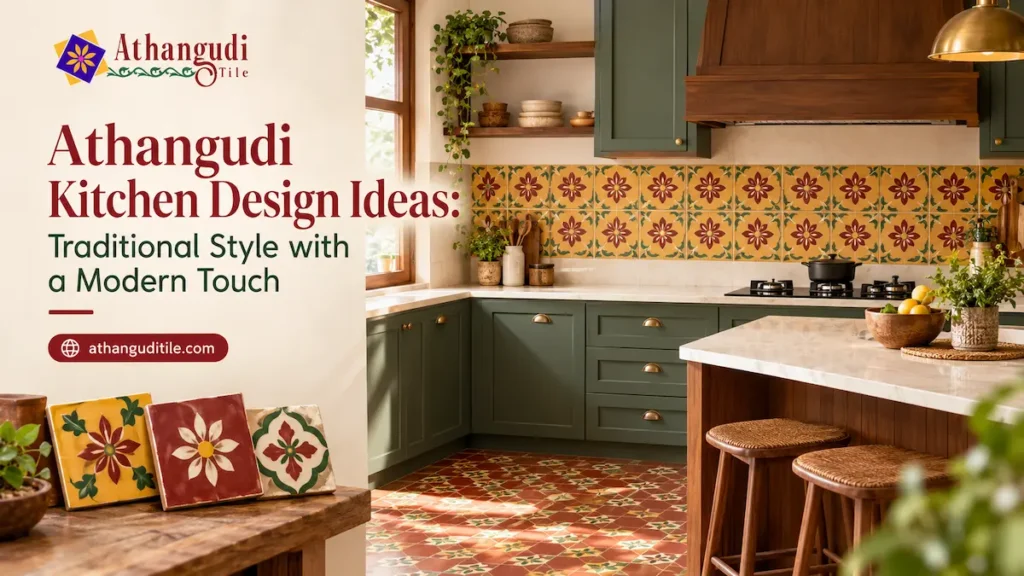
Open kitchen with handcrafted Athangudi tiles, wooden elements, green cabinets and traditional patterned tile accents
Athangudi Tiles

Athangudi Kitchen Design Ideas: Traditional Style with a Modern Touch

The kitchen is more than a place for preparing meals. It is one of the most active and important spaces in a home, where everyday routines, family conversations, and special moments often come together. Because of this, homeowners increasingly want kitchens that are practical but also have a strong visual identity. This is where Athangudi tiles can make a beautiful difference. Their handcrafted patterns, rich colors, and traditional character can add warmth and personality to a kitchen without making it feel outdated. With thoughtful planning, these tiles can be paired with modern cabinets, simple furniture, contemporary lighting, and practical kitchen layouts. If you are looking for Athangudi Kitchen Design Ideas, there are many creative ways to introduce these tiles. They can be used for flooring, backsplashes, selected walls, counters, or small decorative sections. The key is choosing the right pattern and placement according to your kitchen’s size, lighting, and overall style. Start with the Kitchen Layout Before selecting tiles, it is useful to understand the layout of the kitchen. A compact kitchen needs a different design approach from a large open plan kitchen. For smaller kitchens, lighter colors and controlled patterns can help maintain a spacious appearance. Instead of covering every surface with decorative tiles, you can use them on one backsplash or a limited flooring area. Larger kitchens provide more freedom. Homeowners can experiment with patterned flooring, colorful backsplashes, or decorative borders while keeping cabinets and countertops relatively simple. A well planned layout also makes it easier to decide where the tiles will have the greatest visual impact. Give the Backsplash a Decorative Role The backsplash is one of the easiest areas where traditional tiles can become a focal point. It sits directly behind the cooking and preparation areas, making it naturally noticeable. Athangudi kitchen backsplash designs can introduce handcrafted patterns without requiring major changes to the entire kitchen. A colorful pattern behind the stove can create a feature area, while a simpler design can be used across the remaining backsplash. For a modern appearance, pair patterned tiles with plain cabinets. White, cream, beige, wooden, or muted colored cabinets can allow the tile pattern to stand out without creating too much visual activity. Make the Floor Part of the Design Kitchen flooring has to combine appearance with everyday practicality. Traditional patterned tiles can give the floor a distinctive character and make even a simple kitchen more interesting. Athangudi tiles for kitchen flooring can be used throughout the room or within a selected area, depending on the desired effect. A central pattern can visually define the kitchen, while a more subtle design can create a consistent appearance. When selecting flooring, homeowners should also consider cleaning, moisture, foot traffic, and the suitability of the tile surface for kitchen use. Mix Traditional Patterns with Modern Cabinets Traditional tiles do not require a completely traditional kitchen. In fact, combining handcrafted tile patterns with modern cabinetry can create a balanced and attractive interior. Imagine simple handleless cabinets paired with a colorful tiled backsplash. The cabinets provide a clean contemporary appearance, while the tiles introduce pattern and craftsmanship. This approach is useful for homeowners who appreciate traditional design but still want a modern kitchen layout. Traditional kitchen tile designs can work particularly well when the rest of the kitchen uses simple shapes and limited decoration. “A beautiful kitchen becomes memorable when traditional craftsmanship meets thoughtful modern design.” Choose Colors That Complement the Space Color plays a major role in how kitchen tiles affect the overall atmosphere. Athangudi tiles are available in a variety of decorative combinations, so the choice should be based on the existing kitchen palette. If the cabinets are white, cream, or light wood, colorful tiles can add contrast. If the cabinets already have a strong color, a more balanced tile pattern may work better. Colorful kitchen tiles can create an energetic and welcoming atmosphere, while earthy or muted shades can produce a calmer appearance. It is also important to consider natural and artificial lighting. A design that looks balanced in a showroom may appear different in a darker kitchen. Create a Small Feature Instead of Covering Everything Sometimes, a small amount of decorative tile can have a greater impact than covering the entire kitchen. For example, you can create a narrow patterned strip between the countertop and cabinets. Another option is a small decorative section behind the stove or sink. Handcrafted kitchen tiles can also be used around a breakfast counter or a small open shelf. This gives the kitchen a personalized detail while keeping the overall design controlled. This approach is especially useful for homeowners who want traditional character without making the kitchen visually busy. Add Warmth with Wooden Elements Wood and handcrafted tiles naturally complement each other. Wooden cabinets, shelves, stools, or open storage can soften the appearance of colorful tile patterns. For a warm kitchen, consider combining traditional tiles with natural wood tones, simple lighting, and neutral countertops. Athangudi tile kitchen designs can look especially attractive with wood because both materials bring a sense of craftsmanship and natural warmth into the space. The combination does not have to look heavily traditional. Clean-lined wooden cabinets can create a modern foundation while the tiles provide the decorative detail. Make Open Kitchens More Interesting In an open plan home, the kitchen is often visible from the dining or living area. Because of this, its design needs to work with the surrounding interior. A patterned backsplash can act as a visual connection between the kitchen and nearby spaces. Similarly, a decorative tiled floor can help define the kitchen area without requiring a physical partition. Athangudi tiles for kitchen interiors can be particularly effective here because their traditional appearance adds character to an otherwise contemporary space. Keeping nearby furniture and walls relatively simple can help the kitchen remain visually connected to the rest of the home. Use Borders to Frame the Design Tile borders are another way to introduce traditional detailing without overwhelming the room. A narrow border can frame a backsplash, separate

Beautiful home design with traditional Athangudi tiles and elegant Indian interiors
Athangudi Tiles

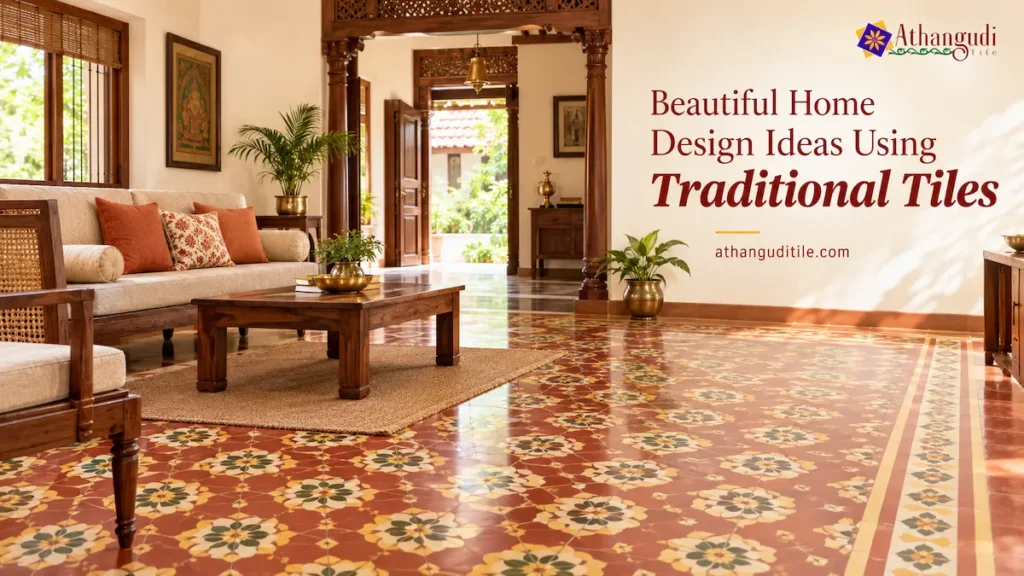
Beautiful Home Design Ideas Using Traditional Tiles

A beautiful home is just not about furniture, wall colors or decorative accessories. The flooring and surface of your wall also create that perfect ambiance. And traditional tiles allow one to add different colors, textures, patterns, and charm to the interiors of each space while still keeping the home warm and welcoming.However, these days many homeowners are looking for materials that provide something a little different from the typical modern surfaces we see. Traditional tiles are an ideal option to ensure an individual look for your home interior. Their hand made aesthetic, gorgeous patterns, and unique hues blend well within both traditional and contemporary interiors.Whether it is a living space, kitchen or bathroom, bedroom, entrance or courtyard, there are multiple ways in which traditional tile designs can be incorporated into a home without it looking old fashioned. With their colors, patterns, and ideal placement, these tiles add to the visual appeal of modern interiors. Why Traditional Tiles Still Work in Modern Homes But traditional doesn’t have to mean boring. Many traditional contemporary rooms use basic furniture, neutral walls, and plain walls with ornate traditional decorating tile to add interest while not making it feel overly full. When looking at traditional tiles for the home there is a large selection of choices when it comes to traditional patterns, colors, and finishes.A patterned tile floor can add character to a room that might otherwise be plain, and a bright color wall tiled makes an attractive feature wall behind furniture. Traditional tiles can also be incorporated in small areas without full tile covering in a room, on a decorative border, a brightly colored tiled front door, or even just using a little corner or dividing wall space in a contrasting tile pattern. “The right tile does more than cover a surface; it helps create the feeling of a room.” Make the Living Room More Welcoming Traditional Tiles for Living Room Spaces This is one of the most overexposed rooms in your home. It’s also a great space to add some decorative floor tiles. Rather than having a uniform floor finish throughout the whole room, try creating a pattern to break the design up a little. Traditional tiles for the living room work particularly well if your walls and furniture are very plain and uniform. If your tiles are multicolored, this can be offset with large amounts of lightly toned furniture. You could also just add the traditional tiles to a small section of the room, possibly a pattern in front of the coffee table, or as a decorative stripe around the edge of the room. For a more contemporary look, combine traditional flooring with modern, simple furniture and a fairly minimal decoration scheme. Add Character to the Kitchen The kitchen is another space where traditional tiles can make a strong visual difference. A patterned backsplash behind the cooking area can become a focal point while protecting the wall from everyday splashes. Traditional tiles for kitchen spaces can be selected according to the existing cabinets and countertops. If the kitchen has white or cream cabinets, colorful patterns can add energy. For darker cabinets, lighter tile designs can help maintain an open appearance. Homeowners can also use tiles on the floor. A small patterned section near the sink or cooking area can create a decorative zone while keeping the rest of the kitchen simple. When choosing kitchen tiles, consider cleaning and maintenance along with appearance. A beautiful design should also suit the practical requirements of a frequently used space. Create a Calm Bedroom Setting Bedrooms usually benefit from softer colors and less visual activity. Traditional tiles do not always have to be bright or heavily patterned. Subtle patterns and muted shades can introduce character while maintaining a peaceful atmosphere. Athangudi tiles for home interiors can be used as a decorative feature around a dressing area, reading corner, or small wall section. If patterned flooring is preferred, choose a design that works well with plain bedding and simple furniture. A carefully selected tile design can also complement natural materials such as wood, cotton, linen, and cane. These combinations can make the bedroom feel comfortable and connected to traditional craftsmanship. The goal is not to fill every surface with patterns. One carefully planned tiled element can often create enough personality for the room. Give the Bathroom a Distinctive Look Bathrooms are ideal for experimenting with decorative surfaces because even a small area can create a noticeable design effect. Traditional tiles can be used on floors, shower walls, vanity backsplashes, or selected wall sections. For a compact bathroom, lighter-colored tiles can help the area feel more spacious. In larger bathrooms, stronger patterns can be introduced as a feature wall or floor design. Traditional tile designs can also be combined with brass fittings, wooden accents, natural stone, or simple white sanitaryware. These combinations allow the tiles to remain the main decorative element while keeping the bathroom visually balanced. Before selecting bathroom tiles, homeowners should consider slip resistance, water exposure, cleaning requirements, and the suitability of the tile for the intended surface. Turn the Entrance into a Design Feature The entrance gives visitors their first impression of a home. Instead of keeping this area completely plain, traditional tiles can create an attractive transition between the outside and inside. A patterned floor at the entrance can immediately introduce the home’s design style. Alternatively, a small tiled border can frame the doorway or entry path. This is also a useful place to use stronger patterns because the entrance usually does not contain as much furniture as a living room or bedroom. A carefully chosen design can make the space memorable without requiring additional decoration. Bring Traditional Style to Courtyards and Open Areas Courtyards, balconies, and semi-open spaces can benefit from decorative flooring. Traditional tiles can add warmth to these areas and create a stronger connection between indoor and outdoor spaces. For homeowners interested in traditional floor tiles for home, courtyard flooring is an excellent area to consider. Patterned tiles can define

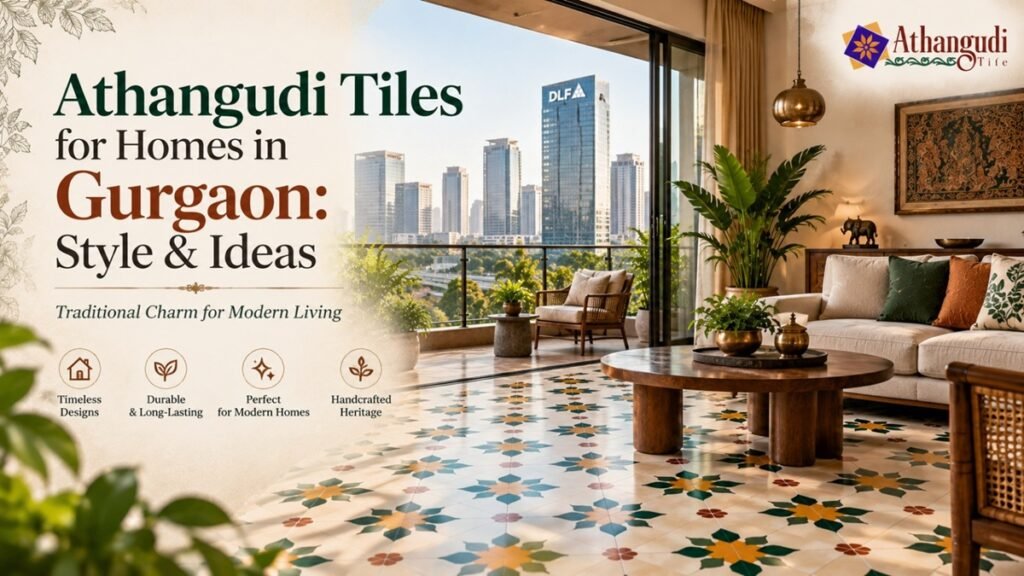
Athangudi Tiles for Homes in Gurgaon with Traditional Floral Tile Designs
Athangudi Tiles

Athangudi Tiles for Homes in Gurgaon: Style & Ideas

Modern architecture in contemporary homes in Gurgaon can seamlessly blend with traditional aesthetics and provide a luxurious, uniquely personal interior in today’s era. These different design elements can be woven together with the appropriate flooring materials, and they can also provide color, texture, and personality to an area. Athangudi Tiles for Homes in Gurgaon might be suitable for those seeking to impart a unique flair and an authentic Indian style to their handcrafted surfaces. Athangudi tiles are manual and traditional products and suitable for living rooms, kitchens, bedrooms, balconies, courtyards, entrances, and other suitable areas.  These decorative designs are not just as flooring material but also can be a vital part of interior decor. Visitors looking for Athangudi Tiles in Gurgaon, let us help you figure out the designs, suitable location, color combinations, installation, and aftercare, and the significant points to remember before buying. Why Athangudi Tiles Suit Gurgaon Homes Athangudi tiles are manual and traditional products and suitable for living rooms, kitchens, bedrooms, balconies, courtyards, entrances, and other suitable areas. These decorative designs are not just as flooring material but also can be a vital part of interior decor. Visitors looking for Athangudi Tiles in Gurgaon, let us help you figure out Gurgaon interiors, which can also include contemporary décor, furniture, and design with the modern feel of clean-lined architecture, neutral walls, and contemporary design. Handcrafted Athangudi tiles can also add traditional craftsmanship while still maintaining the modern look of Gurgaon interiors. The handcrafted look of these tiles can display subtle differences in coloring or design, resulting in the finished floor having a distinctive character that cannot be duplicated by mass-produced floors. The designs, suitable location, color combinations, installation, and aftercare, and the significant points to remember before buying. Another benefit is design adaptability. Homeowners may opt for striking geometric designs in prominent areas or subtler patterns for spaces where they prefer a more discreet look. “A lovely floor does more than just cover a room; it aids in shaping the identity of the area.” Homeowners seeking classic tiles for their residences can therefore consider Athangudi tiles for both modern and heritage-themed interiors in Gurgaon. Choosing Athangudi Tile Designs for Different Rooms The versatility of Athangudi Tiles for Homes in Gurgaon allows homeowners to select different patterns and colors for different areas instead of using the same Athangudi tile designs throughout the property. Home Area Suitable Tile Approach Interior Effect Living Room Floral or geometric patterns Warm and decorative Entrance Bold traditional motifs Welcoming first impressions Kitchen Balanced patterns Practical yet attractive Bedroom Soft colors and subtle designs Calm and comfortable Balcony Simple patterned tiles Fresh traditional look Courtyard Strong geometric designs Heritage-inspired character This approach allows different rooms to have their own personality while maintaining a consistent handcrafted theme throughout the home. Living Room Ideas with Athangudi Tiles The lounge is definitely one of the greatest spaces for displaying ornamental flooring. Athangudi tiles for the living room could be a decorative base, which goes along nicely with furniture, minimalistic wood components, colored walls, and modern decor. In minimalist living room decor, a daring geometric or floral print may be the star of the show.  In case the room is already filled with elements of decor, a much more laid back layout of tiles may create a more peaceful appearance.  Rugs can be used to define a seating area and still break up some of the patterned floor surface. That may work especially well in good-sized Gurgaon homes with open concept living and eating areas. Athangudi Tiles for Gurgaon Kitchens Kitchens are where flooring has to be practical yet aesthetically pleasing at the same time. Athangudi tiles for the kitchen can certainly bring color and pattern to a fairly minimal kitchen. Patterned flooring can also work well with simple cabinetry and light wall colors.  Wooden cabinetry and other natural finishes can further emphasize the natural qualities of the artisan tile.  Before settling on a number of tiles for the kitchen, consumers will need to check in with the tile supplier or contractor to find out the best finish, installation style, upkeep, and suitability of their chosen tile. Creating a Calm Bedroom Interior Soft patterns and matching colors are some of the best things that bedrooms can offer. Instead of choosing an overly detailed design, the residents have the option to go for a light pattern or gentle color combinations.  Athangudi tiles can look amazing next to a moderate-colored wall, lightweight curtains, cotton textiles, off-white walls, and minimal adornments. This allows the flooring to display old art forms to the fullest while ensuring a cozy and peaceful bedroom. Ideas for Entrance and Foyer Design Each initial impact of a house is created by the hall area, and also it is the ideal place to develop one of a kind and also special designs of floor tiles. An attractive Athangudi-style or ornamental border can be made use of to attract your foyer area. In a situation if the doorway area breaks straight right into the sitting room, you can paint the shades from the tile in furnishings and also pillows or in lots of other decorative points. Balconies and Courtyards Balconies, terraces, patios, and courtyards in Gurgaon homes are perfect locations for classic materials that add charm and have an inviting touch. The Athangudi floor tiles are suitable for both outdoor and semi outdoor applications in Gurgaon homes, and they enhance such features as plants, wooden furniture, natural finishes, and earthy ornaments.  For outdoor or semi-outdoor applications, the homeowners should select the appropriate style that meets the end use, which needs to be installed after considering surface preparation, drainage, exposure, and installation criteria. How to Match Athangudi Tiles with Modern Interiors Athangudi tiles are not limited to old-fashioned dwellings. When used, Athangudi tile craftsmen work with, their intricate motifs can also be combined with a fashionable house motif. As one approach to establish this, one can give the décor of a room a floor feature that can be contrasted with

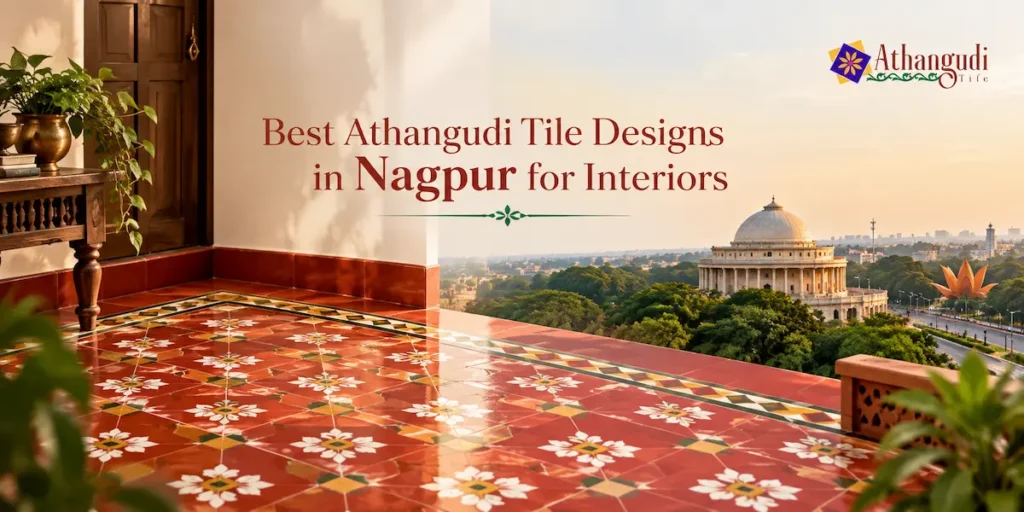
Best Athangudi tile designs in Nagpur featuring traditional patterned flooring in a premium interior
Uncategorized

Best Athangudi Tile Designs in Nagpur for Interiors

Choosing the right tiles can completely change the look and feel of an interior. For homeowners in Nagpur who want something artistic, traditional, and different from ordinary flooring options, Athangudi tiles offer an attractive choice. These handcrafted tiles are known for their detailed patterns, rich colors, and traditional character. Athangudi Tile Designs in Nagpur are suitable for different spaces, including living rooms, bedrooms, kitchens, balconies, courtyards, and entryways. Their decorative appearance allows homeowners to create interiors that feel warm and distinctive without relying heavily on additional decoration. This guide explains different tile design ideas, suitable spaces, selection tips, maintenance requirements, and important things to consider before buying Athangudi tiles for a home in Nagpur. Why Athangudi Tiles Are Different Athangudi tiles have a handmade character that makes them different from many factory-produced tiles. Their patterns are created with careful attention to color, shape, and detailing. Small variations can occur because of the handcrafted process, giving every tile arrangement a slightly individual appearance. For homeowners looking for handcrafted tiles in Nagpur, Athangudi tiles can add a decorative layer to an interior while still functioning as practical flooring or wall surfaces. Their designs commonly include geometric patterns, floral details, borders, and traditional motifs. Depending on the selected pattern and color combination, they can work with both traditional and contemporary interiors. “A well chosen tile design can become part of the personality of a room rather than simply covering its floor.” Popular Athangudi Tile Designs for Nagpur Homes The best design depends on the size of the room, furniture, lighting, and overall interior theme. Here are some options homeowners can consider. Geometric Pattern Tiles Geometric patterns are a practical choice for modern interiors. Repeating shapes can create a structured appearance and work particularly well in living rooms, passages, and open areas. Neutral combinations can provide a subtle look, while stronger colors can make the floor a visual feature. Floral and Decorative Patterns Floral patterns bring a softer decorative feel to a room. They can be used in bedrooms, sitting areas, or smaller spaces where homeowners want the flooring itself to provide visual interest. When using detailed designs, keeping the walls and furniture relatively simple can help maintain balance. Border and Center Designs Another approach is to use patterned tiles in the center of a room with a complementary border around the edges. This arrangement can visually define a space without requiring a separate rug. It can work well in larger living rooms, entrance areas, and courtyards. Traditional Motifs with Modern Interiors Traditional patterns do not necessarily require a traditional home. Traditional tiles in Nagpur can also be paired with modern furniture, clean walls, wooden elements, and simple lighting. The contrast between handcrafted patterns and contemporary furniture can create an interesting interior style. Athangudi Tiles for Different Interior Spaces One of the advantages of Athangudi tiles is their flexibility. The same tile category can be used differently depending on the room. Living Room The living room is one of the most suitable places for decorative tile flooring. A carefully selected pattern can become the central visual element of the room. For a smaller living room, medium or subtle patterns may be easier to balance. Larger rooms can accommodate more detailed designs. Bedroom For bedrooms, softer colors and less complicated patterns can create a calm atmosphere. Athangudi tile in Nagpur can be combined with wooden furniture, neutral bedding, and warm lighting for a comfortable appearance. Kitchen In kitchens, tiles should complement cabinets and countertops rather than compete with them. Patterned flooring can work well with plain cabinets, while a simpler tile can balance a more decorative kitchen design. Balcony and Courtyard Athangudi tiles can also add character to semi-open spaces. A patterned floor in a balcony or courtyard can create a visually distinct area for seating, plants, or relaxation. Entrance Area The entrance is the first part of a home visitors see. A decorative tile arrangement can create a welcoming transition between the exterior and interior. How to Choose the Right Athangudi Design Selecting a beautiful pattern is only one part of the process. The design should also suit the space where it will be installed. Consider Room Size Large patterns can look impressive in spacious rooms but may feel visually busy in a small area. Smaller or more repetitive designs can be easier to manage in compact spaces. Match the Color Scheme Look at your existing walls, furniture, doors, curtains, and other interior elements before selecting a tile. If the room already contains strong colors, a balanced tile pattern may work better. Think About Lighting Natural and artificial lighting can affect how tile colors appear. It is useful to view the selected tile under lighting similar to the final installation environment. Decide Between Flooring and Accent Areas Athangudi tiles do not always have to cover an entire room. They can also be used as an accent area, border, entryway feature, or decorative section. This approach can add character while keeping the overall design controlled. A Simple Comparison of Design Applications Design Type Suitable Space Interior Effect Best For Geometric Living Room Structured and modern Contemporary homes Floral Bedroom Soft and decorative Relaxed interiors Border Pattern Hallways & Rooms Defined appearance Larger spaces Center Pattern Living Room Strong focal point Spacious interiors Traditional Motif Courtyard Cultural and artistic Heritage-style themes Simple Pattern Kitchen Balanced and clean Modern kitchens Combining Athangudi Tiles with Modern Decor A common misconception is that traditional tiles only work with traditional furniture. In reality, the right combination can make them suitable for contemporary homes. Try pairing patterned flooring with simple sofas, wooden furniture, neutral walls, minimal accessories, and modern lighting. This allows the tile design to remain visible without making the room look overcrowded. For a more traditional appearance, combine the tiles with wooden furniture, brass details, handcrafted accessories, and warm-toned lighting. The key is balance. If the flooring is highly detailed, the rest of the room can remain relatively simple. Athangudi Tiles for Modern Interiors in Nagpur Homeowners searching

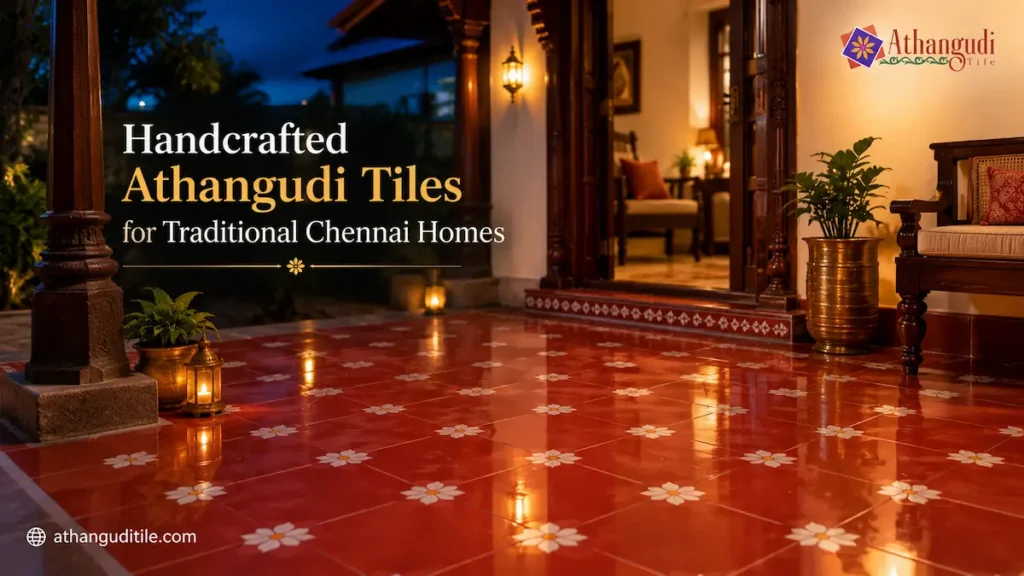
Handcrafted Athangudi tiles flooring in a traditional Chennai home with warm evening lighting
Athangudi Tiles

Handcrafted Athangudi Tiles for Traditional Chennai Homes

Traditional homes in Chennai have a special character shaped by warm colours, detailed patterns, spacious rooms, and a strong connection with South Indian design. For homeowners who want to bring this character into their interiors, handcrafted Athangudi tiles offer an attractive flooring and wall covering option. Their decorative patterns, rich colours, and handmade finish can add personality without making a space feel overly modern. Athangudi tiles for Chennai homes can work beautifully in living rooms, entrances, kitchens, courtyards, bedrooms, and other areas. They can also be combined with wooden furniture, natural materials, traditional décor, and simple contemporary elements. Why Athangudi Tiles Suit Chennai Homes Chennai homes often combine traditional architecture with practical modern living. This makes decorative flooring an important part of the overall interior design. Athangudi tiles can complement this style because they bring visible craftsmanship and detailed patterns to a space. Unlike plain flooring, patterned tiles can become part of the room’s visual identity. Homeowners can select colours and motifs according to the mood they want to create. Traditional Athangudi tiles are particularly suitable for spaces where homeowners want a cultural and handcrafted appearance. They can be used across an entire floor or introduced as a decorative feature in selected areas. The handmade character also makes every installation feel distinctive. Small variations in colour and pattern can contribute to the authentic appearance of the finished surface. Handcrafted Designs with South Indian Character One of the most noticeable features of Athangudi tiles is their decorative design. Floral forms, geometric patterns, borders, and traditional motifs can create a strong visual connection with South Indian interiors. Handcrafted tile designs can be selected according to the size and purpose of a room. Larger rooms may allow more detailed patterns, while smaller spaces can benefit from simpler motifs or carefully planned borders. For a traditional Chennai home, patterned tiles can work especially well with: The goal is not to fill every surface with patterns. A balanced combination of decorative flooring and simple surroundings can make the tile design stand out naturally. Colour Choices for Traditional Chennai Interiors Colour plays an important role when choosing tiles for a traditional home. Athangudi tiles are available in combinations that can range from earthy and muted tones to brighter decorative palettes. Athangudi tile colors can be selected based on existing walls, furniture, curtains, doors, and architectural details. For a warm traditional appearance, homeowners may consider combinations featuring terracotta, cream, yellow, green, blue, or earthy shades. More subtle combinations can create a calm appearance, while stronger contrasts can make the floor a central design feature. Before finalising a colour, it is useful to view a physical tile sample in the actual room. Natural and artificial lighting can change how colours appear. Best Places to Use Athangudi Tiles at Home Athangudi tiles can be used in several parts of a Chennai home. Their decorative character makes them particularly useful where flooring or wall surfaces are meant to contribute to the overall design. Living Room The living room is one of the most effective areas for patterned flooring. A carefully selected design can create a welcoming foundation for sofas, wooden furniture, rugs, and decorative pieces. Athangudi tiles for living rooms can cover the complete floor or be used to create a defined decorative area. Entrance and Foyer The entrance creates the first impression of a home. Patterned tiles can make this area more visually interesting without requiring additional decoration. A border design around the entrance can also create a traditional look while keeping the rest of the flooring simple. Courtyard Traditional South Indian homes often use courtyards as important architectural spaces. Athangudi tiles can complement these areas with their handmade appearance and decorative patterns. Athangudi tiles for courtyards can work particularly well alongside plants, wooden elements, natural light, and traditional seating. Kitchen A kitchen can also benefit from decorative flooring when the pattern is chosen carefully. Neutral cabinetry combined with patterned tiles can create an attractive contrast. For practical reasons, homeowners should also consider cleaning requirements and the specific finish before selecting tiles for a busy kitchen. Bedroom Bedrooms generally benefit from calmer visual elements. Soft coloured patterns can provide decorative interest without overwhelming the room. Athangudi tiles for bedrooms can be paired with wooden beds, cotton textiles, simple curtains, and warm lighting for a comfortable traditional atmosphere. Combining Traditional Tiles with Modern Elements A traditional home does not need to look old fashioned. One of the benefits of handcrafted tiles is their ability to work with both heritage-inspired and contemporary interiors. For example, patterned flooring can be combined with modern sofas, minimal lighting, clean furniture lines, and simple walls. This creates a balanced interior where traditional flooring becomes the main decorative element. Athangudi tiles for modern interiors can therefore be used even when the rest of the home follows a contemporary design direction. A useful approach is to select one strong traditional feature and keep the surrounding décor relatively simple. This helps maintain visual balance. “Good interior design brings together craftsmanship, comfort, and the character of the people who live in the space.” How to Select the Right Athangudi Tile Pattern Choosing a tile pattern is not only about personal preference. Room size, furniture placement, lighting, and surrounding colors should also be considered. For larger rooms, detailed motifs and repeating patterns can create a strong decorative effect. Smaller rooms may look better with patterns that have more open space. Athangudi tile patterns should also complement the architectural style of the property. Homes with traditional wooden doors, pillars, arches, or decorative windows may suit more classic patterns. For a mixed traditional-modern home, simpler geometric designs can create a smoother transition between old and new styles. It is also important to check the tile dimensions and layout before installation. A pattern can look different when repeated across a large floor compared with a small sample. Maintenance and Everyday Care Like any flooring material, handcrafted tiles require appropriate care. Regular sweeping or dust removal can help prevent dirt from building up

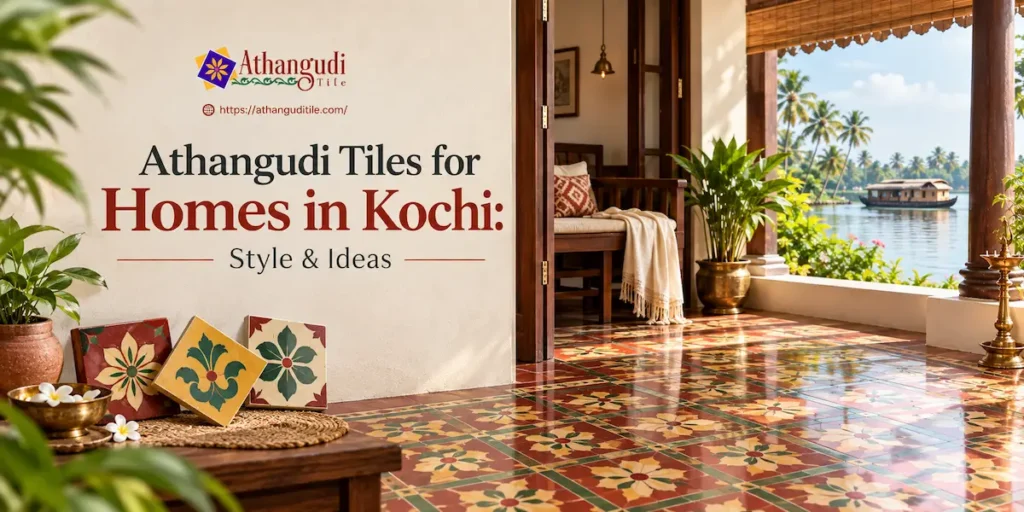
Athangudi tiles for homes in Kochi with colorful traditional flooring and Kerala-inspired interiors
Uncategorized

Athangudi Tiles for Homes in Kochi: Style & Ideas

Modern interior design, tropical environments, and traditional charm are frequently combined in Kochi residences. Selecting the appropriate flooring can assist in balancing these factors while giving a room coziness and a distinctive look. For homeowners seeking handcrafted surfaces with unique designs, vibrant colors, and a genuine Indian character, Athangudi Tiles for Homes in Kochi is a stunning choice.  Athangudi tiles are made with ancient methods and can be used in living rooms, kitchens, bedrooms, balconies, courtyards, and entryways. Instead of just being a useful flooring material, their patterned surfaces can become an integral component of the decor.  Homeowners comparing Athangudi Tiles in Kochi may find it easier to choose if they are aware of their designs, appropriate spaces, upkeep needs, installation specifications, and purchasing factors.  Why Athangudi Tiles Suit Kochi Homes Flooring that feels ornamental without overpowering the interior style of a Kochi home can be beneficial. Athangudi tiles provide this harmony through a variety of traditional color combinations and handcrafted patterns. Additionally, each tile may differ slightly due to its handcrafted appearance. These minor variations add to the finished floor’s personality and make it feel more unique than mass-produced.  Another advantage is design flexibility. Homeowners can choose bold geometric patterns for statement areas or softer motifs for spaces where they want a calmer appearance. “A beautiful floor does more than cover a room; it helps define the character of the space.” For people looking for traditional tiles for homes, Athangudi tiles can therefore be considered for both classic and contemporary interiors. Choosing Athangudi Tile Designs for Different Rooms The adaptability of Athangudi Tiles for Homes in Kochi is one of its main advantages. It is not necessary to utilize the same tile style over the whole property. Depending on the purpose of each area, various patterns and color combinations can be chosen.  Home Area Suitable Tile Approach Interior Effect Living Room Floral or geometric patterns Warm and decorative Entrance Bold traditional motifs Welcoming first impression Kitchen Balanced patterns Practical yet attractive Bedroom Soft colours and subtle designs Calm and comfortable Balcony Simple patterned tiles Fresh traditional look Courtyard Strong geometric designs Heritage-inspired character This approach allows homeowners to create visual variety while keeping the overall home connected through a traditional flooring theme. Living Room Ideas with Athangudi Tiles Decorative flooring is frequently best displayed in the living room. Simple furniture, wooden accents, neutral walls, and traditional décor can all be placed on an Athangudi floor with a pattern. A well-balanced tile pattern might keep the area from feeling crowded if it already has a number of ornamental components. Stronger geometric or floral designs might take center stage in a simpler space. Zones can also be created without completely covering the floor by covering specific portions with a rug. This is especially effective in bigger Kochi homes with an open layout between the dining and living areas.  Athangudi Tiles for Kochi Kitchens Kitchens require flooring that is both esthetically pleasing and useful for daily usage. An otherwise straightforward kitchen design can benefit from the addition of color and pattern provided by Athangudi tiles. Plain cabinets and subtle walls go well with patterned carpeting in contemporary kitchens. The earthy quality of handmade tiles can also be complemented by wooden cabinets. Before making a choice, homeowners should talk to the tile provider about the proper finish, installation technique, and maintenance needs because kitchen floors are frequently spilled on and cleaned.  Creating a Calm Bedroom Interior Softer graphic aspects are often better for bedrooms. Homeowners can think about muted pairings and simpler themes instead of choosing an extremely busy pattern. Wooden furniture, cotton fabrics, light curtains, and minimalist décor can all complement an Athangudi floor. This allows the flooring to add a unique, classic touch while yet creating a cozy atmosphere.  For homeowners searching for Athangudi tile designs for home, bedroom applications, they are worth considering when the goal is to combine traditional craftsmanship with a relaxed interior. Entrance and Foyer Design Ideas Visitors get their initial impression of a house from its entrance. This makes it the perfect place for a tile pattern that is more expressive. The foyer might be visually defined with a bold border or recurring pattern. Choosing colors that recur in the adjacent area might facilitate a more seamless transition if the entrance is directly connected to the living room. Large motifs might make the space appear visually crowded; therefore, a smaller design can be more appropriate for modest entrances.  Balconies and Courtyards Kochi’s home designs can include balconies, verandas, and open courtyards where traditional materials can create a natural connection between the built environment and outdoor areas. Athangudi floor tiles can add pattern to these spaces while complementing plants, wooden furniture, stone details, and earthy décor. For exposed areas, however, the tile’s suitability should be checked according to the exact location and installation conditions. Proper surface preparation and drainage are especially important for outdoor applications. How to Match Athangudi Tiles with Modern Interiors Athangudi tiles do not have to be limited to traditionally styled houses. They can also work in contemporary homes when used thoughtfully. A useful approach is to let the floor provide the pattern while keeping other major surfaces relatively simple. Plain walls, modern furniture, clean lighting, and natural wood can create a balanced combination. For example, a contemporary living room with neutral furniture can gain warmth from a patterned tile floor without requiring traditional furniture throughout the room. This makes handcrafted tile designs suitable for homeowners who want a home that combines modern functionality with Indian craftsmanship. Selecting Colours for Your Kochi Home Choice of colour depends on the size of the room, natural light, furniture, and other colours within the room. Different colours and combinations create moods. Cream, yellow, green, blue and other traditional earthy reds and brown combinations create various moods. In a small room, all lighter combinations will work better while deeper colours will make a stronger impact in larger ones. When deciding on tiles, view a complete sample with

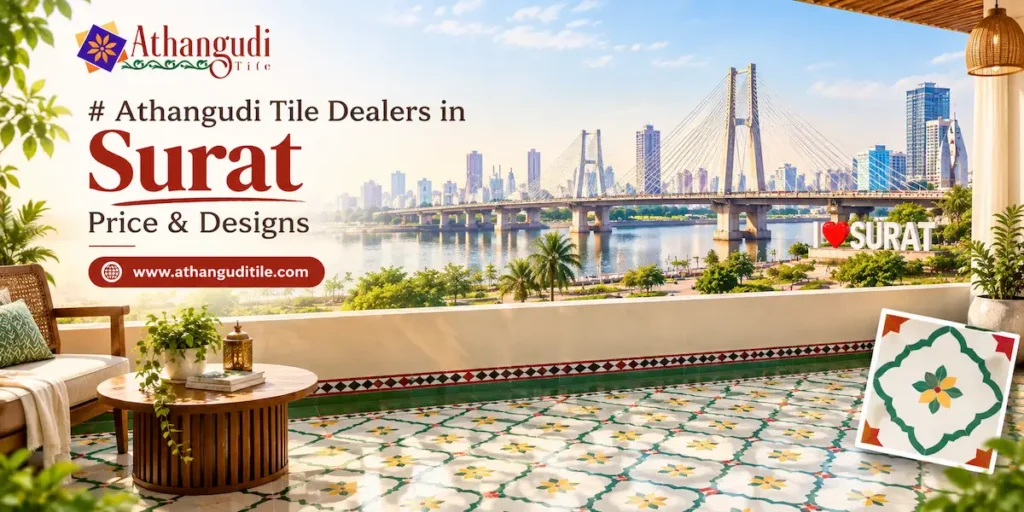
Athangudi tile dealers in Surat featuring traditional patterned tiles, tile designs and Surat city view
Uncategorized

Athangudi Tile Dealers in Surat: Price & Designs

Surat is renowned for its expanding housing stock, stylish interiors, and evolving architectural tastes. Handmade tiles are growing in popularity as homeowners seek out flooring that feels unique rather than commonplace. People who desire classic designs, creative surfaces, and a close connection to Indian handicraft may find Athangudi tiles extremely appealing. Because a trustworthy dealer can assist with tile selection, patterns, quantities, price, and appropriate applications, selecting the best Athangudi tile dealers in Surat can make the purchasing process simpler. These tiles complement both classic and modern interiors and can bring character to residential floors and feature spaces. This guide describes the cost of Athangudi tile in Surat, the styles that are available, significant design options, and useful factors to think about before making a purchase.  Why Athangudi Tiles Suit Surat Homes Practical floor plans and ornate interiors are common features of contemporary Surat residences. Because they provide intricate designs without necessitating an unduly complex interior design, Athangudi tiles can complement this style. These handmade tiles have the potential to become a significant visual component in a space, in contrast to plain flooring. Living rooms, entryways, dining rooms, hallways, courtyards, and specific feature sections are areas where they perform very effectively. Simple walls, wooden furniture, neutral textiles, or sparse décor can help counterbalance their patterned appearance. This enables homeowners to design a visually appealing room without overcrowding every area. Athangudi tiles offer a choice that blends traditional craftsmanship with adaptable interior uses for those looking for traditional tiles in Surat.  “A well-chosen tile can become more than a flooring material; it can define the character of an entire space.” Understanding Athangudi Tile Price in Surat When choosing handcrafted flooring, one of the first factors that purchasers take into account is price. Instead of having a set price for each design, the Athangudi Tile Price in Surat might vary based on a number of criteria. The ultimate cost can be affected by a number of factors, including pattern intricacy, tile size, handcrafted production, finishing, quantity, personalization, transportation, and order requirements. A highly intricate decorative design could cost more than a straightforward pattern. Therefore, rather than focusing solely on the cost of a single tile, buyers should compare pricing based on the entire requirement. When creating a project budget, installation materials, waste, delivery, and the overall area should all be taken into account.  The following table gives a general way to evaluate the main pricing factors: Buying Factor What to Consider Design Simple or detailed handcrafted pattern Size Different tile sizes may have different pricing. Quantity Larger orders may require a detailed quotation. Customization Special colors or patterns can affect cost. Delivery Transportation distance and order size matter. Installation Labor and related materials should be budgeted separately. For accurate pricing, it is better to request a quotation according to your room size and selected design. Choosing Athangudi Tile Designs for Your Space Price is crucial, but so is the choice of design. From delicate traditional flooring to striking artistic surfaces, Athangudi tiles come in a variety of patterns that can evoke various moods. Geometric-patterned Athangudi tile designs are ideal for living rooms and foyers. For areas where homeowners choose a more artistic look, floral or decorative designs may be appropriate. Buyers might favor designs that don’t make the floor look too cluttered for smaller spaces. Stronger patterns or recurring motifs can be accommodated in larger spaces, which also offer greater versatility. Take into account the room’s size, natural lighting, furnishings, wall color, and general interior concept while choosing a design. Rather than competing with every other design feature, a tile should enhance the space.  Where to Use Athangudi Tiles in Surat The adaptability of Athangudi tiles is one of their benefits. When the installation and design are chosen properly, they can be utilized in various areas of a house. Because patterned flooring can provide an eye-catching base for furnishings, living rooms are a popular option. Because they make an instant visual impression, ornamental tiles can also be beneficial for entrance areas. These tiles can also be used in dining areas, hallways, courtyards, and specific wall or feature areas. While some homeowners may decide to utilize tiles only in a certain area to create contrast, others may choose a full floor design. The ideal use for Athangudi Tiles for Homes relies on the intended use, maintenance needs, interior design, and purpose of the space.  Finding Reliable Athangudi Tile Dealers in Surat Your entire purchasing experience may be impacted by the dealer you select. Ask questions about design alternatives, availability, customization, order amounts, shipping, and installation advice in addition to price when comparing Athangudi Tile Dealers in Surat. A competent dealer should be able to assist you in estimating the quantity of tiles needed for your project and describe the features of various designs. Asking if the chosen design is already available or if it has to be made for your order is also helpful.  Before confirming a purchase, buyers should ask for precise information regarding pricing and delivery. Viewing tile samples, if at all possible, can also be helpful because colors and patterns may appear differently on a screen than they do in the finished product. Before submitting the final order, go over all requirements with the dealer for bigger home or commercial projects.  Athangudi Tile Suppliers in Surat: What to Check When organizing a bigger project, customers might look for Athangudi Tile Suppliers in Surat in addition to dealers. When a large number of rooms, repeating designs, or tiles are needed, suppliers may be helpful. Examine the available designs, product consistency, projected delivery time, packing, and transportation plans before choosing a supplier. Inquire about the handling of replacement requirements in the event that tiles are broken during transit. Carefully calculating the necessary quantity is also crucial. While ordering too much can unnecessarily raise project expenses, ordering too little can cause issues if the same design later becomes unavailable. In order for buyers to make selections based on their actual project requirements,

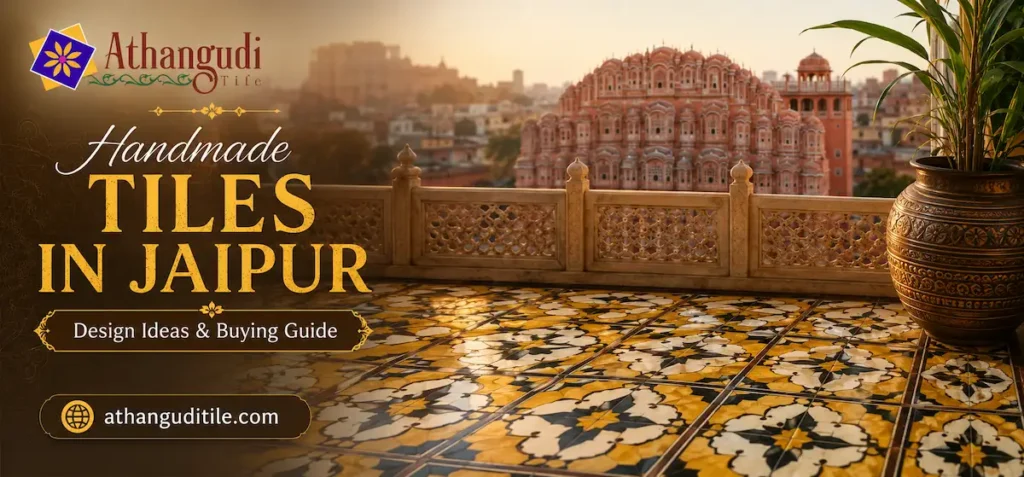
Handmade Tiles in Jaipur
Uncategorized

Handmade Tiles in Jaipur: Design Ideas & Buying Guide

Jaipur is renowned for its exquisite use of color, ancient patterns, intricate craftsmanship, and royal architecture. These characteristics are also having an impact on contemporary house interiors, as homeowners are becoming more and more interested in surfaces that feel artistic rather than mundane. For those who like to add character, texture, and traditional charm to their homes without making the entire area appear old, handmade tiles in Jaipur are a sensible option.  Living rooms, kitchens, baths, entrances, balconies, courtyards, and even some outdoor spaces can all benefit greatly from the use of handmade tiles. Each area feels more unique because of their handcrafted appearance, and homeowners may design interiors that complement both classic and modern designs with a variety of colors, patterns, and layouts.  “A beautiful home is not only about the materials you choose; it is about how those materials make the space feel.” The ideal tile is therefore more than just a flooring or wall covering material for Jaipur homes. It may develop into a significant component of the overall design narrative. Before selecting handmade tiles for a Jaipur home, this article describes the design possibilities, appropriate uses, purchasing considerations, maintenance requirements, and practical elements to take into account.  Why Handmade Tiles Suit Jaipur Homes Jaipur’s handcrafted details, earthy hues, architectural patterns, and heritage style all have a powerful visual connection. These qualities are naturally complemented by handmade tiles. Handcrafted tiles can have small differences in color, texture, edges, or pattern, in contrast to perfectly homogeneous factory-made surfaces. These minor variations frequently give a wall or floor additional apparent depth and authenticity.  Handmade tiles can also be used with natural wood, stone, brass accents, neutral walls, or conventional furniture to create a cozy interior for homeowners. Instead of covering every surface in a contemporary house, they might be employed as an accent. Flexibility is an additional benefit. Handmade tiles are beneficial even if you don’t have a big space. With the correct tile layout, a kitchen backsplash, bathroom feature wall, entryway panel, or tiny patio can become a focus point.  Popular Handmade Tile Design Ideas The design you select should complement the room rather than compete with everything around it. Jaipur homes can accommodate many different handmade tile styles, from subtle patterns to more decorative arrangements. 1. Heritage-Inspired Floor Patterns Patterns with a traditional feel are appropriate for living spaces, doorways, hallways, and patios. A floor can have a unique personality thanks to balanced borders, repeated themes, and geometric layouts. Use patterned tiles in a specific location and keep the surrounding walls and furniture basic for a classy look.  2. Colorful Kitchen Backsplashes The kitchen is one of the easiest places to introduce handcrafted tiles. A backsplash behind the stove, sink, or countertop can add color without requiring a major renovation. Soft blue, earthy red, muted green, cream, and terracotta-inspired shades can work particularly well with wooden or neutral kitchen cabinets. 3. Decorative Bathroom Walls Bathrooms do not have to rely entirely on plain surfaces. A decorative tile wall behind the vanity or shower area can create a strong visual feature. When using patterned tiles in bathrooms, balance them with plain tiles on the remaining walls. This keeps the room attractive without making it feel visually crowded. 4. Courtyard and Balcony Flooring Because of Jaipur’s unique architectural style, balconies and courtyards are great places for custom designs. These semi-open areas can have a distinct identity and a historic feel thanks to patterned flooring. Always take into account if the tile is appropriate for the anticipated levels of moisture, dust, sunlight, and foot traffic in these locations.  Choosing Tiles for Different Rooms Choosing a tile solely for its esthetic appeal might not be sufficient because every space has varied functional needs. Consider design, comfort, longevity, and furniture coordination while designing living rooms. Stain resistance and ease of cleaning become increasingly crucial for kitchens. Moisture and slip resistance are important considerations in bathrooms, especially when choosing flooring tiles. There may be more foot activity in entrances and regularly utilized hallways. Before completing the design, homeowners should inquire about the tile’s compatibility for frequent use in such regions. Due to their relatively limited exposure to damp, bedrooms typically offer more freedom. Here, calmer surroundings can be produced using softer patterns and warmer hues.  Handmade Tiles vs Uniform Factory Tiles Visual consistency is one of the primary distinctions between tiles made by hand and those made by machines. The dimensions, colors, and patterns of factory-made tiles are typically meant to be extremely consistent. Conversely, handmade tiles could have little differences that add to their unique personality. This does not imply that one choice is superior to the other. The ideal option will depend on how you want your area to look and function.  If you want an extremely uniform, minimal appearance, a highly consistent manufactured tile may be suitable. If you prefer texture, individuality, and an artisanal appearance, handmade tiles can offer something different. “Small variations are often what give handcrafted surfaces their natural personality.” How to Select the Right Tile Color The entire space should be considered when choosing a color scheme, not just the tile. Earthy and warm colors can create an inviting atmosphere for traditional Jaipur-inspired interior design. Natural materials can complement terracotta, beige, cream, mellow red, and warm brown hues. Homeowners might employ contrasting colors more cautiously for contemporary decor. One patterned tile wall in a neutral space can serve as a powerful focal point without overpowering the overall design.  While darker or richer tiles can make large areas feel cozier and more grounded, lighter tiles can help smaller spaces appear more open. Always examine tangible samples in the room’s illumination before making a final decision. In both artificial and natural illumination, colors can appear differently.  Key Points to Check Before Buying Buying handmade tiles requires attention to both appearance and practical performance. Before placing an order, consider the following: ✓ Check the actual tile sample instead of relying only on photographs. ✓ Confirm the recommended application,

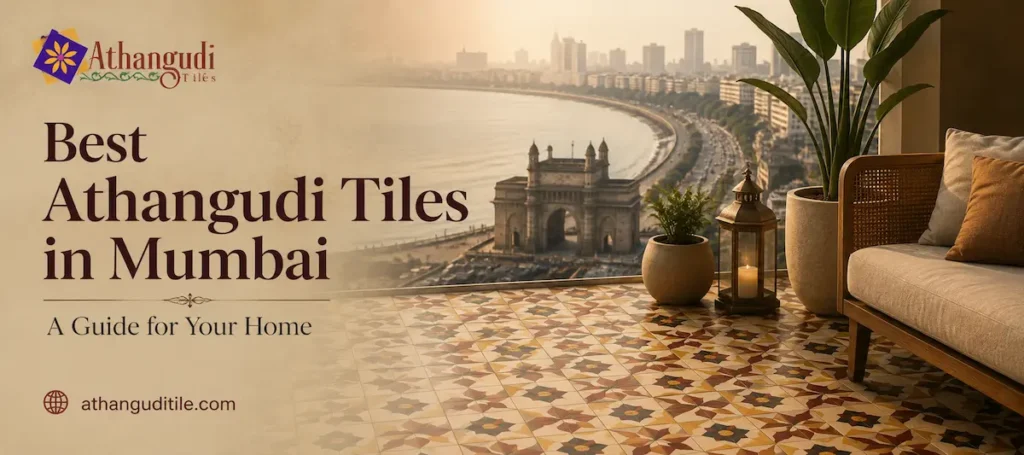
Best Athangudi Tiles in Mumbai for stylish home flooring
Uncategorized

Best Athangudi Tiles in Mumbai: A Guide for Your Home

A Different Kind of Welcome Mumbai homes frequently strike a balance between two opposing demands: they must feel contemporary while still having a unique personality. Homeowners are searching for flooring that does more than just cover the floor as apartments get smaller and interiors become more design-focused. Athangudi Tiles in Mumbai can provide something unique to a house in this situation.  Athangudi tiles are handmade cement tiles that are traditionally associated with the Chettinad area of Tamil Nadu. Because of their elaborate patterns, vivid colors, and handcrafted surface, they offer an artistic quality that is difficult to achieve with standard factory-made flooring. Because each tile contains little variations created during the handmade process, the floor as a whole appears more distinctive and esthetically pleasing.  These tiles are ideal for Mumbai homeowners’ living rooms, kitchens, balconies, entrances, and other areas where flooring must blend in with the interior design rather than be a background feature.  Why Mumbai Homes Choose Them Athangudi handmade tiles in Mumbai are popular for reasons other than just how they look. The fusion of traditional craftsmanship and design freedom is their main draw. Mumbai interiors can be anything from modern apartments to residences with a heritage feel. Because Athangudi tiles come in a variety of colors, geometric designs, and decorative combinations, they can fit into both styles.  Homeowners can utilize patterned tiles as a design element from the start rather than going with a simple floor and decorating it later. A focal point can be created with a skillfully chosen Athangudi pattern without the need for a lot of furniture or accessories. Their handmade character is an additional benefit. There may be slight variations in color and texture because these tiles are made individually. These variances add to the genuine handcrafted aspect rather than being a drawback.  Patterns That Set the Mood The variety of Athangudi tile designs in Mumbai is among their most intriguing features. A room’s atmosphere can be drastically altered by patterns. For homeowners seeking a modern, structured look, geometric shapes are appropriate. Bold contrasting patterns can make a smaller area visually prominent, while floral and traditional designs can create a softer and more artistic environment.  An intricate design might function virtually as a decorative rug in a living area. Subtle design may bring character to a kitchen without making it feel busy. When someone enters a house, a striking design can make a lasting impression. Instead of picking a design just because it appears good in a catalog, it’s crucial to choose a pattern based on the space.  Finding the Right Color When using Athangudi tiles, color choice is just as crucial. Mumbai houses frequently have modern lighting, hardwood furniture, and neutral walls, which makes patterned carpeting an excellent way to add color. Traditional themes can be mixed with earthy tones, muted greens, blues, yellows, creams, and terracotta-inspired hues. Homeowners might choose softer combinations with less contrast for a smart decor. Stronger hues and intricate patterns are options for those who want a striking floor.  A balanced tile pattern might be more effective if the furniture is already colored. However, a more expressive floor might enhance a plain room. Making every component fight for attention is not the aim. The floor should establish visual equilibrium and blend in with the space.  Where They Work Best The versatility of Athangudi tiles for home makes them suitable for several areas. Living Room One of the greatest locations to display handmade flooring is the living room. An Athangudi floor with patterns could serve as the room’s visual cornerstone. The tile pattern can continue to be the focal point when it is paired with basic furniture.  Kitchen Decorative flooring in kitchens can add coziness and warmth to a functional space. When cupboards and counters are kept reasonably plain, medium or smaller designs can be particularly effective.  Entrance The entrance creates the first impression of a home. A distinctive Athangudi pattern around the foyer can provide an artistic welcome without requiring additional decoration. Balcony For homeowners who want to give their balcony a traditional or earthy character, Athangudi tiles can create a charming atmosphere. Plants, wooden furniture, and warm lighting can complement the handmade appearance. Bathroom These tiles can also be considered for selected bathroom applications, depending on the specific tile, surface treatment, and installation requirements. Proper installation and maintenance planning are important in moisture-prone areas. A Practical Cost View It’s crucial to consider more than just the cost per tile while looking up Athangudi tile prices in Mumbai. Tile design, size, quantity, shipping, installation, and project complexity are some of the variables that may affect the project’s final cost. Because handmade tiles require craftsmanship and production techniques, their cost may differ from that of mass-produced ceramic or vitrified flooring.  Here is a simple way to think about the overall cost: Cost Factor What It Can Include Tile selection Design, size, and pattern Quantity Total area and additional tiles Transportation Delivery to the Mumbai location Installation Labor and fitting Surface preparation Levelling or preparation when required Finishing Sealing, polishing, or other recommended treatment Maintenance Cleaning and periodic care Therefore, homeowners should compare the complete project requirement rather than judging a tile only by its individual price. Handmade Beauty vs. Uniform Flooring The need for something less predictable is one of the reasons individuals actively go for handmade tiles in Mumbai. Consistency is typically the goal of factory-made tiles. Conversely, handmade tiles may differ somewhat from one piece to the next. The final surface may appear handcrafted if there are minor changes in tone, texture, or pattern alignment. Because of this, homeowners who value traditional materials and creative features find Athangudi tiles especially appealing. However, before making a purchase, those who desire absolutely uniform flooring should be aware of this feature. Handmade variety isn’t always a flaw; it’s part of the appeal.  Designing Around the Floor Choosing flooring without taking the room’s overall design into account is a frequent error. The opposite strategy may be more effective with

Scroll to Top