Athangudi Geometric Tile Patterns for Modern Indian Homes
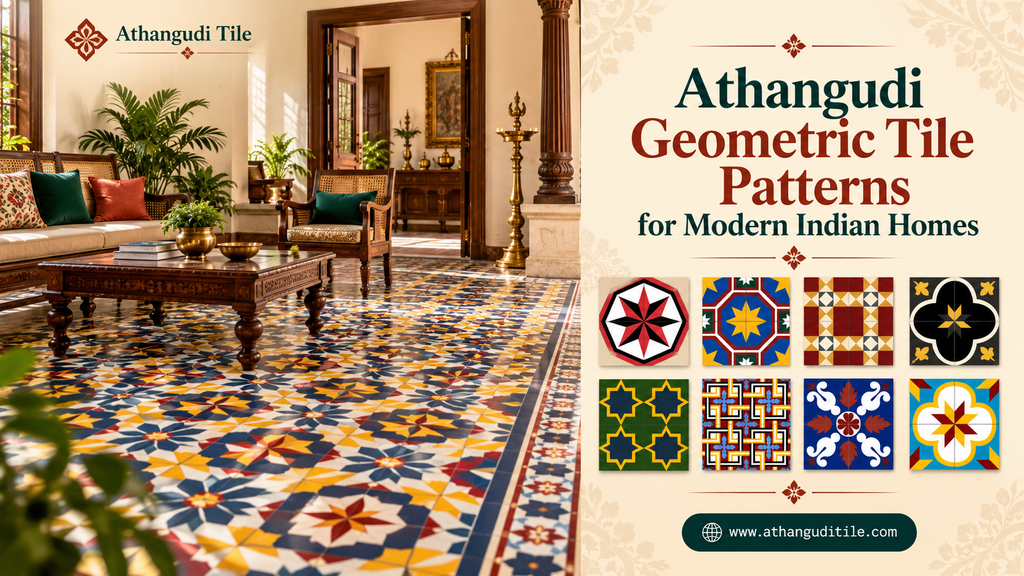
A beautiful house is more than furniture, paint colour, or accessories. The colour of the floor can change the look and atmosphere of the room. All your needs can be met just by changing the floor design. Athangudi Geometric Tile Patterns are a great way for homeowners who love Indian traditional style but wish to have modern interior designs for their space to give it a fresh look. Their vibrant colors, attractive shapes, and repetitive patterns can enhance the personality of a living room, hallways, entrances, and other spaces. With graphic designs, you use shapes like squares, diamonds, circles, and lines that create pattern balance. It can appear modern and simple or bold and classic, based on colour placement and choice. No matter if you are constructing a house or having your old home remodelled, the geometrical Athangudi tiles provide an abundance of stylistic options. Find out how to select the best patterns, pair colours, and create warm and inviting interiors. 1. What Makes Athangudi Geometric Tile Patterns Special? There is something special about geometric tiles. While a single tile can contain just a basic shape, when multiple tiles are placed together, they form a larger pattern and give the floor a unique look. Athangudi Geometric Tile Patterns bring this aesthetic together with the old-school craftsmanship of the Chettinad region of Tamil Nadu. They serve a decorative purpose, which makes them quite a fascinating fit for people who are looking for something fresh from the usual. The great thing about geometric patterns is the abundance of designs out there. Some of them are made up of tiny repeating shapes that give a uniform design. Others have high-contrast colours and sharp angles to really make an impact. You can find one that fits the decor of your home, rather than the other way around. They work equally well in traditional and contemporary interiors. For instance, a patterned floor will sit comfortably with solid timber furniture, warm lighting, and heritage-style accessories. It will also work in a contemporary living room with neutral walls and contemporary furnishings. For those who are into authentic Athangudi tiles for their interior decor, look at the pattern, colors, and arrangement of tiles before you select a design. Your choice of design can make your floor look very attractive. 2. Why Choose Geometric Tiles for Modern Indian Homes? Today, many Indian homes combine practicality with style. Owners want a cozy look without being too simple. Geometric floor tiles fit the bill. Imagine a lounge with coloured walls, a plain sofa, and some wooden furniture. In that setting, patterned, colourful geometric floor tiles can add detail and personality. It does not require extra decoration. Traditional Indian decor can also include floor tiles. Use handcrafted furniture, warm accessories, and wooden doors to make the design cosy. I think repeating shapes help to create order in a room. A well-thought-out design can unify a floor, or a contrasting border can define a room area. This is especially useful in open-plan homes that combine living and dining spaces. However, it is important to choose a pattern that suits the room size. A bold design may overwhelm a small room. Using motifs that’re smaller or a lighter colour mix can give a more subtle effect. Think about your furnishings, décor, lighting, wall colour, and the interior style you like before you choose your floor. The best floor must look good. Feel right. 3. Popular Athangudi Geometric Tile Design Ideas There are many ways to use geometric patterns in your home. You do not have to choose the boldest design to create an attractive interior. Sometimes, a simple repeating pattern can be just as effective. Diamond patterns are a good option if you want a floor that catches the eye. Their angled shapes create an interesting effect, particularly when contrasting colours are used together. Square patterns offer a structured appearance. They can suit rooms where you want the flooring to feel balanced and coordinated with the rest of the décor. Checkerboard designs use alternating colours to create a classic look. Depending on the colour combination, they can complement both traditional and contemporary interiors. Repeating geometric motifs can work well across larger floors and hallways. Their consistent arrangement creates visual rhythm and helps the flooring look connected. Geometric patterns with decorative borders can add a finished appearance to entrances and defined seating areas. The border can frame the central pattern and help distinguish the space. When comparing Athangudi tile designs, remember that the complete floor may look different from a single tile. Ask for samples or layout guidance so you can understand how the pattern will repeat across your room. You can also explore this Athangudi tile design collection for ideas that may suit your home’s interior style. 4. Create a Beautiful Living Room with Geometric Tiles The living room is often the heart of family life. It is where people unwind after a day, share moments, and greet visitors. A good choice of flooring can make this area feel cozy and welcoming. Athangudi Tiles for Home can bring colour and character to your living room when you pick the pattern. If you like styles, try pairing geometric tiles with wooden furniture, soft lighting, and handmade décor. These details go well with the tiles. Keep the space from feeling too full. For a look, pick a tile pattern that matches your sofa, curtains and wall shades. When the tiles have bright colours, keep the furniture simple and go for neutral walls. This helps balance the look. Don’t forget the size of the room. In a living room, a simpler tile design might feel more comfortable and open. In a living room, you can try bolder patterns or contrasting colours. Also think about how you’ll place your furniture before you decide on the tile layout. Big sofas and rugs cover parts of the floor, so plan the design around the areas that stay visible. If you are exploring Athangudi Tiles for Home, browse the Athangudi