
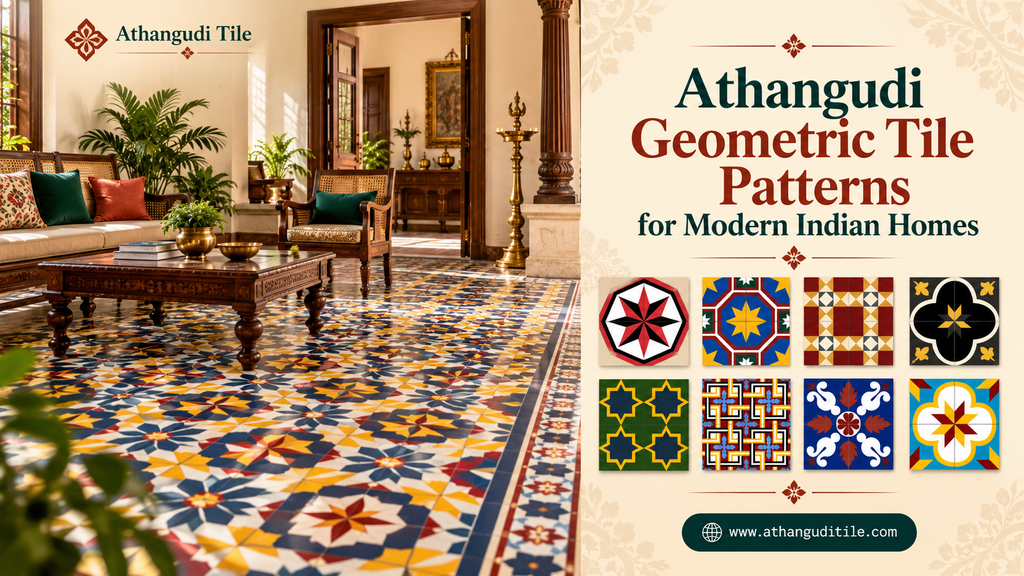
A beautiful house is more than furniture, paint colour, or accessories. The colour of the floor can change the look and atmosphere of the room. All your needs can be met just by changing the floor design.
Athangudi Geometric Tile Patterns are a great way for homeowners who love Indian traditional style but wish to have modern interior designs for their space to give it a fresh look. Their vibrant colors, attractive shapes, and repetitive patterns can enhance the personality of a living room, hallways, entrances, and other spaces.
With graphic designs, you use shapes like squares, diamonds, circles, and lines that create pattern balance. It can appear modern and simple or bold and classic, based on colour placement and choice.
No matter if you are constructing a house or having your old home remodelled, the geometrical Athangudi tiles provide an abundance of stylistic options. Find out how to select the best patterns, pair colours, and create warm and inviting interiors.
1. What Makes Athangudi Geometric Tile Patterns Special?
There is something special about geometric tiles. While a single tile can contain just a basic shape, when multiple tiles are placed together, they form a larger pattern and give the floor a unique look.
Athangudi Geometric Tile Patterns bring this aesthetic together with the old-school craftsmanship of the Chettinad region of Tamil Nadu. They serve a decorative purpose, which makes them quite a fascinating fit for people who are looking for something fresh from the usual.
The great thing about geometric patterns is the abundance of designs out there. Some of them are made up of tiny repeating shapes that give a uniform design. Others have high-contrast colours and sharp angles to really make an impact. You can find one that fits the decor of your home, rather than the other way around.
They work equally well in traditional and contemporary interiors. For instance, a patterned floor will sit comfortably with solid timber furniture, warm lighting, and heritage-style accessories. It will also work in a contemporary living room with neutral walls and contemporary furnishings.
For those who are into authentic Athangudi tiles for their interior decor, look at the pattern, colors, and arrangement of tiles before you select a design. Your choice of design can make your floor look very attractive.
2. Why Choose Geometric Tiles for Modern Indian Homes?
Today, many Indian homes combine practicality with style. Owners want a cozy look without being too simple. Geometric floor tiles fit the bill.
Imagine a lounge with coloured walls, a plain sofa, and some wooden furniture. In that setting, patterned, colourful geometric floor tiles can add detail and personality. It does not require extra decoration.
Traditional Indian decor can also include floor tiles. Use handcrafted furniture, warm accessories, and wooden doors to make the design cosy.
I think repeating shapes help to create order in a room. A well-thought-out design can unify a floor, or a contrasting border can define a room area. This is especially useful in open-plan homes that combine living and dining spaces.
However, it is important to choose a pattern that suits the room size. A bold design may overwhelm a small room. Using motifs that’re smaller or a lighter colour mix can give a more subtle effect.
Think about your furnishings, décor, lighting, wall colour, and the interior style you like before you choose your floor. The best floor must look good. Feel right.
3. Popular Athangudi Geometric Tile Design Ideas
There are many ways to use geometric patterns in your home. You do not have to choose the boldest design to create an attractive interior. Sometimes, a simple repeating pattern can be just as effective.
Diamond patterns are a good option if you want a floor that catches the eye. Their angled shapes create an interesting effect, particularly when contrasting colours are used together.
Square patterns offer a structured appearance. They can suit rooms where you want the flooring to feel balanced and coordinated with the rest of the décor.
Checkerboard designs use alternating colours to create a classic look. Depending on the colour combination, they can complement both traditional and contemporary interiors.
Repeating geometric motifs can work well across larger floors and hallways. Their consistent arrangement creates visual rhythm and helps the flooring look connected.
Geometric patterns with decorative borders can add a finished appearance to entrances and defined seating areas. The border can frame the central pattern and help distinguish the space.
When comparing Athangudi tile designs, remember that the complete floor may look different from a single tile. Ask for samples or layout guidance so you can understand how the pattern will repeat across your room.
You can also explore this Athangudi tile design collection for ideas that may suit your home’s interior style.
4. Create a Beautiful Living Room with Geometric Tiles
The living room is often the heart of family life. It is where people unwind after a day, share moments, and greet visitors. A good choice of flooring can make this area feel cozy and welcoming.
Athangudi Tiles for Home can bring colour and character to your living room when you pick the pattern.
If you like styles, try pairing geometric tiles with wooden furniture, soft lighting, and handmade décor. These details go well with the tiles. Keep the space from feeling too full.
For a look, pick a tile pattern that matches your sofa, curtains and wall shades. When the tiles have bright colours, keep the furniture simple and go for neutral walls. This helps balance the look.
Don’t forget the size of the room. In a living room, a simpler tile design might feel more comfortable and open. In a living room, you can try bolder patterns or contrasting colours.
Also think about how you’ll place your furniture before you decide on the tile layout. Big sofas and rugs cover parts of the floor, so plan the design around the areas that stay visible.
If you are exploring Athangudi Tiles for Home, browse the Athangudi home flooring collection for inspiration and ideas for your living space.
5. Use Geometric Tiles to Improve Entrances and Hallways
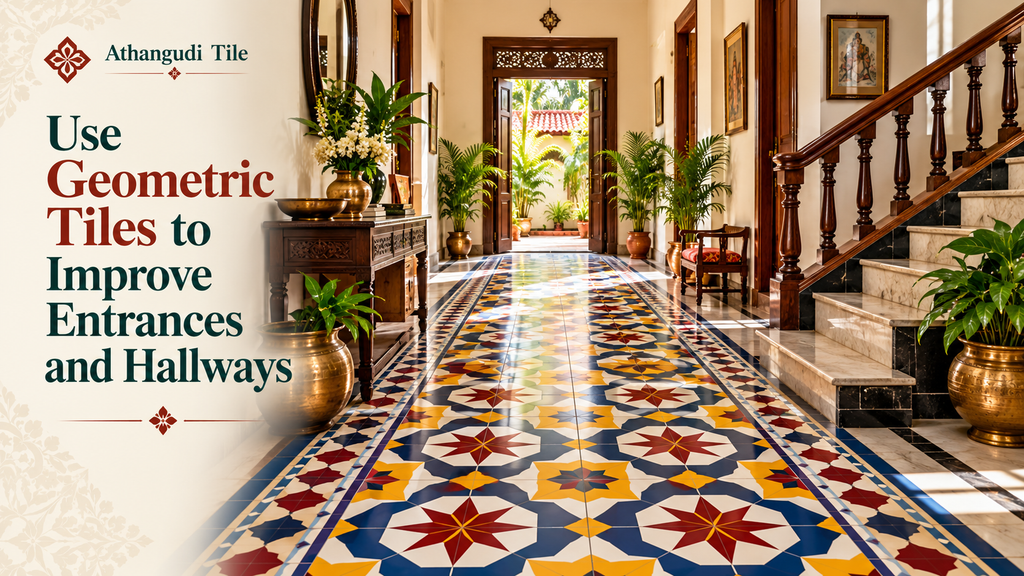
You have just one opportunity to make a good first impression, and it’s your home’s entryway. No matter how tiny your entryway may be, it will look that much warmer with a well-designed floor.
Decorate this space with colour and personality with a series of geometric tiles that do not need to be complemented with a lot of other accessories. Diamonds, checks, or borders are great styles depending on the size and configuration of the entrance.
For a traditional house, use geometric flooring along with a large wooden door and a warm light bulb. In a contemporary house, the wall can be plain, and only a little decoration is needed. The pattern on the tiles will be the highlight.
Patterned floors can also be used in hallways. A repeating pattern is ideal for this as you can use the same pattern in different rooms. Coordinated colours can also be used to unite areas.
But entrances and hallways are normally walking areas. Inform your supplier if the flooring you choose is suitable for the location, and the type of surface, installation, and cleaning that should be considered.
Precise measurements are necessary, too. Doorways, corners, and tight corners can cause alignment problems for geometric patterns. When you do your research of the room beforehand, you can create a floor that is uniform and also attractive.
Even a plain hallway can look stunning within your house when fitted correctly and with the perfect design.
6. Best Colour Combinations for Geometric Athangudi Tiles
Colour can completely change the appearance of a tile pattern. The same geometric design can feel traditional, modern, bold, or subtle depending on the shades you choose.
Blue and white can create a fresh and balanced look. This combination may suit interiors with light walls, natural materials, and simple furniture.
Red and cream can bring warmth to a room. These shades often complement traditional Indian décor, wooden furniture, and warm lighting.
Green and beige offer a softer, nature-inspired appearance. They can work well with earthy accessories and wooden elements.
Black and white create a strong contrast. This combination may suit modern interiors where the furniture and walls are relatively simple.
Yellow and earthy shades can add warmth and brightness to an entrance or living space.
Multicoloured geometric patterns are worth considering if you enjoy vibrant interiors. To keep the room balanced, choose simpler colours for large furniture items, curtains, and wall finishes.
Before deciding, compare the tile samples with your existing décor. Colours may look different under natural light, warm indoor lighting, and showroom lighting.
There is no single colour combination that suits every home. Choose shades that complement your surroundings and create the atmosphere you want.
7. How to Combine Traditional Tiles with Modern Interior Design
You do not need a completely traditional home to enjoy the charm of Athangudi tiles. Geometric patterns can look equally attractive in contemporary spaces when the surrounding décor is planned thoughtfully.
One simple approach is to let the flooring provide most of the pattern and colour. Plain walls, simple curtains, and clean furniture lines can help create a balanced appearance.
Natural materials can also work well with geometric tiles. Wooden furniture, cotton fabrics, woven accessories, and selected metal details can complement the traditional character of the floor without making the room feel old-fashioned.
Lighting is another important detail. Natural daylight can highlight the shapes and colours of the tiles, while warm indoor lighting can make the room feel cosy in the evening.
If you are unsure about using patterned tiles across an entire room, consider introducing them in a smaller area. An entrance or a defined seating space can provide a decorative feature while allowing other rooms to remain simple.
It is also worth thinking about how the flooring connects with adjoining rooms. Coordinated colours and planned transitions can help your home feel consistent, even if different patterns are used in different spaces.
“A beautiful home is not about following every trend. It is about choosing details that feel right for the people who live there.”
The aim is to create an interior that reflects your taste. Traditional craftsmanship and modern design can work together when the patterns, colours, and furnishings complement one another.
8. Easy Maintenance Tips for Athangudi Geometric Tiles
Flooring is part of everyday life, so it is important to understand how to care for it before making a purchase. Regular cleaning can help keep tiles looking attractive, but the correct method depends on the specific product and finish.
Start by sweeping the floor or removing loose dirt with a suitable vacuum attachment. For routine cleaning, use a damp mop and a cleaning solution recommended by your tile supplier.
Avoid abrasive brushes and harsh chemicals unless the manufacturer confirms that they are suitable. Some products may affect the surface or appearance of particular tile finishes.
If a spill occurs, clean it promptly using an appropriate method. For stubborn marks, ask the supplier for advice rather than experimenting with strong cleaning products.
Installation quality also matters. The surface underneath the tiles should be properly prepared, and the installer should pay attention to pattern alignment. With geometric designs, small alignment problems can become noticeable across a large area.
If you plan to install tiles in a location exposed to frequent moisture, confirm that the selected product is suitable for that environment.
For additional guidance, explore the available Athangudi tile installation and related services and discuss your project’s requirements with the supplier.
9. What to Consider Before Buying Athangudi Geometric Tiles
Spotting a pattern is great fun, but by planning, you can make your purchase process easier.
Before you start, try to calculate the surface on which you will lay the tiles. Speak with your supplier to determine how many you will need and factor in some spare tiles, according to your pattern and cutting needs, and probably repairs in the future.
The basis of all geometrics is the grid that holds the shapes in place. How will those shapes line up at corners and doorways, and where rooms join?
Ordering samples can be checked before purchase when it is permitted. The image of the design may seem nice, but it can be showcased differently under your home lighting system. Therefore, make a comparison with the colour of your furniture and walls.
Ask about the product specs, installation details, surface finish, cleaning, and usage on site. This is of particular importance when the flooring will be exposed to moisture or will be walked upon excessively.
Delivery planning: Coordinate with your contractor or installer to make sure your tiles show up right when you need them.
If you are comparing Athangudi tile suppliers, look for clear information about available designs, ordering, delivery, and product care. Choosing carefully can help avoid unnecessary delays and make the project easier to manage.
10. Bring Home the Beauty of Athangudi Geometric Tile Patterns
Your flooring can be more than a surface. It can bring harmony to your home’s colour, furniture, and adornments while giving every room its individual personality.
Athangudi Geometric Tile Patterns provide an easy method to infuse Indian traditional value into contemporary abodes. You can choose from a diamond design, checkerboard motifs, colourful repetitive patterns, and more.
The best design isn’t always the biggest or the most dramatic, the loudest or the most colourful. It’s the design that fits your room and matches your furniture, and feels right to you.
Monitor all designs; think about your most popular colour and layout before setup. Inquire your merchandise well, fashioniness and in what way to be able to take care of it.
If you are planning a new home or renovating your existing space, explore our Athangudi Tiles for Home options and browse the available designs.
For questions about ordering, suitable patterns, or your flooring requirements, enquire about Athangudi tiles for your home project.
With thoughtful planning and the right design, you can create a home that feels welcoming, distinctive, and truly your own.
1. What are Athangudi Geometric Tile Patterns?
Athangudi Geometric Tile Patterns use shapes such as squares, diamonds, circles, and repeating lines to create decorative flooring inspired by traditional Indian design.
2. Are geometric Athangudi tiles suitable for modern homes?
Yes. They can complement modern interiors when paired with simple furniture, coordinated colours, and uncluttered décor.
3. Where can geometric Athangudi tiles be used?
Depending on the specific product’s suitability, they can be considered for living rooms, entrances, hallways, bedrooms, and other interior spaces.
4. Which colours work best with geometric tile patterns?
Blue and white, red and cream, green and beige, black and white, and multicoloured combinations are all options. Choose shades that suit your room’s lighting and décor.
5. How do you maintain Athangudi geometric tiles?
Sweep regularly, clean with a suitable damp mop, and follow the supplier’s care instructions. Avoid harsh chemicals and abrasive tools unless they are approved for your tiles.
6. How can I choose the right geometric tile pattern?
Consider your room size, lighting, furniture, and personal style. Review samples and plan the layout before placing your order.
7. Where can I explore Athangudi tile designs?
Explore the Athangudi geometric and decorative tile designs to find inspiration for your home.