
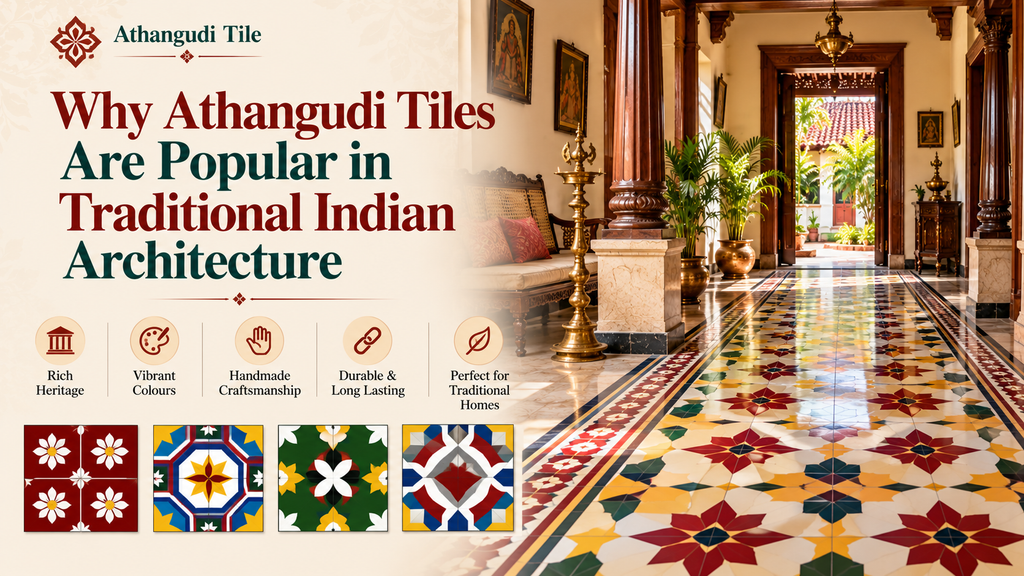
Indian home architecture has consistently embraced a lovely harmony between expression, culture, and life. Wooden doors with intricate carvings, vibrant courtyards, and decorated floors all narrate tales of the architects who created these beautiful spaces. Of all the unique components that come together to make a traditional house special, Athangudi tiles are one of the most cherished. With a rich colour palette, the best patterns, and artisanal character, they make each house unique.
Tiles made of Athangudi are famous for their local colour. Athangudi tiles from the Chettinad region of Tamil Nadu have earned a considerable following among those who love interior design with a traditional South Indian touch. More than the style, they have caught the collective imagination because every tile encompasses a tradition.
A lot of these traditional Athangudi tiles are now being used in heritage renovations, upscale modern homes and apartments, boutique hotels, and stylish commercial spaces. Athangudi tiles work well in both old and new buildings and are perfect for anyone who loves the look of real materials and thoughtful design.
1. The Rich Heritage Behind Traditional Athangudi Tiles
The great legacy of traditional Athangudi tiles plays a role in the rich architectural history of the Chettinad region in Tamil Nadu. Their large, old family homes—magnificent structures with huge grounds, detailed woodwork, and beautiful interiors—are a fundamental regional influence. The architecture of these houses was based on symmetry and intricacy.
Chettinad’s still-popular handmade cement tiles, which made their way into Athangudi and beyond, started creating their own unique cement tiles, which slowly made inroads into Chettinad homes and other indigenous structures. The tiles proved to be a welcome addition for injecting colour and ornamentation into floors, while remaining, nonetheless, in sync with traditional skills. One could see floral patterns, geometric formations, and well-balanced borders lining the floors of these homes.
The most special thing about the heritage is that it is made by human craftsmanship. Instead of copying pattern tiles on a large scale, the traditional methods use moulds, colour combinations, and labour-intensive methods in creating the tiles. The resulting products have a charming quality that is strongly human in nature.
If the house folk is craving true authenticity, then Athangudi tiles are not merely a design element. They are a physical reminder of the architectural history of Tamil Nadu. Putting them in a project lets the owners recognize local craftsmanship.
2. How Chettinad Architecture Influenced Athangudi Tile Designs
Chettinad architecture is characterized by open-plan living with spacious layouts, long hallways, soaring ceilings, massive atriums, and lavishly carved interiors. This type of architecture incorporates the influences of imported oriental decorative motifs, as well as the indigenous architecture in the form of village farmhouses. This fusion of elements created a unique style, without being out of touch with life itself.
It is also the flooring that embodies this architectural character. Patterned tiles in a large Chettinad house link rooms visually and define each space’s character, while allowing one to flow into the next. A thoughtfully designed floor can lead the eye down a hall, frame a court, or match the intricate carving in a doorway.
And traditional Athangudi tiles are extremely suitable for such versatile environments because they can be designed to suit any architectural arrangement. Repetitive patterns establish rhythm across vast expanses of flooring, while borders delineate transitions. The flooring becomes an integral part of the architecture, not an afterthought.
Yet, this connection between the scheme of tiles and the planning of the building persists to this day. A contemporary residence which has an open-plan living space, a courtyard in the centre or a long passage at the entrance can now take inspiration from Chettinad interior schemes without the attempt to imitate a traditional building. A hint of tradition, through selective tiled flooring, can be brought in.
What this means is a delicate compromise of traditional design and modern-day comfort, and flooring plays the integral role of bridging that gap.
3. The Beauty of Traditional Athangudi Tile Patterns and Colours
One of the big reasons behind Athangudi tiles’ popularity is their mind-boggling array of patterns and colour combinations. Instead of a simple floor that acts as the background to our lives, Athangudi tiles can take centre stage in the form of intricate patterns, geometric shapes, or border features, and so on.
If your home has a comfortable and cosy vibe, then floral motifs may be what you’re looking for. Their smooth contours are great at neutralising the harsh lines of a space and are amazing when paired with wooden furniture, old brass fittings, and fabric textiles. If you want to give your home a more modern look, you can go for geometric designs.
Let’s start with colour, it also plays an important role in the end. Using a mixture of red, green, yellow, blue, cream or black could make the space a vibrant traditional space or a more subtle reference to vintage style. The ultimate effect will depend on the lighting, wall colours and furniture used in the room.
Borders and repeating motifs are another way to individualise a floor. Borders can be used to border a room, and repeats can be used to create flow between adjoining rooms.
Looking at your whole interior before deciding which Athangudi tile style you want for your home is another way to help guide you in your decision. Where possible, the best combinations are those that echo the structure of the building, add visual harmony, and capture your individuality.
4. Handmade Craftsmanship That Makes Every Tile Special
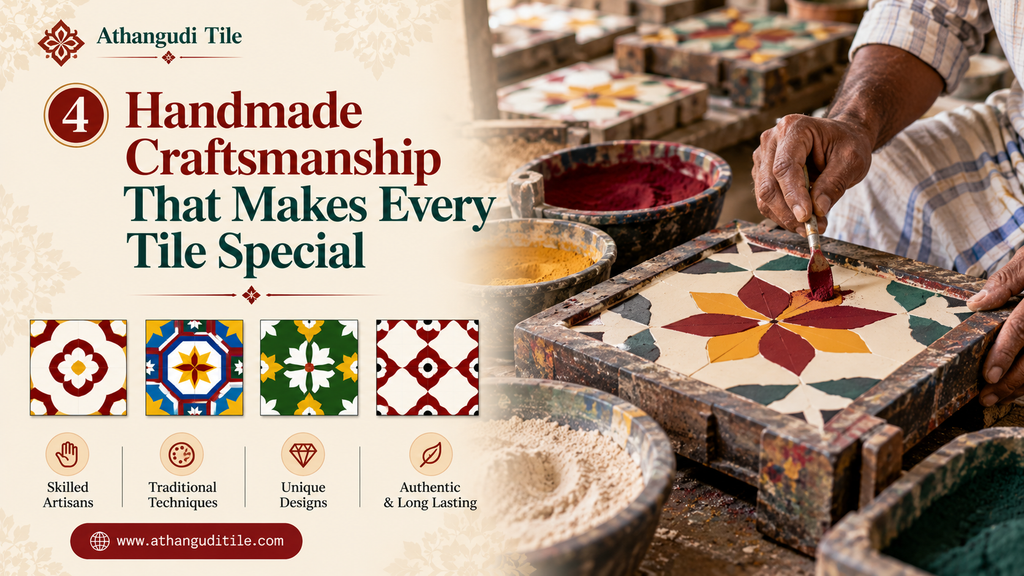
What’s special about the Athangudi tiles is not just the designs but the execution. Before laying Athangudi tiles, artisans carefully prepare each one by mixing colours, forming the surface, shaping the tile, and allowing it to dry. This traditional process takes time, patience, and skill.
The colours and patterns on handmade Athangudi tiles are incorporated into the tile rather than added on like a digital print. The outcome is a truly unique decorative finish with texture and personality that would be hard to achieve via other processes. Artisans carefully hand-finish each tile, giving every piece its own unique character and slight variations.
That singularity is part of why so many homeowners and designers love Athangudi tiles. Today, many interiors use similar panels and finishes, but handmade surfaces give each room a more personal and distinctive feel. It conveys the idea that someone put together this house, instead of just finishing it.
But that is not to say that handmade means the absolute same across all tiles or usable for everything. Buyers should always check dimensions, finish, quality control, installation considerations, and range of expected variation with their supplier before placing an order. Correct installation is also important to the final look.
Choosing Athangudi tiles for your flooring celebrates the skill and dedication of traditional artisans. Such a surface showcases traditional design and the skill that goes into its execution.
5. Why Traditional Athangudi Tiles Suit Indian Homes So Well
Indian homes have to be both stunning and practical. People use these spaces to chat, eat, celebrate, and spend time together, so the flooring needs to support all these activities while also enhancing the look and feel of the space.
The tiles’ decorative features suit regional-architecture homes. Its designs will suit wooden doors, intricately carved furniture, the decorative pillars, the traditional cloth, and nature-based finishes. They blend into the interiors of heritage-inspired houses to give the feeling of architecture and finished interiors flowing together.
You can also use colour to add character to otherwise neutral spaces. A plain, decorated room with plain walls and a few carefully chosen pieces of furniture can have character added to it by using patterned tiles as a flooring material. Conversely, these tiles can simply enhance a more traditional style interior by echoing already existing decorations.
The best tile for a given home depends on the purpose of use for an area and the place of installation. For tiled floors, before buying the tiles, always inform the supplier and installer of the factors of moisture exposure, surface finish, cleaning, and skid resistance.
Finally, a comment on whether the flooring will look good as the furniture and other furnishings change. A good traditional pattern will adapt to the changes in decor and furnishings, enabling the interior to evolve.
If you prefer something more creative than wall-to-wall flooring, use Athangudi tiles to bring a touch of Indian craftsmanship into the most frequently used spaces in your home.
6. Bringing Athangudi Tiles into Modern Homes
It isn’t about an old building; homeowners now want things that introduce some of nature, culture, and a handmade touch in their homes. Traditional Athangudi tiles will go perfectly because patterns can be emphasized on simple furniture and architecture.
The zig-zag pattern on the floor is the showcase piece in this contemporary living room, with a clean and uncluttered decor throughout the rest of the room. When you choose neutral wall colours, comfortable furniture, and minimal décor, the tile colours stand out beautifully.
Athangudi tiles for entrance: The one way in which a home leaves its impression, at the outset, is the way the entrance is made. Pick a distinctive pattern for the floor, and one that will help communicate a visual concept for the rest of the house. In a yard, the tiles come into their own in the air, sunlight and greenery.
You can use them throughout the home or in selected areas to create subtle decorative accents. One display in an entry, a jogged band across a hallway, a clearly delineated seating area, for example, all contribute historic interest without disrupting the present-day design.
The key is to stay in balance. If you have a few bold colours or a complex flooring pattern, then more muted furniture and wall finishes will contribute to the space feeling balanced. And, if you have a very plain floor tile pattern, then try your furniture and décor in a more complex pattern.
By bleding using the craftsmen technology and modern planning can help the home owners to create new develop within the interior which will able to keep is pepls.
7. Using Traditional Athangudi Tiles in Kitchens, Courtyards, and Corridors
Rooms in various parts of your house will vary in how they provide use of Athangudi tiles. A kitchen, a courtyard, and a corridor are interesting places because the shape, the light, and the movement here every day will affect the pattern.
A patterned surface will add warmth and character to the room of cabinets, worktops and appliances. Classic floral or geometric designs sit well with wooden cabinets, neutral work surfaces and simpler wall finishes. Look at spills, cleaning needs, damp areas, and whether the surface finish is appropriate before laying tiles in a kitchen.
There is an allure to courtyard flooring, as many South Indian houses open up to beautiful courtyards that resemble a mini-garden in the middle of the house. A courtyard floor can be the perfect setting for your family to unwind, and an added feature to a house plan. Use the tiles that are able to endure the outdoor environment (in addition to outdoor drainage and wall finish).
Paths and corridors may use repeated patterns that suggest a feeling of movement. Borders can delineate the edges of a passage, while a continuous motif can link two rooms.
Choose Athangudi tiles based on the purpose of the space rather than appearance alone. When you match the design, installation, and maintenance requirements, these tiles can enhance the beauty of your home and strengthen its architectural flow.
8. Maintaining the Timeless Character of Athangudi Tile Flooring
Of course, homeowners should treat a beautiful floor with care, especially when skilled artisans have crafted it by hand. With maintenance, an Athangudi floor will look great, and the pattern will remain part of your house for years.
1. Regular Cleaning and Daily Care
Begin by always following the cleaning and maintenance guidelines supplied by the installer or manufacturer. Removal of dust or lightly sweeping soil helps maintain a clean surface by wiping or mopping (we recommend using a cleaning product that is compatible with your installed tiles with a soft mop or cloth). Do not scrub aggressively unless recommended as suitable for your tiles.
2. Protecting Tiles from Everyday Damage
Domestic: Prompt cleaning of spills, especially in kitchens and dining rooms. Use of pads: Protect and have pads available for furniture legs as required. Spare tiles: Keep one or two spare tiles – matching pattern -available to replace broken ones where practical.
3. The Importance of Proper Installation
The actual installation can also influence the durability of the product. Because it’s just as crucial as daily care, installation—such as the preparation of the adhesive type used, layout, and finishing—can all play a role in longevity. For instance, when installing tiles in damp or high-traffic areas, choose an installation method that suits those conditions. Substrate preparation. The actual installation can also influence the durability of the product. Because it’s just as crucial as daily care, installation—such as substrate preparation, adhesive type, layout, and finishing—can all play a role in longevity. For instance, when installing tiles in damp or high-traffic areas, choose an installation method that suits those conditions.
4. Preserving the Beauty of Handmade Tiles
Mandapams are decorative attractions. Handmade surfaces are distinctive with their imperfections and are long-lasting if the product quality, installation, and usage/maintenance are up to the mark.
As long as the floor receives the needed care and attention, it might be able to continue to create a home in the future, and also serve as a peculiar form of design in Indian homes.
9. Why Athangudi Tiles Continue to Matter in Indian Architecture
Architecture goes beyond just building things that are beautiful. It is also about holding onto memories, building cultural identity, and designing environments that connect to those who are in them. Traditional Athangudi tiles combine these together in a craft that has stood the test of time in the world of interior design.
Located in the cultural context of Chettinad style, their ethnic association is complete, but their personalized patterns open up space for design. They will set off the voluminous spaces of the ancestors’ mansion as perfectly as they will bring flavor to the apartment or villa.
For architects and interior designers, these tiles present an exciting opportunity to incorporate local techniques into contemporary projects. For homeowners, the tiles offer a solution to bland and homogenized flooring and also the chance to select a material with a meaningful history. The tiles’ colours and patterns can make a room feel unique, and the traditional provenance ties the interior to its wider architectural context.
There is also a shift in demand for homewares and treatments that consider the artisans and artisanship behind our homes and homescapes. The shift towards traditional tiles not only showcases them and keeps regional crafts alive, but it also keeps demand ongoing, as long as you buy right.
What really makes Athangudi tiles special is how they blend the past with the present. They show that a classic style can still fit into modern life.
Conclusion: Celebrate Indian Heritage with Traditional Athangudi Tiles
Traditional Athangudi tiles continue to be in vogue due to the combination of colourful design, rustic craftsmanship, and strong association with Chettinad architectural history. Be it floral designs, geometric patterns, border designs, or modern usage, there are many ways to showcase the tiles and add character to Indian homes.
A well-selected Athangudi tile design, whether for an existing house being refurbished, a new villa, or adding a special touch to an existing apartment, can make for interiors that appear natural and personal. What is more important is getting the right patterns, knowing what is needed for installation, and choosing the products that are appropriate both in form and function.
At AthangudiTile.com, explore Athangudi tile designs for inspiration and discover possibilities for your next interior project. Bring the beauty of traditional craftsmanship into your home and create spaces that celebrate India’s architectural heritage while reflecting your own style.
Frequently Asked Questions
1. What are traditional Athangudi tiles?
Traditional Athangudi tiles are handmade decorative cement tiles associated with Athangudi in Tamil Nadu’s Chettinad region. They are known for their distinctive colours, geometric arrangements, floral motifs, and handcrafted production methods.
2. Why are Athangudi tiles popular in traditional Indian architecture?
They complement traditional architectural features such as courtyards, wooden doors, decorative pillars, and spacious corridors. Their patterns and colours help create visually rich interiors connected to regional craftsmanship.
3. Can Athangudi tiles be used in modern homes?
Yes. They can be incorporated into modern living rooms, entrance areas, kitchens, and selected feature spaces. Pairing patterned flooring with simple furniture and neutral finishes can create a balanced contemporary interior.
4. Are Athangudi tiles handmade?
Traditional Athangudi tiles are produced using handmade methods involving moulds and carefully arranged coloured materials. Buyers should confirm the production method and product specifications with their supplier.
5. How should Athangudi tiles be maintained?
Follow the manufacturer’s care instructions, clean the surface regularly with suitable products, remove spills promptly, and avoid harsh or abrasive cleaners unless recommended. Proper installation is also essential for long-term performance.