
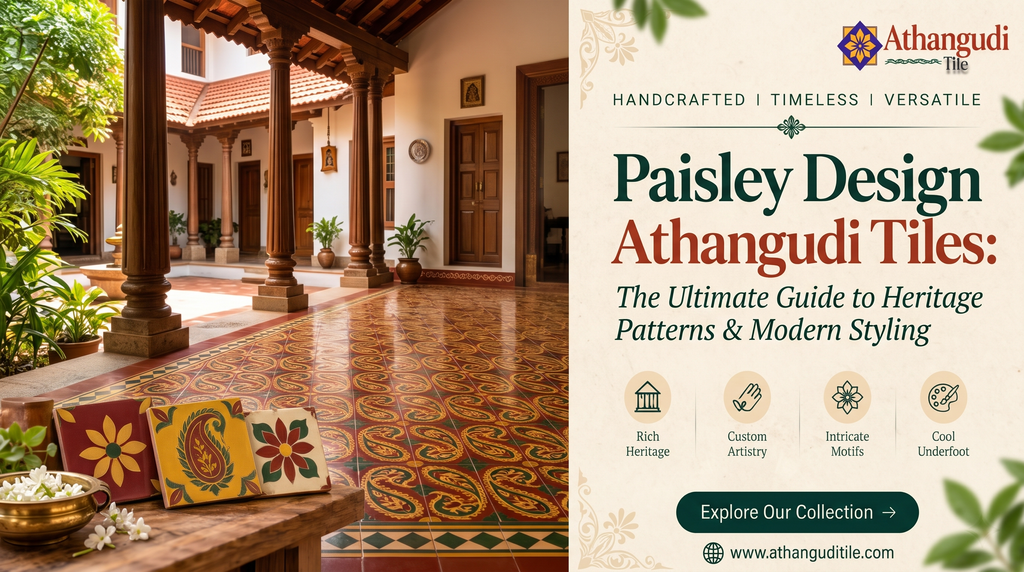
A handcrafted Paisley design Athangudi tile is more than a walking surface; it tells a story underfoot. Geometric grids and floral medallions offer crisp formality and garden whimsy. However, the paisley Athangudi tile is the most fluid and richly decorated design of all.
Locals refer to this teardrop design as the Manga (mango) or Kalka motif. In fact, it marries time-honoured tradition with modern architectural elegance. It brings rhythm to any floor, transforming ordinary rooms into heritage-rich spaces.
Whether you are restoring an ancestral verandah or styling a modern city apartment, this guide helps you. Specifically, it explores the history, artisan process, and decor ideas behind paisley Athangudi tiles.
The Heritage Behind the Paisley (Manga) Motif
The paisley motif travelled through cultures for centuries, starting as a Persian boteh and appearing on Kashmiri shawls. Later, Chettinad artisans in Tamil Nadu adapted the curve. They turned it into an iconic regional art form.
To Chettiar families, this motif represents the raw mango—a symbol of fertility, abundance, and prosperity. These curving cement patterns soften the rigid lines of square floor grids. Therefore, using paisley tiles in your home celebrates a rich history of cultural art.
When transformed into these gentle, undulating hand-cast cement tile motifs, the motif has given Chettinad tile designs a visual rhythm that plays against the strict, orthogonal grid of the square tiled floor. Your use of this motif at home can, therefore, be a nod to this long history of cross-cultural influences, intertwined with the story of this specific form’s evolution.
How Paisley Athangudi Tiles Are Handcrafted
Factory machines stamp vitrified tiles on automated assembly lines. In contrast, skilled artisans handcraft every paisley Athangudi tile. First, craftsmen shape a metal stencil into the curved paisley outline. They press this frame flat against a spotless sheet of glass.
Artisans hand-ladle liquid cement blended with mineral oxides into each stencil cell. Once the pattern fills, the artisan lifts the metal frame straight up. Next, workers sprinkle dry river sand and cement over the wet pattern to absorb moisture and build density.
After drying the tiles in the sun for two days, workers submerge them in water tanks for 8 to 15 days. Unlike kiln-fired ceramics, these water-cured tiles stay naturally cool underfoot. Furthermore, this hand-poured process ensures that every single tile remains unique.
4 Creative Ways to Style Paisley Design Tiles in Modern Homes
Since the paisley curve is so visually striking, you can feel free to use it as a broad pattern or a smaller accent. These four ideas should inspire you to incorporate this cultural pattern into your modern lifestyle:
1. The Living Room “Tile Carpet”
In an open-plan living space, a whole wall of busy, floral motifs can be too much. Get the look by laying 6 to 10 rows of a mosaic of paisley tiles like this one in the main seating or coffee table area to create a decorative “rug.” Lead this rug into the rest of the space by framing it with a single stronger-toned border and skirting Athangudi tile and top-and-tailing with plain terracotta or cement tiles.
2. Traditional Pooja Rooms and Prayer Corners
The positive symbolism of the mango shape would make paisley a powerful option for pooja rooms and other spiritual chambers. Rustic red and turmeric yellow oxide hues evoke a sense of an authentic sacred room and flow elegantly with brass lamps, oil diyas, and carved teakwood doors. This detailed design lends sacred geometry and warmth to these contemplative areas.
3. Breezy Verandahs & Courtyards
Paisleys are supposed to follow or imitate natural forms of botanical plants, making them suitable for semi-outdoor courtyards, garden walkways, and breezy verandahs (thinnai). The tiles remain cool during hot summer days and warm up just the right amount to be slip-resistant under your feet.
4. Statement Kitchen Backsplashes & Wall Borders
Though more than just a tile floor, these Athangudi chips work as a wonderful vertical detail. A row or two of the repeating (in an extremely repetitive pattern) miniature paisley tiles along a blank slate behind a traditional kitchen backsplash, vanity mirror in a bathroom, or wainscot in the dining room adds instant architectural detail. Subversive and impactful.
“From Hand-Cast Stencils to Grand Modern Interiors, Paisley Athangudi Tiles Weave Timeless Craftsmanship and the Rich Heritage of Chettinad into the Heart of Your Home.”
Pattern Comparison: Choosing the Right Design
Selecting between signature collections depends on your room’s proportions, natural lighting, and overall architectural style:
| Signature Design | Visual Impression | Ideal Placement | Complementary Furniture |
| Paisley | Fluid, ornate, regal, dynamic | Living room rugs, focal borders, pooja rooms | Antique teak, cane, solid brass |
| Floral | Balanced, classic, welcoming | Full bedroom floors, indoor courtyards | Traditional wooden woodwork |
| Geometry | Structured, modern, rhythmic | Open dining areas, contemporary hallways | Mid-century modern, metal accents |
| Border & Skirting | Neat, defining, protective | Perimeter framing, step risers, wall trims | Compatible with all flooring bases |
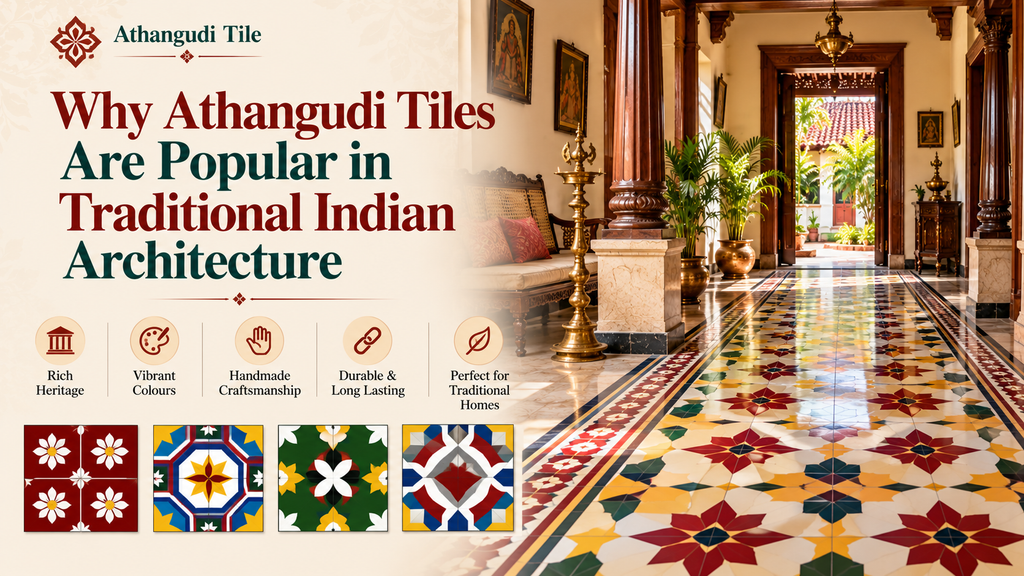
Essential Care & Maintenance Tips
Since they are handmade, little maintenance is necessary to allow our cement tiles to maintain their shine and last for decades to come. To begin with, never use any strong chemical acids, bleaching agents or store-bought abrasives to clean your cement tiles, as these will etch away the surface of the natural mineral oxide and will cause the colours to fade.
All that you need for daily cleaning is a clean mop and warm plain water. For everyday cleaning and to add a little extra shine to bring out the vibrancy of the colours, in Athangudi tile maintenance practices you may add a few drops of coconut or linseed oil to the mop water once in a while. The traditional Athangudi method of maintaining and shining the floor is ‘feeding’ the cement so the characteristic sheen remains – natural burning from traffic creates an even smoother surface that reveals more character.
Frequently Asked Questions
Can I get custom colours for paisley design Athangudi tiles?
Yes! As every tile is hand-poured into a hand-cast stencil, you can choose the mineral oxide colour combination for your place. They are available in historic heritage colours (red, yellow, black) or a more up-to-date pastel and monochrome colour palette (grey, olive green, cream) to complement your interior palette or introduce a period pattern into a modern colour scheme.
What is the regular size of a paisley tile?
Common floor tiles are produced in an 8×8 inches size or 10×10 inches size – with a thickness of around 15mm – 20mm. Border and skirting strips with a continuous pattern of tiny paisleys can also be made in narrower, customised widths to fit the dimensions and ramping of your rooms.
Are paisley cement tiles slippery for seniors or children?
No, they are very slip-resistant. Even though they have a silky smooth surface finish created by the glass plate curing method, natural cement tiles have excellent grip compared to polished vitrified tiles or glazed porcelain. They are safe, long-lasting, and functional in busy families with young children and grandparents.
Bring Authentic Chettinad Artistry to Your Space
Whatever your purpose – be it a private home, cafe or hotel – handcrafted paisley tiles will inject warmth, character and long-lasting craftsmanship into your property. Designed to stand the test of time, they will be part of your home or business for decades.
Explore our Athangudi tile collection to see how these intricate designs can transform your next project.