
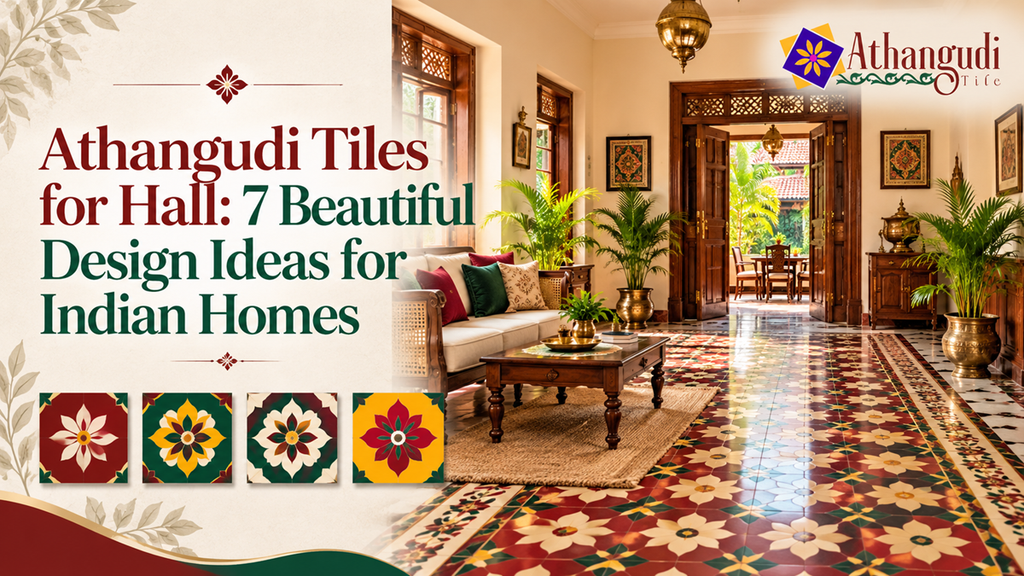
The hall is the most important space in an Indian house. You will meet your family members here, entertain your friends, and make all your daily memories here. The appropriate flooring can make this space more inviting, and Athangudi tiles for hall interiors provide a unique blend of classic appeal, pattern, and art.
These were traditionally designed in the Chettinad region of Tamil Nadu. They are handmade decorative Athangudi tiles with bright colors and designs, which can be used in a modern home as well as a traditional home, making them a fascinating choice of flooring.
Check out seven Athangudi tile design ideas for halls in this post, and know how to select the patterns and color combinations and the useful tips for the installation and care of Athangudi tiles.
Why Choose Athangudi Tiles for Hall Flooring?
Using these tiles can make a hall look unique without needing very complex decoration. Their textured glazed surface can also add color to the room and provide an attractive floor that contributes to the overall interior design.
As with every tile, the shape of each solid tile is a result of the traditional manufacturing process that gives each tile its distinct appearance. They come in geometric motifs as well as a range of florals, so there are options available to suit all styles of interiors. Good in homes with wood furnishings, simple wall finishes, and traditional accessories or modern furniture.
The size of the room, natural light entering, placement of the furniture, and the natural color scheme all help you choose the appropriate Athangudi flooring tile for your hall. It can make your home more welcoming and well-proportioned.
1. Traditional Athangudi Tile Patterns for a Classic Hall
Patterned Athangudi tiles are suitable for homeowners who prefer a traditional decor theme and those who wish to incorporate a traditional-style interior. Try using floral designs, balanced geometric shapes, and borders to give your hall some personality and reflect the creative vibe of Chettinad.
This style is often found in Indian décor, such as motifs in brown and red along with cream, yellow, green, or blue in the case of a more subdued color scheme. Against wooden doorways, wooden furniture carved from traditional bronzes.
Use the floor as your dominant design element—if you want to keep the overall design simple, allow the floor to be the primary eye-catching feature. Plain wall colours, minimal furniture, and carefully considered ornamentation will help you to ensure you do not create too much visual crowding in your entrance hall.
2. Red and Cream Athangudi Tiles for a Warm Interior
Red and cream make a nice color scheme for a hall because they are both warm and light, so it is soft but not too bright. Cream provides contrast to make the pattern visible, and red adds depth.
Red and cream Athangudi tiles would work well in traditional Indian aesthetics, along with warm-colored accessories and home furniture. These tiles can also be used in transitional rooms, where homeowners wish to team legacy flooring with modern furniture.
Walls in cream, beige, or another light neutral color will give a combined effect, and you might want to complement the design with warm-toned furnishings and lightbulb colors. To ensure you’re happy with your selection before going ahead, look at a sample to see how it appears under natural light, as this can impact how the colors reflect.
3. Blue and White Athangudi Tiles for a Fresh Hall Design
Mix blue and white Athangudi tiles to keep it cool and fresh. Depending on the pattern and tone of this combination, it can be very traditional-looking, quite contemporary, or somewhere in the middle of the two.
The tiles go well with the white walls, pale neutral furniture, and simple accessories. If your hall gets plenty of light, a blue-and-white floor is a decorative touch that won’t create heaviness.
The combinations of floor colors should also be considered in relation to curtains, cushions, furniture finishes, and adjoining rooms for the most effective result. Where the hall is directly connected to a dining room or sitting room, use the same one or two colors throughout these rooms.
4. Athangudi Tiles for Small Halls
Selecting Athangudi tiles for a small hall in your house has several considerations, mainly the scale of the design, color contrast, and the amount of furniture placed in a small space. A decorated floor can be appealing in a small room, but too busy a design will clash with other visual elements.
Think softer backgrounds, moderate contrast, and patterns that can continue to be appreciated across the floor space that’s available. A single flooring pattern running throughout the length of your hall can also help make it seem more cohesive.
Maintain your surrounding walls as minimalist, and avoid large furniture to fill every corner. Use the natural space with mirrors and light to enhance the design. When shopping for tiles, experiment with mock-ups of layouts that show a consistent pattern around doorways, corners, and fixed furniture.
5. Athangudi Floor Tiles for Spacious Halls
More space to be creative: larger rooms open up design possibilities by using decorative flooring as the room’s focal point. Larger areas of flooring allow for aggressive geometric patterns, detailed floral designs, or the use of field tiles with decorative borders.
For a unified appearance, utilize one pattern to set the major seating location or establish a decorative border around the boundary. Layouts need to correspond to the proportions of the room and furnishings—they should not seem like a random patchwork of styles placed on the flooring.
For large halls, the use of color needs to be particularly considered. Tile colors should complement the walls, doors, furniture, and lighting choices to give the hall an overall composition and not give the impression of a space that is empty or broken up.
6. Minimalist Hall Interiors with Athangudi Tiles
I find that Athangudi tiles work well in decor if you choose the right design. I like to mix Athangudi tiles with furniture, bare walls, and a limited color palette to achieve a simple look.
Likewise, I suggest selecting a pattern of Athangudi tiles with one or two colours or a geometric design that works with the features of the room. Likewise, I have noticed that neutral walls and simple furniture leave Athangudi tiles to do the talking.
For instance, I have seen a floor of Athangudi tiles matched with a plain sofa, a piece of wood for a coffee table, understated lighting, and some select accessories. It incorporates craftsmanship but in a contemporary and tidy way.
For more inspiration, explore our Athangudi tile designs and flooring ideas.
7. Athangudi Tiles with Wooden Furniture
Wooden furniture and Athangudi flooring can make a perfect combination of decorative detail and natural elements. Combining natural wood grain with the earthy look of colored or patterned tiles works well to get this effect.
If you have dark wood furniture, then use tile patterns with a lighter background or contrasting colours to keep the room from feeling overweighted. Light wood finishes will work with muted patterns as well as those with a little more colour.
If you want to see the patterns on the tiles, don’t fill the whole floor with accessories or cover every spot with rugs. Minimize the accessories and orient the furniture for function. The hall can be warm, inviting, and cohesive.
How to Choose the Best Athangudi Tiles for Your Hall
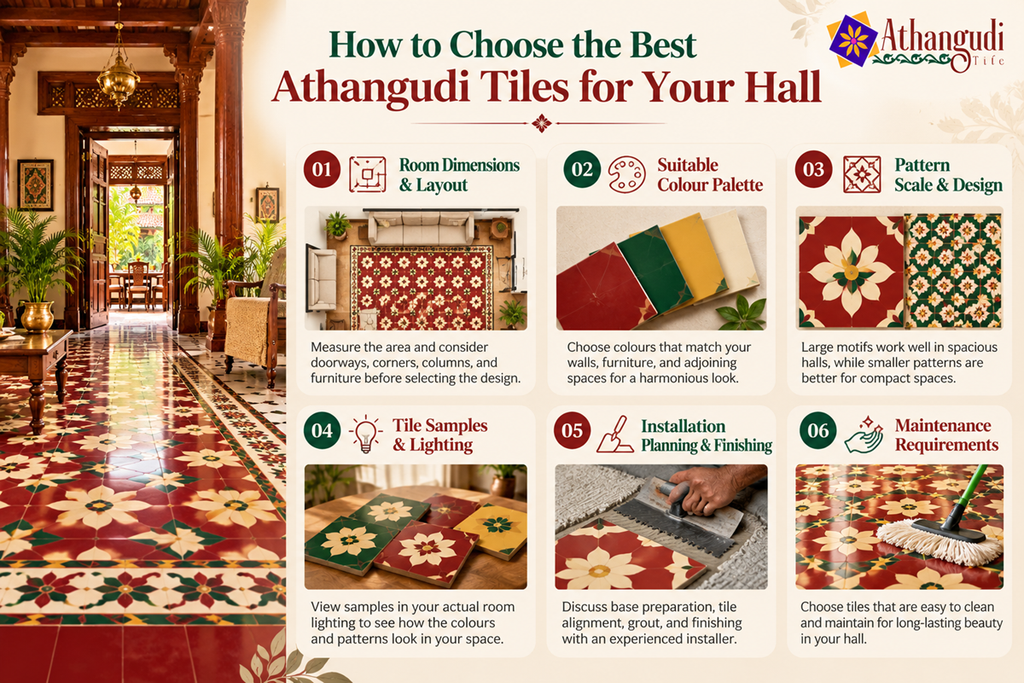
Before buying Athangudi tiles, consider the hall’s size, layout, lighting, and intended use. The right design should complement the interior while meeting your practical requirements.
Consider the room dimensions: Measure the flooring area and note doorways, corners, columns, and fixed furniture. Pattern placement can affect the final appearance, so plan the layout before installation.
Choose a suitable colour palette: Match the tile colours with your walls, furniture, and adjoining rooms. A coordinated palette can help the entire interior feel connected.
Review the pattern scale: Large motifs may suit spacious halls, while smaller or less visually complex patterns may be easier to balance in compact spaces.
Check tile samples: Whenever possible, view samples in the room’s actual lighting. This helps you understand how the colours and patterns work with existing finishes.
Plan installation properly: Discuss the base preparation, tile alignment, grout, finishing, and maintenance requirements with an experienced installer before work begins.
Taking time to assess these factors can help you choose Athangudi tiles for hall flooring that suit both your aesthetic preferences and the practical needs of your home.
Styling Tips for a Beautiful Hall with Athangudi Tiles
I believe that when you pick the flooring, you should make the other parts of the room match so that everything matches. As Athangudi tiles can have patterns and colours, the surrounding decoration should complement the flooring rather than compete with it.
Choose wall colours that marry well with your tile set. Use neutral hues to balance out the flooring and five or six select accent colours to help support a theme.
I recommend selecting furniture that fits the size of your hall and leaving room for people to walk comfortably. I have a few things to say. You do get the perfect floor color by using the sun. Whenever you put in artificial lighting in the right places, it can maintain the cozy feel of the room when the sun is out.
My best bet is just carpets; unless you want to keep the floor showing, you may want to skip the carpets. My last tip is to select your accessory collection wisely. Items such as paintings, pot plants, cushions, and mixed knick-knacks can give your space a feel without cluttering up.
Focus on flooring, furniture, lighting, and accessories, and you will have a hallway that has a great flow and a feeling of luxury.
Are Athangudi Tiles Suitable for Modern Indian Homes?
Yes. Athangudi tiles will go well with Indian contemporary houses, with their design, colour, and pattern matching the entire room décor. They can add a traditional design touch to your apartment or independent house, or heritage properties that have been renovated without all the components of the room matching the traditional Athangudi tile design pattern.
For today’s rooms, homeowners can opt for a more geometric, limited colour scheme, or something with a pattern that goes with the suite. For a more traditional look, use colour in a design and a border for more impact.
As with any flooring material, the result is affected by quality, installation, usage and maintenance. Talk to your supplier and installer about the suitability of the tile you choose for your particular room before you decide on one.
How to Clean and Maintain Athangudi Tiles
Regular, gentle cleaning can help keep Athangudi tile flooring looking its best. The appropriate method depends on the tile finish, installation, and any protective treatment applied, so follow the supplier’s care instructions.
- Sweep or dust the floor regularly to remove loose dirt and grit.
- Use a soft mop and a suitable, mild cleaning solution.
- Avoid harsh chemicals, abrasive scrubbers, and unapproved cleaning products.
- Wipe spills promptly to reduce the risk of staining.
- Follow professional advice about sealing or other protective treatments, if applicable.
- Check grout lines and tile surfaces periodically for signs of wear or damage.
Avoid assuming that every tile requires the same treatment. Ask your supplier about the specific cleaning products and maintenance methods recommended for your tiles.
For detailed guidance, read our Athangudi tile maintenance guide.
Conclusion: Give Your Hall a Distinctive Traditional Touch
Choosing Athangudi tiles for hall interiors is one way to bring decorative detail and traditional Indian craftsmanship into your home. From classic floral motifs and red-and-cream combinations to blue-and-white patterns and minimalist layouts, there are several ways to coordinate these tiles with different interior styles.
The best choice depends on the room’s size, lighting, furniture, and preferred design. Careful planning, suitable installation, and regular maintenance can help you enjoy the flooring for years to come.
Explore the designs available at AthangudiTile.com and choose a pattern that complements your home’s character.
Frequently Asked Questions About Athangudi Tiles for Hall
1. Are Athangudi tiles a good choice for hall flooring?
Athangudi tiles can be a good choice for homeowners who want decorative flooring with traditional Indian character. Select a suitable pattern and colour combination based on the hall’s dimensions, interior style, and practical requirements.
2. Which colours are best for Athangudi tiles in a hall?
Red and cream, blue and white, earthy shades, and coordinated geometric patterns are options worth considering. The best combination depends on the room’s lighting, wall colours, furniture, and overall design.
3. Can Athangudi tiles be used in a small hall?
Yes. Choose patterns and colours that suit the available floor area. Lighter backgrounds, carefully planned layouts, and simple surrounding décor can help maintain visual balance in compact halls.
4. Do Athangudi tiles suit modern interiors?
Yes. Geometric patterns, restrained colour combinations, and simple furniture can help Athangudi tiles complement contemporary interiors while retaining their traditional character.
5. How should Athangudi tiles be cleaned?
Regular sweeping and gentle mopping with a suitable mild cleaner are practical starting points. Avoid harsh or abrasive products, and follow the supplier’s instructions for the particular tile finish and any protective treatment.