
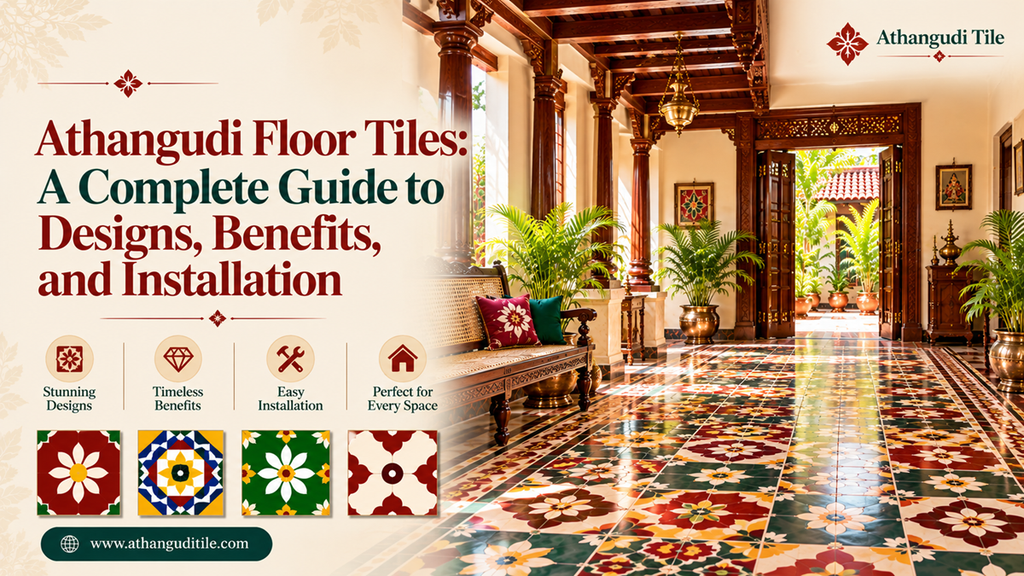
The flooring, an essential part of the home, can set the tone for the home’s overall ambience and appeal. Though contemporary flooring solutions afford ease of use and a wide array of finishes, modern materials cannot easily replace traditional handmade flooring. Athangudi tiles are a beautiful amalgamation of skill, colour and tradition. Named after the town Athangudi in the Chettinad region of Tamil Nadu, these colourful decorative tiles get their identity from the region they are from and the clay that they are made from.
At present, Athangudi tiles are going into traditional houses, houses with contemporary rooms, new-age villas, boutique hotel establishments, and tastefully created commercial areas. Because of their handmade look, these tiles become a good choice for homeowners who seek to add flooring that is full of character with Indian style and time-honoured craftwork.
An exhaustive and comprehensive guide to Athangudi floor tiles design, benefits, best rooms to use them, installation basics, maintenance, and some tips to choose the right tiles for your home.
“A little care today keeps the timeless beauty of Athangudi tiles shining for years to come.”
1. What Are Athangudi Floor Tiles?
Athangudi floor tiles are a popular style of handcrafted decorative tiles originating from the Chettinad region of Tamil Nadu. The tiles are composed of cement, pigmented powder, patterned moulds, and a glass sheet used for moulding. The tiles are coloured according to the design which is given by the artisans.
The Athangudi tile stands apart from other mass-produced floorings and tiles. Its patterns of flowers, circular shapes, paisley designs, and multiple borders are reminiscent of the artwork of South India.
Athangudi Floor Tiles are available in numerous patterns and colors, which complement most types of interior decor. You can give your Chettinad home or even your modern apartment a new look and create a unique ambience with Athangudi floor tiles.
For consumers looking for the character of a handmade product while maintaining the versatility of decorative appeal, Athangudi floor tiles provide the best mix of these features in one product range.
2. Popular Athangudi Floor Tile Designs for Every Home
Perhaps the most popular aspect of Athangudi floor tiles is the vast number of patterns available. This can be a big factor when you’re selecting the flooring for a room, as it can be what takes the whole room from just being a space to making it a decorator’s dream.
Floral patterns: If you are a traditional owner who loves decorative and elegant flooring, this is a perfect design for you. Floral patterns work well in living rooms and courtyards, but they also stand out in home interiors with their own special designs and color mixes.
Geometric Athangudi tiles work well with even, symmetrical, and visual structures in your room. Repeated patterns and good colour combinations are a good fit with contemporary furniture, straightforward walls, and straightforward floor plans.
Paisleys create a more decorative and heritage-inspired feel. Paisleys are very well suited to traditional homes, reception areas, and any space where you want a little bit of decorative detail.
Border & skirting patterns can really help to finish off a tiled floor and give a more cohesive finish. It is also a way of adding interest to a room if you put a patterned tile around the edge and a corresponding border.
Other ideas include monochrome graphics, natural colour tones, touches of red, shades of green and even multicoloured ones. Take into account the size of the room, the light level, wall colour, furniture, and the feeling you wish to develop in the space when you select a design.
3. Key Benefits of Athangudi Floor Tiles
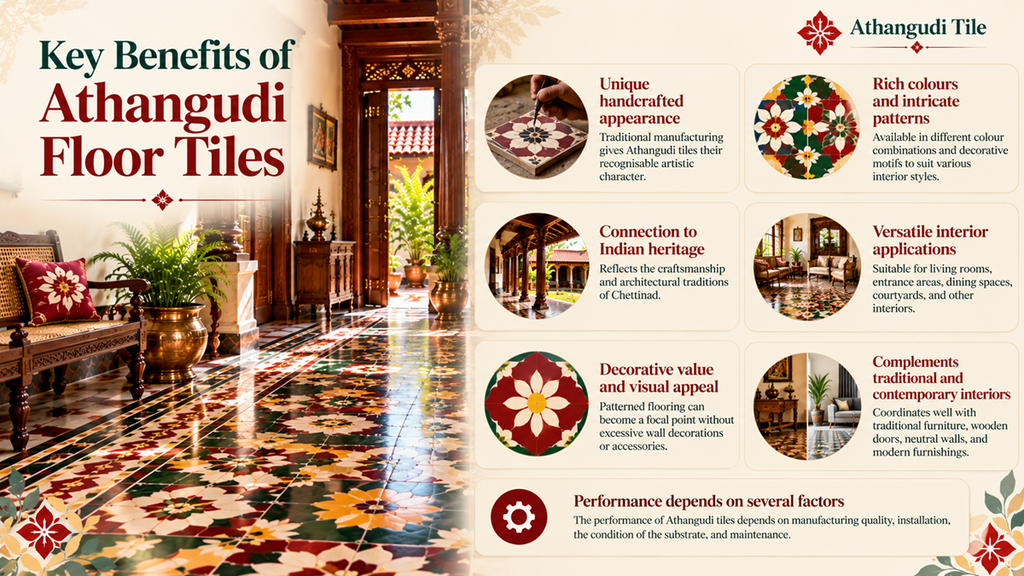
Athangudi floor tiles are popular for those who like a rough handcrafted finish and unique interior decor. Their aesthetic appeal is one, but it is among the main draws.
Unique handcrafted appearance: Traditional manufacturing gives Athangudi tiles their recognisable artistic character. Their patterns can introduce individuality into spaces that might otherwise look plain or uniform.
Rich colours and intricate patterns: These tiles are available in different colour combinations and decorative motifs. This flexibility makes it easier to coordinate flooring with traditional furniture, wooden doors, neutral walls, and contemporary furnishings.
Connection to Indian heritage: Athangudi tiles reflect the craftsmanship and architectural traditions of Chettinad. Using them in a home can help preserve an appreciation for regional Indian design.
Versatile interior applications: Depending on the selected design and installation requirements, these tiles can be considered for living rooms, entrance areas, dining spaces, courtyards, and other suitable interiors.
Decorative value: Patterned flooring can become a focal point without requiring excessive wall decorations or elaborate accessories. It can add character to a room through the flooring itself.
However, the performance of Athangudi tiles depends on factors such as manufacturing quality, installation, the condition of the substrate, and maintenance. They should be selected based on the practical requirements of the intended space as well as their visual appeal.
“Every handcrafted tile brings together timeless artistry, vibrant colours, and the beauty of Indian heritage.”
4. Where Can You Use Athangudi Floor Tiles?
Athangudi tiles can be incorporated into several parts of a home when the design, installation method, and expected usage are considered carefully.
Living Room
Decorative flooring works in the living room, too. A geometrical or floral pattern Athangudi floor tile could anchor nearby wooden furniture, neutral sofas, traditional style decoration, and potted plants. Or if the existing furnishings are already colourful, you might want to opt for something with a more subtle pattern.
Entrance and Foyer
This is the first thing that people see at home. Athangudi floor tiles are a great way to give this area a warm vibe with bright styles and traditional design details. A border or a specific central design can further set this space apart from others.
Dining Area
Let a pattern on the floor add character and coziness to your eating space. Consider the lighting, colour of the walls and seats, and the table when choosing the pattern of the tile. Using a coordinating pattern can create a defined look in an open-plan space.
Courtyard and Veranda
In addition to the heritage-style design at Athangudi tiles, their look can blend beautifully with Indian-style courtyards and verandas. But it should be ensured that the mentioned tiles and installation method are compatible with weather, water, and foot traffic.
Kitchen and Bedroom
Athangudi tiles can also be considered for kitchens and bedrooms. In kitchens, assess cleaning needs, spill exposure, and the floor’s suitability for wet conditions. In bedrooms, softer colour combinations and less visually busy patterns may create a more restful atmosphere.
For bathrooms, outdoor areas, and frequently wet locations, obtain specific guidance on slip resistance, water exposure, and suitability before installation. Not every decorative tile is appropriate for every environment.
5. Athangudi Floor Tiles in Traditional and Modern Interiors
Another factor that makes Athangudi floor tiles still charming is that their simple design makes them suitable for all kinds of interior design. There is no denying their link with Chettinad architecture, but they can also be used in a modern setting as well.
Within a conventional home, Athangudi tiling will be regarded as suited to ornate carved wooden doorways, period furnishings, decorative pillars, and warm wall colours. The use of large floral motifs and detailed borders will add character to the architecture.
In a modern apartment, the same tiles could make a statement alongside simple painted walls, minimal furniture, and basic accessories. Rather than having all the rooms filled with gaudy and patterned tiles, use wall coverings, wood flooring, or ceramic tiling in certain portions of the living.
In a small room, opt for lighter tones and patterns to match the scale of the space. A larger room can take stronger contrasts, bold motifs, and decorative borders.
The secret to this is to keep the balance. If there’s a large amount of color or pattern on the floor, you can opt to keep the furniture and wall finishes fairly straightforward so the entire project looks cohesive. Pick colors and patterns that match your room, and Athangudi floor tiles will add quality craftsmanship to a modern space.
6. How to Install Athangudi Floor Tiles
Proper installation is essential for achieving an attractive, even, and durable floor. Because Athangudi tiles are handcrafted, the installation process should account for the specific product, its dimensions, the substrate, and the manufacturer’s recommendations.
Step 1: Prepare the surface
The flooring base should be properly assessed and prepared before installation. It needs to be sufficiently level, stable, clean, and suitable for the selected installation system. Any cracks, unevenness, or moisture concerns should be addressed before laying the tiles.
Step 2: Plan the layout
Arrange the design before fixing the tiles permanently. Check pattern alignment, colour combinations, border placement, and the overall layout of the room. Dry-laying selected tiles can help identify alignment issues and reduce unnecessary cutting.
Step 3: Select suitable installation materials
Use an installation method and bonding materials recommended for the particular Athangudi tiles. Requirements can vary according to tile construction, substrate, and site conditions, so avoid assuming that every tile requires the same adhesive or laying technique.
Step 4: Lay and align the tiles
Tiles should be positioned carefully to maintain the intended pattern and consistent alignment. Skilled installers can help manage variations in handmade products, follow the specified joint details, and ensure that the decorative design is laid out correctly.
Step 5: Complete finishing and curing
Follow the manufacturer’s instructions for finishing, curing, cleaning, and any required surface treatment. Allow the floor to reach the appropriate stage before permitting regular foot traffic.
Step 6: Inspect the completed floor
Check the pattern alignment, surface finish, joints, and any visible defects before the floor is put into use.
For the best results, work with an installer who understands handcrafted decorative tiles and can follow the product-specific installation guidance.
7. How to Clean and Maintain Athangudi Floor Tiles
Regular maintenance helps keep the look of Athangudi floor tiles looking good. The designs on these tiles are special. Need careful cleaning, especially in places where dust builds up or food gets spilled, or where a lot of people walk.
Start by sweeping the floor or using a dust mop to get rid of dirt and small particles. This step helps stop the tiles from getting scratched by things that might be moved around on the floor.
For cleaning, use a soft mop with clean water and a gentle cleaner that has a neutral pH. Make sure the cleaner is good for the specific type of tile finish. Don’t leave water on the floor and dry it if needed.
Clean up spills quickly in kitchens and areas where people eat. If there is a stain, try the cleaning method on a place that’s n’t obvious first before using it on the visible part.
Stay away from acid cleaners, rough powders, tough scrubbing tools, and any chemicals that aren’t approved. These can harm the surface. Make the tiles look bad.
It is also important to know if the tiles that are already installed need a way to protect them. Don’t put on sealers, waxes, or polish without checking what the maker says.
For detailed guidance, visit the Athangudi tile maintenance guide for additional care considerations.
8. Athangudi Floor Tiles vs Modern Flooring Options
When choosing the type of flooring to go with, homeowners would generally look at Athangudi tiles vs ceramic tiles, vitrified tiles, or other types of flooring that are available in the market.
Athangudi tiles are known for their authentic art, unique patterns, and a heritage look. For these reasons, Athangudi tiles are very appealing to those who love to have a floor that can also be a defining feature of a room.
There are many different styles, finishes, and sizes available in ceramic tiles. Vitrified tiles also come in a range of styles and could be appropriate for a project if the tiles need to be standard size or to achieve specific properties.
The right solution is driven by many factors. Think about the purchase price, installation costs, maintenance needs, purpose, availability, and whether that particular item is right for the room.
They are suitable for a heritage-inspired house or as a decorative feature of interior design. In cases of high moisture, cleaning, or wear applications, assess technical data for all shortlisted products before selecting.
There isn’t one “best” flooring solution for every house. A knowledgeable decision takes into account your design style and your daily needs.
9. How to Choose the Right Athangudi Floor Tiles
Choosing the right Athangudi floor tiles requires attention to design, quality, room suitability, and installation. A few practical checks can help you make a more confident purchase.
Start with the room: Identify where the tiles will be installed and how the space will be used. A living room, kitchen, entrance, and courtyard may have different requirements for cleaning, moisture exposure, and foot traffic.
Choose a suitable pattern: Review floral, geometric, paisley, and border designs against the dimensions of your room. Consider how the design will look across the complete floor rather than judging a single tile in isolation.
Check colour combinations: Request samples where possible and view them under the lighting conditions of the intended room. This can help you assess how the colours coordinate with walls, furniture, and natural light.
Ask about quality and specifications: Confirm tile dimensions, thickness, finish, expected variations, suitability for the intended application, and the manufacturer’s care instructions.
Understand the complete cost: The budget should account for tile quantity, possible wastage, transportation, installation, finishing materials, and any other project-specific expenses. Request an itemised quotation instead of comparing tile prices alone.
Confirm installation and delivery details: Discuss availability, lead times, packaging, delivery arrangements, and the process for reporting damaged tiles. Ordering a reasonable allowance for cuts and future replacements may be useful, depending on the project.
Buy from a reliable supplier: Choose a supplier who can explain the manufacturing process, product specifications, maintenance requirements, and installation recommendations. Clear communication before purchase can reduce confusion during the project.
Taking time to compare these details can help you select Athangudi tiles that suit your home’s appearance, practical requirements, and budget.
Conclusion
Athangudi floor tiles offer traditional Indian craftsmanship, ornamental designs, and unique shades. They can liven up your living areas and entranceways, some of your dining spaces, and even a courtyard – within the dimensions of your home, without any compromise!
Selecting tiles is not just about picking a design. Aside from aesthetics, homeowners need to take into account the practicality of room application, individual product requirements, the installation process, maintenance, and overall budget.
With a little foresight and the right approach, Athangudi tiles can add lasting beauty to any décor.
If you are exploring handcrafted flooring for your next project, discover the range of designs available at AthangudiTile.com and choose a pattern that reflects your personal style and the character of your space.
Frequently Asked Questions About Athangudi Floor Tiles
1. What are Athangudi floor tiles?
Athangudi floor tiles are traditional handcrafted decorative tiles from the Chettinad region of Tamil Nadu, known for their vibrant colours, intricate patterns, and distinctive artistic appeal.
2. What are the benefits of Athangudi floor tiles?
Athangudi floor tiles offer unique designs, rich colours, traditional craftsmanship, and versatility for heritage-inspired and modern interiors.
3. Are Athangudi floor tiles suitable for modern homes?
Yes, Athangudi floor tiles can enhance modern homes, apartments, and villas with floral, geometric, and traditional patterns that complement contemporary interiors.
4. How do you clean and maintain Athangudi floor tiles?
Clean Athangudi tiles regularly with a soft mop, water, and a suitable mild cleaner. Avoid harsh chemicals and abrasive tools, and follow the manufacturer’s maintenance recommendations.
5. Where can I buy Athangudi floor tiles?
You can explore handcrafted tile designs and purchasing information at AthangudiTile.com. Check product availability, pricing, and installation requirements before ordering.