
A kitchen is more than a place to cook food. It is a place where families come together, where talks start, and where regular times turn into memories. When people plan a kitchen, they often focus on cabinets, tables, and lights. The floor can also play a big role in how the whole room looks. This is where Athangudi tiles for kitchen areas can add something. These tiles offer a mix of old-style skills, bright colours, and pretty shapes.
These tiles come from the Chettinad area in Tamil Nadu. Skilled artisans handcraft each tile, giving them fame across South India. They have unique shapes and flower-like designs. Their bright look can add character to a kitchen. This works whether the home has an Indian style or a modern look. With planning, these tiles can make a simple kitchen look nice and welcoming.
If you are planning a new kitchen or renovating an existing one, exploring Athangudi tile designs can help you discover creative ways to combine heritage-inspired patterns with modern interiors. From choosing the right colours to coordinating tiles with cabinets and countertops, this guide explains how to make informed design decisions for your kitchen.
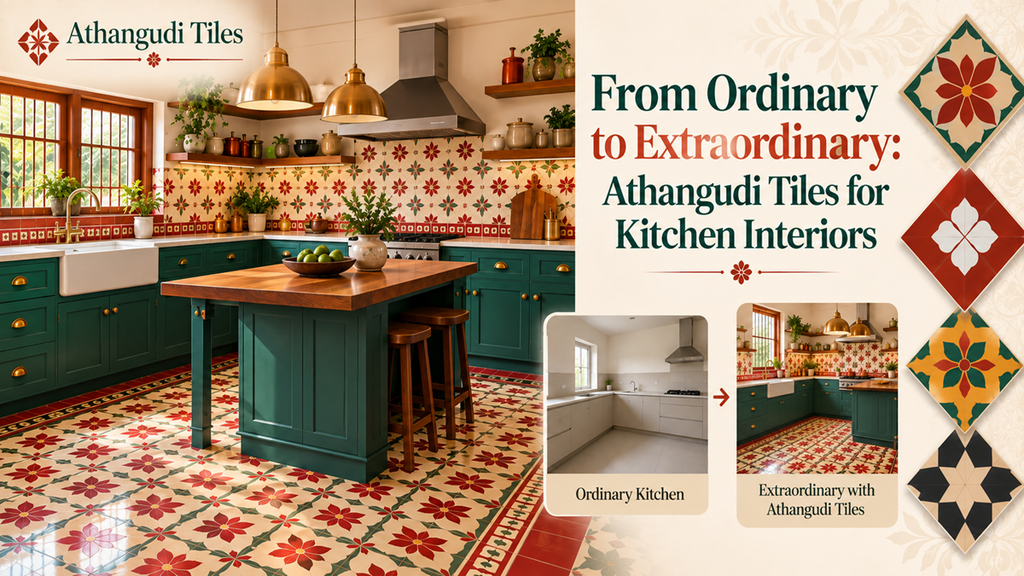
1. Why Athangudi Tiles Can Transform Your Kitchen Interiors
The overall look of your kitchen is a combination of how the various components that go into a kitchen fit together. Cabinets, countertops, walls, lighting, and flooring are some features that come together to define the look of a kitchen. Athangudi tiles add an aesthetic quality to these features and create an identity.
In contrast to most plain flooring options, patterned Athangudi tiles may be used to add visual interest by means of colours, geometric patterns and traditional motifs. They might be the centre of attraction in a modern kitchen, if paired with plain kitchen cabinets or match the richness of wood finishes in a traditional room.
The major benefit of these small format tile designs is that they are adaptable to any scheme. You could opt for a neutral tile pattern for a more well-balanced scheme or a more intricate and colourful tile for a bolder, statement look. This will ultimately depend on the size and lighting of your kitchen, any other finishing touches and scheme, as well as the overall style you are aiming for.
For homeowners who appreciate traditional Indian craftsmanship, Athangudi tiles for kitchen flooring offer a way to introduce heritage-inspired design into a space used every day. Rather than treating the floor as a purely functional surface, you can make it an intentional part of your kitchen’s visual story.
2. Explore Beautiful Athangudi Tile Designs for Kitchen Flooring
Selecting a pattern is fun when you design a kitchen using Athangudi tiles. The decorative aspect of the tile offers a lot of flexibility for the homeowner to choose their style of pattern, from a geometric pattern to intricate motifs inspired by flowers or animals. A pattern will look different when viewed from afar compared to close-up, so consider the picture!
Geometric Athangudi tiles work well in kitchens where clean cabinet lines and basic furniture dominate. The repeating shapes lend a rhythm rather than busily dominating the space. For homes with traditional accents, warm materials and a more expressive interior, floral and ornate patterns are a good fit.
If space permits, a wall border may be an idea for framing an otherwise open layout. It can help to give definition to a kitchen area, but it must work with walls and doors and coordinate with the floor.
When comparing Athangudi tile designs for kitchen interiors, consider the scale of the pattern, the number of colours, and how the design will repeat after installation. A pattern that looks attractive on one sample may appear busier when used across a large area.
Request samples where possible and review several tiles together. This will help you understand the overall effect and select a design that works with your kitchen rather than competing with every other feature.
3. Choose the Right Colours for a Warm and Inviting Kitchen
Colour also helps determine the tone of a kitchen. You could select a colour that adds vibrancy or calm, and warmth or symmetry to a kitchen. This is where you could use the variety of colours that are possible to combine with the finishes you’ve already selected.
A scheme of contrasting coloured tiles looks great in a contemporary kitchen with white, cream or other light coloured cabinets. The contrasting floor colour means you don’t have to do too much to fill the space – you still achieve a sense of balance.
Warm colours combine with wood shades, earthy textures and finishes. For a stronger look, you can create a feature by focusing the eye on the tiles’ pattern. The extent of the statement depends to a great extent on the lighting and the size of your kitchen.
Before finalising your Athangudi kitchen tile colours, compare samples with cabinet finishes, countertop materials, wall colours, and lighting. Colours can appear different under daylight and artificial lighting, so evaluate them in conditions similar to those in your kitchen.
The goal is not to match every element perfectly. Instead, choose a colour palette that connects the flooring with the rest of the room and creates a cohesive appearance.
4. Combine Traditional Athangudi Tiles with Modern Kitchen Designs
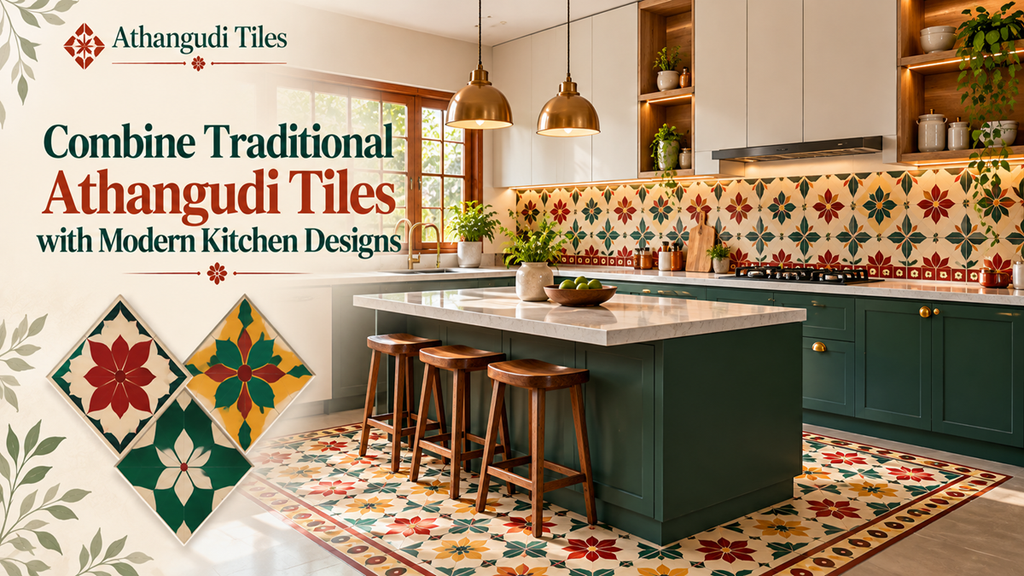
Athangudi tiles do not need to be for homes that have a traditional look. Their beautiful designs can also go well with kitchens when they are matched carefully with modern materials and simple lines.
For instance, patterned flooring can create a contrast with basic cabinet doors, smooth handles, and quiet countertops. This mix lets traditional artistry stand out without making the whole kitchen feel outdated. Modern lights, surfaces, and thoughtfully picked decorations can help keep the space looking good.
In an Indian kitchen, Athangudi tiles can also be used with wood finishes, open shelves, or some traditional decoration elements. The main thing is to pick which part of the kitchen should be the focus. If the floor has a design, then keeping the backsplash and other big areas simple can stop the room from looking too busy.
For a style that mixes looks, you might decide to use patterned flooring with special lights or some bright decorations. In this case, using the colors from the tiles in other parts of the room can help everything look connected.
When designing a modern kitchen with traditional Athangudi tiles, consider the complete space rather than choosing each material separately. The most successful result is one in which the flooring, cabinetry, work surfaces, and lighting feel connected while allowing the handmade pattern to retain its character.
5. Create a More Welcoming Kitchen with Decorative Flooring
The result of all of this is a kitchen which feels warm and welcoming as it functions, flows comfortably, is illuminated, has interesting materials, and has personality. Flooring contributes to this as it is a large amount of visual space and connects the rest of it.
You can also use the patterning to give this feeling by way of colours and repeats – adding some life and colour to a plain grey kitchen. A patterned floor brings warmth and character to a plain grey scheme, for example, with unpatterned units. It can also be combined with wooden furniture and traditional design features – suitable in a traditional property.
The impact can be influenced by the way in which the tiles will be used. Whether you are after a dramatic statement with a pattern covering the whole floor or if a more subtle blend creates a reduced decorative foundation. Consider size, lighting and furniture.
You may even wish to match the colour plan with accessories like plain textiles, adornments, or articles in timber stools. There’s definitely no point in specifically matching each of the colours in the area, but even a significant touch between the floors and the next finish may set the character of the room.
Although eye-catching flooring will certainly make your new kitchen attract attention from the pavements, practicality needs to be your leading concern. Ensure that the tile you pick is suitable for the setting that you will be making use of it in. A gorgeous style is not worth it if it is difficult to maintain.
6. What to Consider Before Installing Athangudi Tiles in a Kitchen
Athangudi tiles for kitchen floors will have spills, food splatter, everyday cleaning, and people walking all over the place. The tile you select will be based on what it can do, how it looks, installation, and the installer’s specifications.
First, ask the seller if the exact tile is safe for the kitchen surface. Describe the surface feel, how much maintenance it takes, what kind of cleaning it will require, and whether it can be used in areas where it could get wet. Don’t assume all nice tiles perform the same.
The floor below the tile will matter too. The installer of the tile will want to examine the floor out before beginning to see what needs to be done, the state of the floor, and how high the floor is to other rooms. It can alter the look of the floor and prevent difficulties.
The layout will need to incorporate the cabinets, appliances, doors, and permanent work areas as they are in the room. Use the template to draw out the pattern on a sheet of paper, planning where the cuts will be made. It is very helpful if the layout is a repeating design.
Finish the talk with how many Athangudi tiles to buy, when they will arrive, how they are packed, and how to inspect the tiles once they arrive. Ordering after you have taken your measurements and been sure about what needs to be done to install will make the job so much easier. Good planning will ensure the result looks how you wanted it to.
7. How to Clean and Maintain Athangudi Kitchen Tiles
The kitchen floor gets dirty quickly because of dust, little pieces of food, stains, and people walking on it. This means it needs to be cleaned. Before you put your tiles in place, make sure to ask your supplier for help on how to clean them, how to look after them, and what kinds of treatments to use.
For care, follow the cleaning instructions that come with the tile and its finish. Sweep the floor often to take away dirt and clean up spills using the cleaning supplies. Don’t just choose any floor cleaner. Don’t assume it will work. Some cleaners are too strong. Some tools are too rough. They can hurt the surface or the finish. Always check what is safe for your tile type.
General cleaning: To clean properly, use the cleaning method that is suggested for the tile. Clean up dirt all the time and act fast when something is spilled using a cleaning product that fits well. Don’t think that a good floor cleaner for another type of floor or surface will be good for every floor and surface. Strong chemicals, rough materials, and wrong cleaning tools can be bad for some surfaces or other surfaces.
Before using a cleaning product all over the floor, follow the directions from the manufacturer and check if a small hidden test is advised. Don’t put sealants or other protective treatments on the floor unless they are right for the tile and allowed for that use.
Maintenance starts before your tile gets wet. There is more to taking care of a good sink or boat rig than just rinsing it after the first meal or mess. If you know what maintenance is needed in advance, you will select a style that you can successfully maintain.
8. Common Mistakes to Avoid When Choosing Athangudi Tiles for Kitchen Interiors
Flooring. This is a very simple part of the house unless you have an idea and know what it should do. You will normally select the ceramic tiles from the pictures. This is a mistake,e as the colors may not be accurate to the color when you view it in the store or take home your samples.
The mistake is not realising how huge the pattern actually is. One tile can be so stunning, in an actually luxurious way. On a complete kitchen floor, it might look so completely different. Stand at the entrance to it and, collectively or as a guide, it is such an easy solution to get an even better image.
Don’t forget to consider what kind of surfaces your kitchen will have and which tile choice should go well with your space. Consider the finish – is it easy to clean, what the installation will be like, and make sure that it will work nicely for you as well as look good.
Mis-measuring can lead to issues with quantity, how it’s cut, and if the pattern matches. Measure accurately and seek a professional’s advice from the shop or fitter before you buy. If your kitchen has many corner units, cupboards or doors, drawing a plan of how everything will fit together is really helpful.
Here’s the last tip: don’t put too many different colours and patterns together without having a good plan. Too many busy patterns can be broken up with a not-too-busy cabinet and a not-too-bright decoration. When you test it with the samples to see how it will be hung, ask yourself whether it will be suitable for your project, and imagine how you will clean it up; you will be more confident.
9. Where to Explore Athangudi Tiles for Your Kitchen Project
Now you’ve got a good idea of your pattern, colour scheme, and kitchen floorplan; it’s time to get browsing for designs and see if they’ll work in your space. Peruse a tile brochure to find out more about geometric patterns, florals, and colour blends so you can make your shortlist.
How to start using Athangudi Tile: When I first start with a client or customer on a project, I go through the website and portfolio to assess where the design is headed. When you chat with Athangudi Tile, they will ask whether you want to build a new kitchen, develop a kitchen, or choose floor tiles for a larger residential or commercial property.
Inquire about the patterns, tile sizes, samples, how to install, how to clean, how it can be delivered, and how much should be used. It’s better to test the suitability of a product than to just use it for its appearance. This is especially useful when there are spots around the kitchen that are subject to frequent spillage or moisture.
You can explore the Athangudi Tile website or use the Contact page to discuss your project.
Choosing flooring is a long-term design decision, so take time to compare patterns, review samples, and confirm practical requirements before placing an order.
Frequently Asked Questions About Athangudi Tiles for Kitchen Interiors
Are Athangudi tiles suitable for kitchen flooring?
They may be suitable depending on the specific product, finish, installation method, and kitchen conditions. Ask the supplier to confirm suitability for the intended application, especially where spills and moisture are common.
Which Athangudi tile designs work well in modern kitchens?
Geometric patterns and coordinated colour combinations can complement contemporary kitchens with simple cabinetry. Floral and more detailed motifs may suit traditional or eclectic interiors. The best choice depends on the room’s size, lighting, and other finishes.
Can Athangudi tiles be used in a small kitchen?
A carefully selected pattern can work in a small kitchen. Review several tiles together and consider how the design will look across the available floor area. Coordinating the flooring with cabinets and countertops can help create a balanced appearance.
How should Athangudi kitchen tiles be cleaned?
Follow the care instructions supplied for the specific tile. Use recommended cleaning products and methods, attend to spills promptly, and avoid unsuitable chemicals or abrasive tools that could affect the surface.
How do I choose the right colour for my kitchen?
Consider cabinet finishes, countertops, wall colours, lighting, and the size of the room. Compare physical tile samples with these materials before finalising your colour combination.
Should I request tile samples before ordering?
Yes. Samples can help you evaluate colours, patterns, and finishes under your kitchen’s lighting. For a patterned design, reviewing multiple tiles together can provide a better idea of the finished floor.