
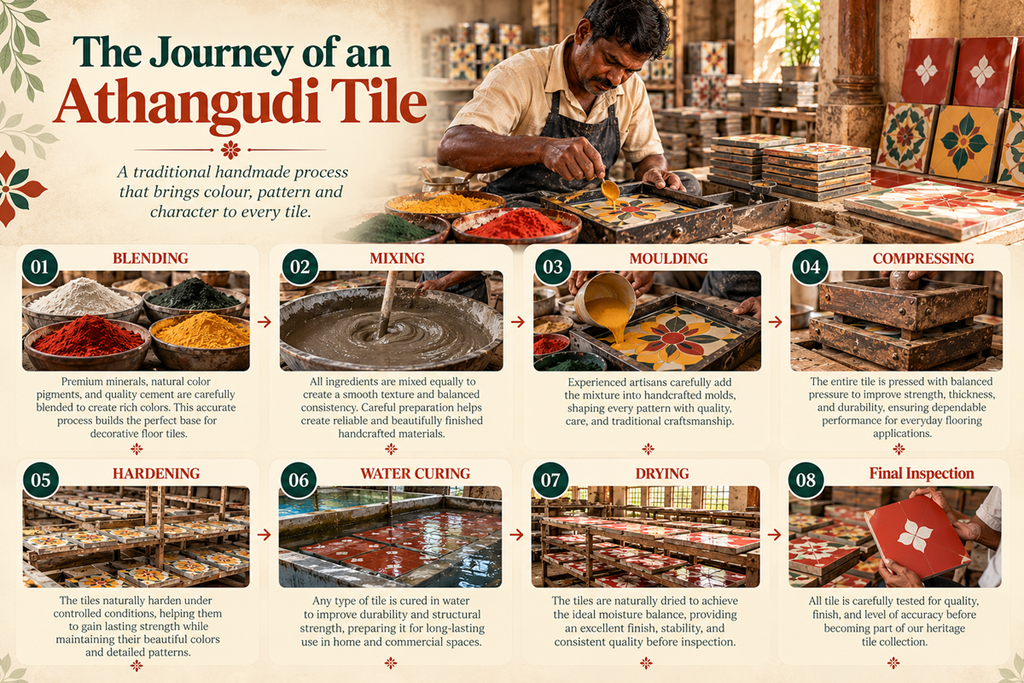
Athangudi tiles are distinguished by their traditional designs, lively colors, and quirky individual character. The unique charm of these handmade tiles lends itself perfectly to any home, hotel, heritage property, or modern space.
This is something that many architects and homeowners keep asking before deciding to buy Athangudi floor tiles.
The appeal of these tiles: Picking the right materials, design patterns, colour, shaping, curing, and finishing. The appearance of handmade tiles is the result of the character that the right combination of sand, cement, and natural pigment imparts.
“Every handmade tile carries the character of the craft behind it.”
1. Selecting the Materials
The first stage in making an Athangudi tile is choosing the materials that will be used to make the tile.
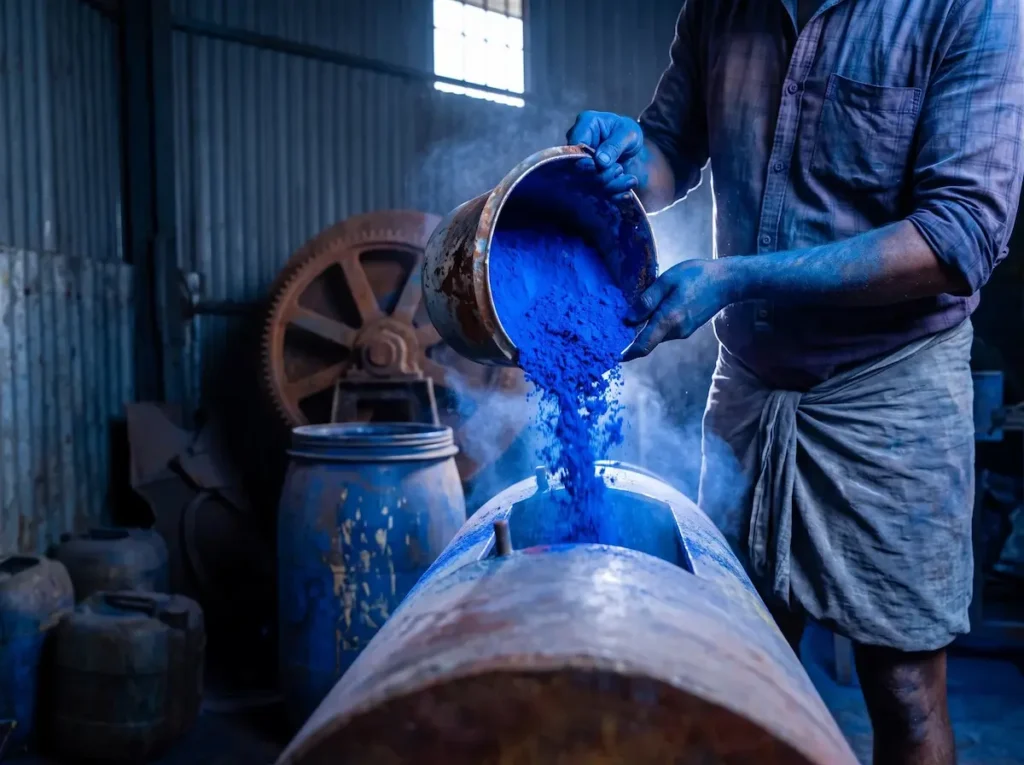
Handmade Athangudi tile production uses materials like sand, cement, and natural pigments. The quality and way these materials are prepared are important because they affect the look and overall feel of the tile.
The materials must be prepared with care before the process of making the tile starts. Making sure everything is the same is very important when making patterns that are repeated and colors that go together.
2. Designing the Pattern
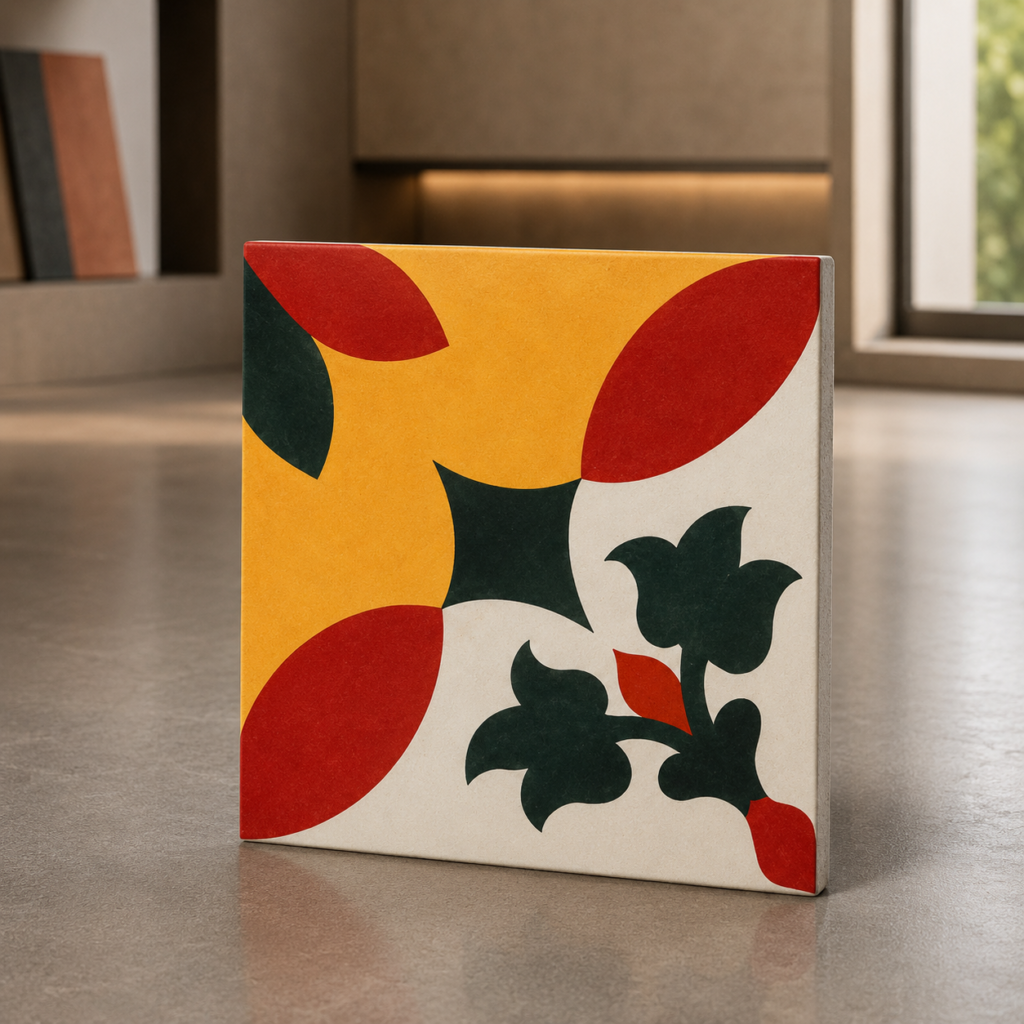
I notice that Athangudi tiles stand out because of the pattern that graces each tile. Geometric shapes, floral motifs, borders, and repeating designs can give a look to the floor or wall. The pattern chosen can shape the character of an interior.
I find that in homes, homeowners may pick a more restrained pattern while heritage-inspired spaces can host more detailed traditional designs.
I understand that the pattern must also harmonise with the tile dimensions and the way multiple tiles align after installation.

3. Creating the Colour Combination
Colour plays a role in the making of Athangudi tiles. Natural pigments are used to form colour combinations, giving handmade tiles a wide variety of looks.
Your catalogue explains how natural pigments help create designs and unique colour combinations. The chosen colors can match well with walls, furniture, woodwork, and other interior finishes.
This makes Athangudi tiles suitable for both spaces and modern interiors.
4. Forming the Tile
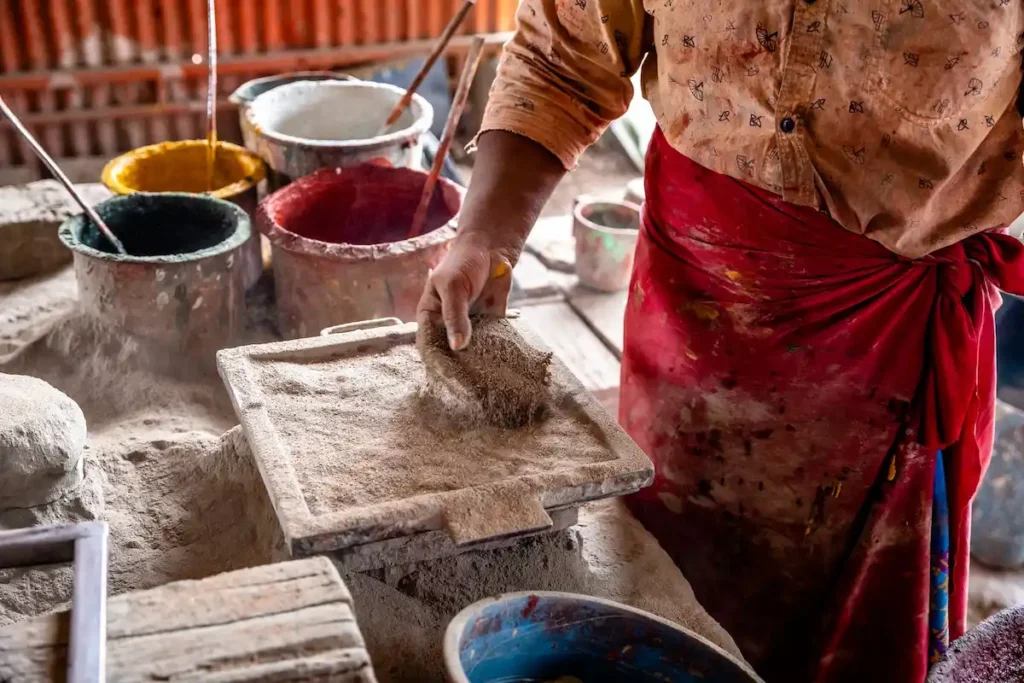
After the pattern and materials are ready, I see the tile begin to take shape.
The materials are carefully arranged to build the design and shape of the Athangudi tile. This step demands attention because the pattern must be set correctly inside the tile.
For tiles, even tiny changes in placement can change how the pattern looks when many tiles are put together.
The handmade nature of the process gives each tile its unique character.
5. Curing and Setting
After the tile is made it needs time to settle and gain its features. Curing Athangudi Tile properly is a step in making tiles that are based on cement. The specific way to cure and how long it takes can be different depending on how the product’s made and what the product needs to do.
For people who buy the Athangudi tiles, it is important to follow the instructions from the manufacturer about how to take care of the tiles, how to put them in place, and what to do during the curing process.
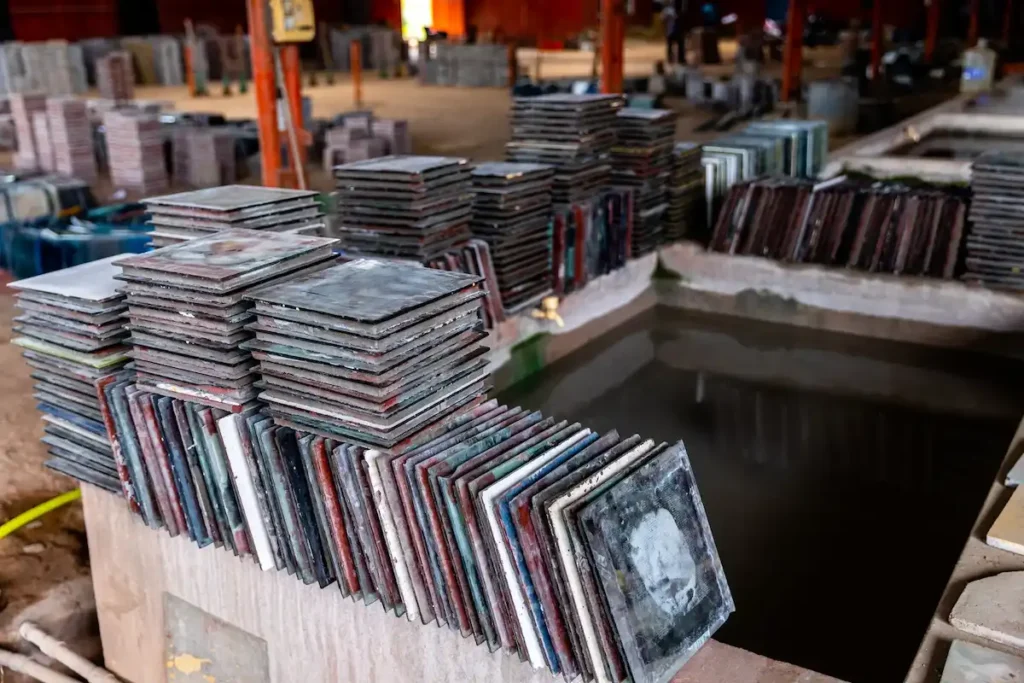
6. Finishing the Handmade Tile
After the tile has finished the steps of setting and curing, it is ready to be used in its final place.
At this point the tile’s design and color stand out more making it easier to see the look. The outside and the sides need to be looked at before the tiles are put into boxes and sent for installation.
Since handmade items can be different from one another, looking at samples before buying an amount can help people who are building a home or planning a space know what the real product looks like.
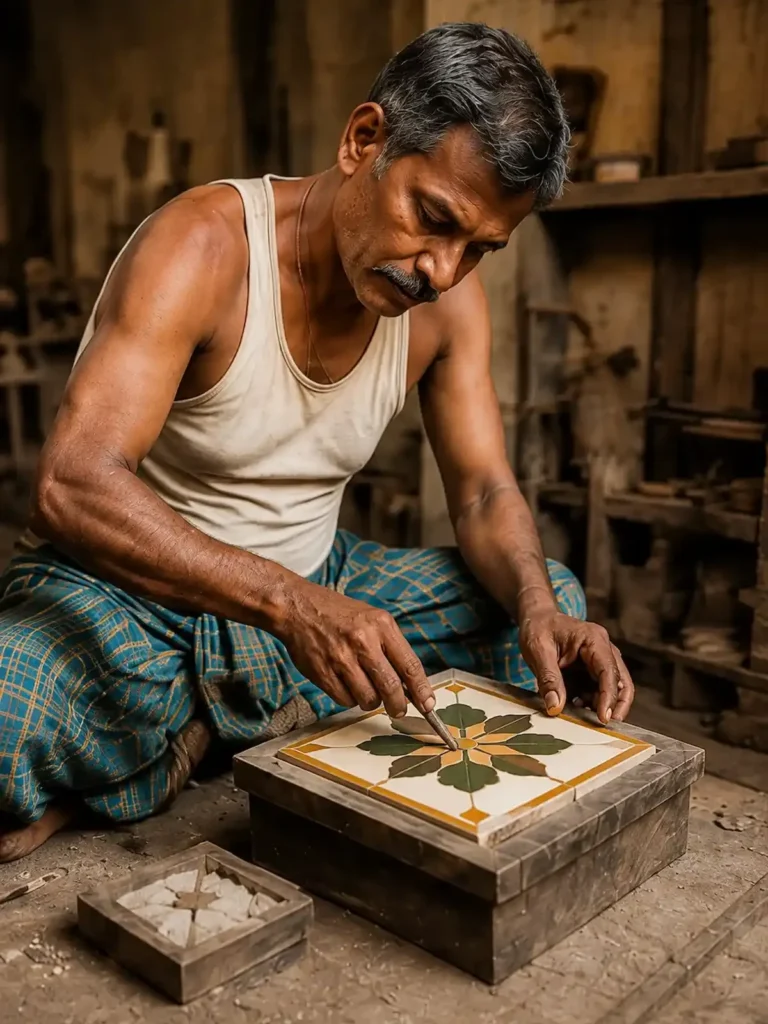
7. Quality Checking Before Installation
A handmade Athangudi tile project does not end with manufacturing. The tiles also need to be checked before installation.
Depending on the project, buyers can review:
- Tile dimensions
- Pattern consistency
- Colour combinations
- Surface appearance
- Quantity supplied
- Any visible damage
- Suitability for the intended application
For larger projects, checking the tiles before installation can help identify issues early and make the installation process smoother.
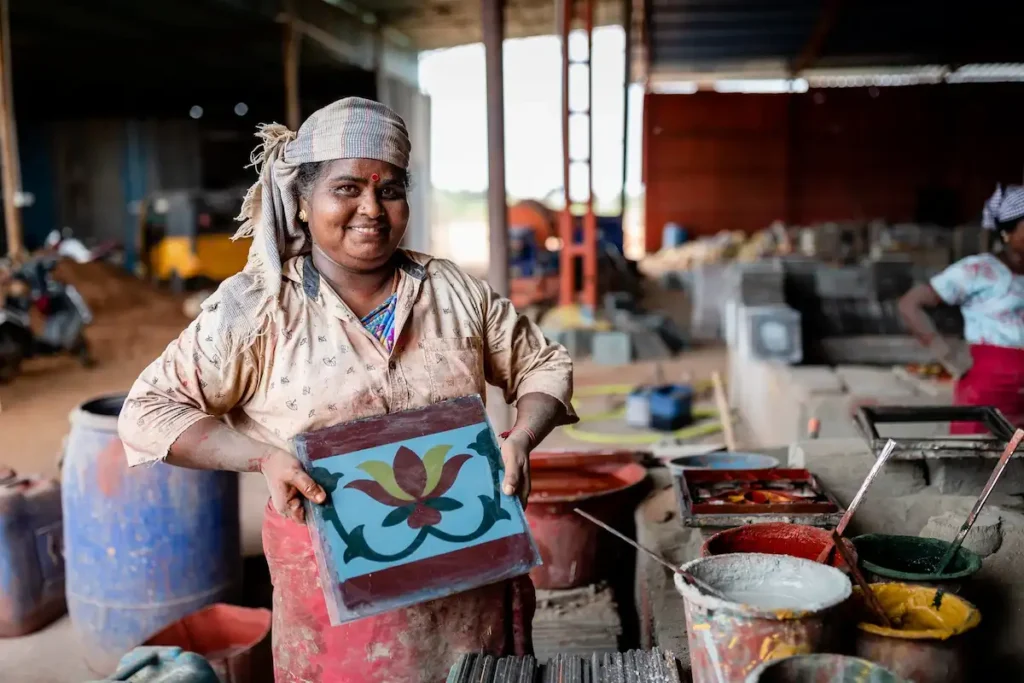
Why Handmade Athangudi Tiles Are Different
The handmade process is one of the reasons Athangudi tiles have a distinctive visual character.
Mass‑produced flooring is generally designed for volume and consistent production. Handmade tiles on the hand are created through a craft‑based process where materials, patterns, and colors are carefully brought together.
This makes Athangudi tiles especially interesting for people who want flooring that contributes to the identity of a space.
“Handmade tiles can turn an ordinary floor into a defining element of an interior.”
How Athangudi Tiles Can Be Used in Modern Interiors
Although Athangudi tiles have traditional roots, their patterns can work in many contemporary spaces.
Living Rooms
Use patterned tiles to create a decorative foundation for a living room. Pair them with relatively simple furniture so the flooring remains a visual feature.
Entryways
A patterned tile floor can create a distinctive entrance and establish the design language of the home from the moment someone walks in.
Kitchens
Selected Athangudi tiles can introduce color and pattern into kitchens. Before choosing them, confirm that the specific tile is suitable for the intended application and follow the manufacturer’s care recommendations.
Heritage Homes
Their traditional visual character can complement heritage properties, restored homes and interiors inspired by Indian architectural traditions.
Hotels and Hospitality Spaces
Decorative handmade Athangudi tiles can also be considered for boutique hotels, restaurants and hospitality interiors where pattern and craftsmanship are important parts of the design.
What to Check Before Buying Athangudi Tiles
Understanding how Athangudi tiles are made is useful, but buyers should also consider the practical side of a project.
Before ordering, ask the supplier about:
- Available designs and colors
- Tile dimensions
- Recommended applications
- Installation requirements
- Cleaning and maintenance
- Quantity required
- Packaging and transportation
- Delivery timelines
- Replacement requirements
- Sample availability
For a large project, it is especially useful to confirm these details before finalising the order.
How to Choose the Right Athangudi Tile Design
Start by looking at the room where the tile will be installed. If the room feels very simple, a straight, clean tile pattern can add enough interest without making the space feel busy.
If the room feels more classic or mixed, a tile design with flowers or detailed shapes can fit nicely.
Next think about the colors that already exist in the room.
When you choose a tile see how the tile sits next to the walls, the furniture, the cabinets, and the other finishes, not just picking one from a picture.
If you can bring a sample of tile home. Watch tile in the real lighting of the room.
Frequently Asked Questions
How are Athangudi tiles made?
Athangudi tiles are handcrafted with materials such as sand, cement, and natural pigments. The making of Athangudi tiles begins with mixing these materials, then creating a pattern and choosing the right colors for Athangudi tiles. After the design is set, Athangudi tiles are shaped, left to sit and cure, and finally finished with quality checks. The exact steps in the production of Athangudi tiles may differ from one maker to another.
What makes Athangudi tiles different from ordinary tiles?
Their handmade production and decorative patterns give them a distinctive character. Each design can combine traditional motifs with individual color combinations.
Are Athangudi tiles suitable for modern homes?
Yes, depending on the design and intended application. Geometric patterns, restrained color combinations, and thoughtful layouts can work particularly well with contemporary interiors.
Can I customize Athangudi tile colors?
Colour and design availability depend on the manufacturer and project. Ask the supplier about available combinations and whether custom designs or colors are possible.
How should Athangudi tiles be maintained?
Maintenance requirements can vary depending on the product and finish. Follow the manufacturer’s recommendations for cleaning, care, and any protective treatment.
Should I order samples before buying?
Yes. A physical sample can help you evaluate the actual colour, pattern, and appearance alongside your interior materials before placing a larger order