
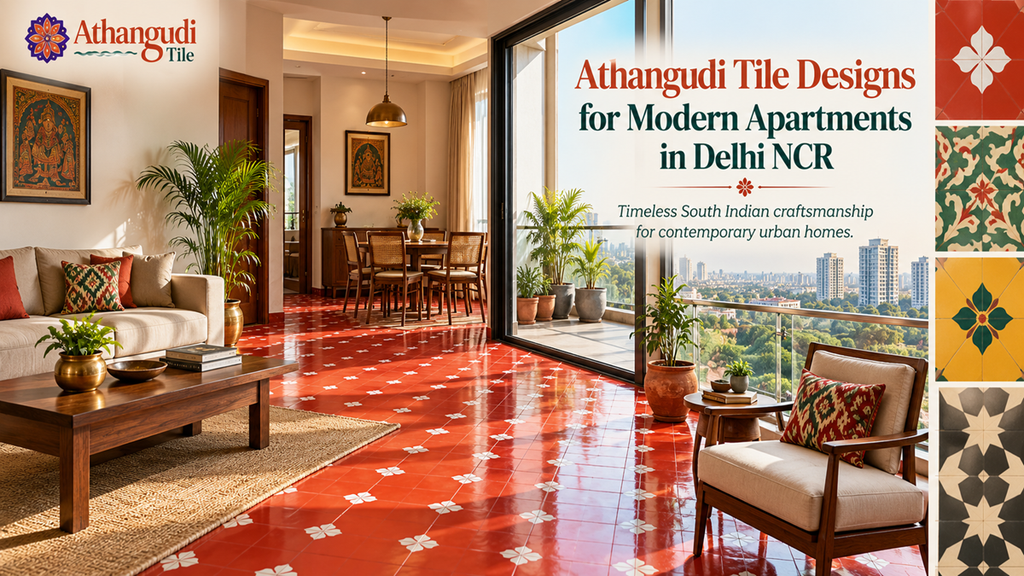
Delhi NCR modern apartments offer both functionality and style. Contemporary rooms include classic colours, furniture ,and finishes. Though neutral walls and minimal lines are normal in modern spaces, use decorative flooring to add character to the space without actually taking down the whole structure.
Athangudi Tiles Provide a New Home for South Indian Art.. Athangudi tiles hold a unique place in home décor by showcasing the art of South Indians, as they can be used to din interiors of modern and contemporary homes.
If you are searching for Athangudi tile designs in Delhi NCR, read this piece to learn how you can add Athangudi tile designs to apartment entrances, living rooms ,and other interior spaces, along with some tips for selection, installation, and maintenance.
What Makes Athangudi Tiles Suitable for Modern Apartments?
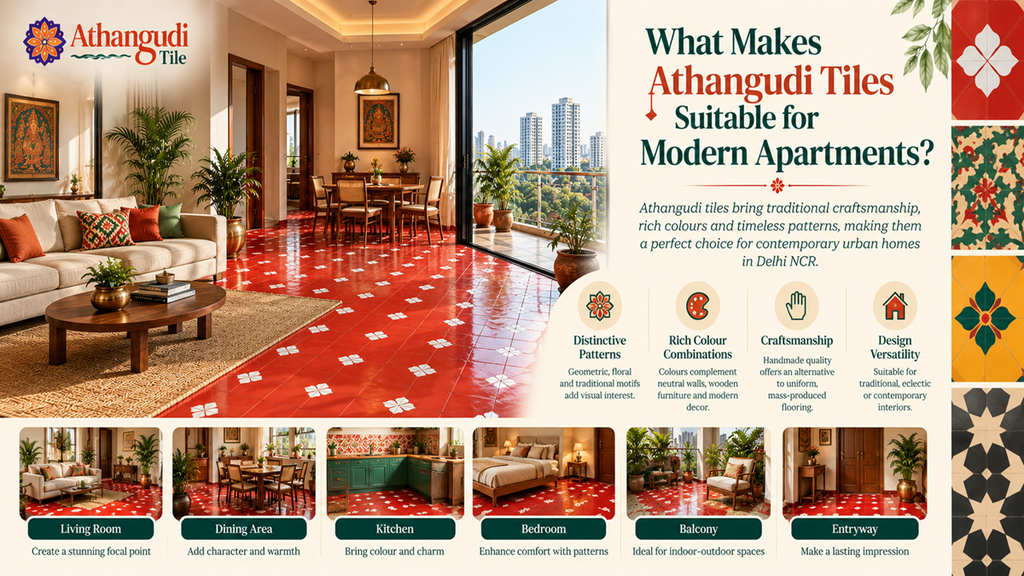
Athangudi tiles are from the Chettinad region of Tamil Nadu. The tiles’ vibrant colour and design can add a unique style statement to modern interiors.
Instead of applying the same type of flooring to all rooms, patterned tiles provide a way to create specific zones or a feature to break up the other areas of the home.
“The tiles vibrant colour and design can add a unique style statement to modern interiors.”
Some design characteristics that make Athangudi tiles worth considering include:
- Distinctive patterns: Geometric, floral and other traditional motifs can add visual interest.
- Rich colour combinations: Selected colors can complement neutral walls, wooden furniture and simple furnishings.
- Craftsmanship: Their handmade character offers an alternative to uniform, mass-produced flooring.
- Design versatility: Depending on the pattern and colour, they can suit traditional, eclectic or contemporary interiors.
The final appearance depends on the tile design, room dimensions, lighting, furniture and installation quality.
1. Athangudi Tile Designs for Apartment Entryways
An apartment entryway creates the first impression of the home. Even when the entrance is compact, a carefully selected floor pattern can make the area feel intentional and welcoming.
Choose a pattern that suits the available space
If the space is small choose a design pattern that’s clear and still fits in the area you have. If you are using shapes or many colors this can make a small place look busy.
Patterns that repeat or geometric designs are good when you want a professional look.
Create a defined entrance zone
Patterned flooring can visually distinguish the entrance from the adjoining living area, particularly in open-plan apartments.
“Patterned flooring can visually distinguish the entrance from the adjoining living area, particularly in open-plan apartments.”
Before choosing the layout, check door clearances, storage units, shoe cabinets and the position of any fixed furniture.
Coordinate with the interior palette
Patterned tiles will provide visual interest when the walls and furniture are neutral. Or choose a colour from an accent wall, or a rug or accessory to use elsewhere in the room.
Darker and vibrant styles may be more appropriate for Delhi NCR Apartments and when the amount of sunlight at the entrance is less.
2. Use Athangudi Tiles to Add Character to Living Rooms
Living rooms offer more flexibility for decorative flooring because they often have a larger uninterrupted surface.
However, the right design depends on whether you want the flooring to stand out or complement other interior elements.
Create a patterned focal area
You might notice that a selected section of flooring can add colour and pattern without making the entire room look crowded. For example a patterned area near a seating arrangement can help separate the living zone in an apartment.
Plan the tile layout next, to the sofa, coffee table and other major furniture so that important motifs do not get hidden.
Pair traditional patterns with contemporary furniture
Athangudi tiles can be combined with modern furniture through a balanced approach.
Consider these combinations:
- Patterned tiles with a neutral sofa and simple furniture.
- Geometric motifs with clean-lined wooden furniture.
- Floral designs with understated curtains and accessories.
- Warm tile colors with natural textures and restrained decorative elements.
The objective is to let the flooring contribute to the room’s identity without competing with every other design feature.
Consider room proportions
A detailed pattern may look different across a large floor compared with a small sample. Review multiple tiles together, preferably in a layout that reflects the intended installation.
This helps you assess repetition, colour balance and how the design will appear around furniture.
3. Athangudi Tiles for Compact Apartments
In apartments the type of flooring you choose can change how tidy and open a room looks. A fancy tile doesn’t always make a space feel bigger or smaller. It really depends on the size of the pattern, how contrast there is, the light in the room and how the floor works with the walls and furniture.
For a more balanced result:
- Avoid combining several highly decorative floor patterns in adjoining areas.
- Consider repeating one or two colors from the tile design elsewhere in the room.
- Review how the pattern aligns with walls, thresholds and adjoining flooring.
- Use room dimensions and a sample layout to evaluate the visual effect before ordering.
A simpler furniture arrangement can also help a distinctive floor pattern remain visible.
4. Combining Athangudi Tiles with Contemporary Interior Styles
Traditional tiles do not require an entirely traditional interior. Their patterns can be incorporated into different design approaches.
Minimalist interiors
Use patterned flooring as the main decorative feature while keeping furniture, wall colors and accessories relatively restrained.
Contemporary Indian interiors
Combine traditional motifs with modern lighting, simple cabinetry, natural materials and a considered colour palette.
Eclectic interiors
For homes that mix different styles, coordinate the tile colors with selected textiles, artwork or furniture rather than trying to match every element exactly.
Warm, natural interiors
Wood, woven textures and neutral finishes can complement the colors and handmade appearance of patterned tiles.
In each case, request samples and view them alongside your proposed finishes before making a final decision.
5. How to Choose the Right Athangudi Tile colors and Patterns
Selecting a design involves more than choosing a motif from a photograph. The tile must work with the room’s dimensions, lighting and overall colour scheme.
Start with the room’s purpose
An entrance, a living room and a kitchen have functional requirements. Identify how the entrance, the living room and the kitchen will be used and the level of cleaning, foot traffic and moisture exposure that the flooring may experience.
Narrow down the colour palette
Select two or three colors that complement the main interior finishes. If your furniture already has bold colors or patterns, a more restrained tile design may provide better balance.
Review samples in the actual space
View the samples under both natural and artificial lighting. colors can appear different depending on the light source and nearby finishes.
Check practical suitability
Ask the supplier about the intended application, surface characteristics, installation requirements, cleaning methods and suitability for the relevant conditions. Do not assume that every decorative tile is appropriate for every room.
6. Important Planning Considerations for Delhi NCR Apartments
Before purchasing Athangudi tiles for an apartment in Delhi NCR, account for the practical requirements of the property and project.
Check floor levels and existing flooring
During renovation, determine whether existing flooring must be removed and whether the floor needs levelling. Confirm the proposed finished floor height in relation to doors, balconies and adjoining rooms.
Consider transportation and delivery
If the tiles are sourced from outside Delhi NCR, discuss packaging, transportation arrangements, delivery timelines and procedures for reporting transit damage.
For larger orders, confirm quantities and delivery arrangements in writing before work begins.
Plan for seasonal and indoor conditions
Indoor temperature and humidity conditions can change from season to season. It is important to follow the tile manufacturers guidance for storage, installation and any curing needs. Make sure the installation team is fully aware of the product- instructions.
Confirm building and apartment restrictions
Check any applicable apartment association requirements, renovation rules, working-hour restrictions and material movement procedures before scheduling installation.
7. Estimating Tile Quantity for Your Apartment
Accurate quantity planning helps reduce shortages and avoid unnecessary leftover material.
Begin by measuring the floor area to be covered. For a rectangular room:
Floor area = Length × Width
For example, a room measuring 5 metres by 4 metres has a floor area of 20 square metres.
The final order quantity should account for the tile dimensions, layout, cuts, pattern alignment and any additional material recommended for future repairs.
Do not apply the same wastage percentage to every project. Ask the installer or supplier to estimate the additional quantity based on the actual layout and tile format.
For rooms with multiple corners, doorways or complex pattern arrangements, prepare a layout plan before confirming the order.
8. Installation and Maintenance Considerations
A good design also relies on installation and the right care.
Before starting the installation check the condition and preparation of the surface fixing materials that are suggested the details of the joints and the finishing process that is needed.
Make sure the tile layout matches what the installer is doing before the work starts in areas where patterns need to line up over a big space.
For keeping the tiles in shape follow the advice from the supplier about the specific product. Use the cleaning products to stay away from strong chemicals that are not allowed and deal with spills or wet areas as the tiles care instructions say.
If the floor is going to be in a place that gets wet or in an entrance that’s often damp make sure the tiles have enough grip and are good for that kind of use, before picking them.
9. Common Mistakes to Avoid When Choosing Athangudi Tiles
A few checks can help prevent avoidable design and installation problems.
- Choosing from photographs alone: Request samples to assess the actual colors and patterns.
- Ignoring room dimensions: Review the pattern at a realistic scale before ordering.
- Overloading the interior: Balance decorative flooring with furniture, wall finishes and accessories.
- Ordering without measuring: Calculate the floor area and confirm the additional quantity required for cuts and future repairs.
- Overlooking installation requirements: Confirm substrate preparation and installation instructions before work begins.
- Failing to confirm delivery details: Agree on packaging, timing, quantity and damage-reporting procedures in advance.
- Assuming every tile suits every room: Verify the product’s intended application and care requirements.
A short planning checklist can make the selection process easier for homeowners, architects and interior designers.
10. Where to Explore Athangudi Tile Designs for Delhi NCR Homes
If you are planning an apartment interior or renovating an existing home, begin by identifying the rooms where patterned flooring will add the most to the design.
Look at the patterns, pick the colors you like and ask for samples to see how patterned flooring looks with your furniture and finishes.
Athangudi Tile’s website provides a starting point for exploring the business and its work:
- Website: Athangudi Tile website
- About the business: About Athangudi Tile
- Portfolio: Athangudi Tile portfolio
- Contact: Contact Athangudi Tile
Contact the business to confirm current design options, product suitability, sample arrangements, delivery to Delhi NCR and project-specific requirements.
Frequently Asked Questions
Are Athangudi tiles suitable for modern apartments?
They can complement modern apartments when the pattern, colors and intended application are selected to suit the space. Review samples, room dimensions and installation requirements before deciding.
Which Athangudi tile designs work well in small living rooms?
The choice depends on the room’s proportions, lighting and furniture. Repeating geometric patterns or designs with a coordinated colour palette may provide a balanced look, but evaluate a sample layout before ordering.
Can Athangudi tiles be used in apartment entryways?
They may be an option for entryways if the specific product is suitable for the expected foot traffic and exposure to moisture. Confirm surface characteristics, cleaning requirements and installation guidance with the supplier.
How do I estimate the quantity required?
Measure the floor area, prepare the layout and account for cuts, pattern alignment and any additional material recommended for future repairs. Have the final quantity checked before placing the order.
Can I order Athangudi tiles for a Delhi NCR project from a supplier elsewhere in India?
Potentially, but confirm that the supplier serves your location, along with shipping arrangements, packaging, lead times, order quantities and procedures for handling damaged material.
How should I maintain Athangudi tiles?
Follow the specific care instructions supplied for the product. Confirm suitable cleaning methods and any finishing or maintenance requirements before installation.
Conclusion
Athangudi tile designs bring color, pattern and traditional craftsmanship to apartments, across Delhi NCR. Whether you are thinking of an entryway or a carefully planned living room, Athangudi tile designs should complement the space and meet practical flooring requirements.
Before you place an order review Athangudi tile designs samples in the intended setting plan quantities carefully confirm product suitability and coordinate installation.
To explore your options, visit Athangudi Tile website and contact Athangudi Tile to discuss designs and requirements for your apartment project.