
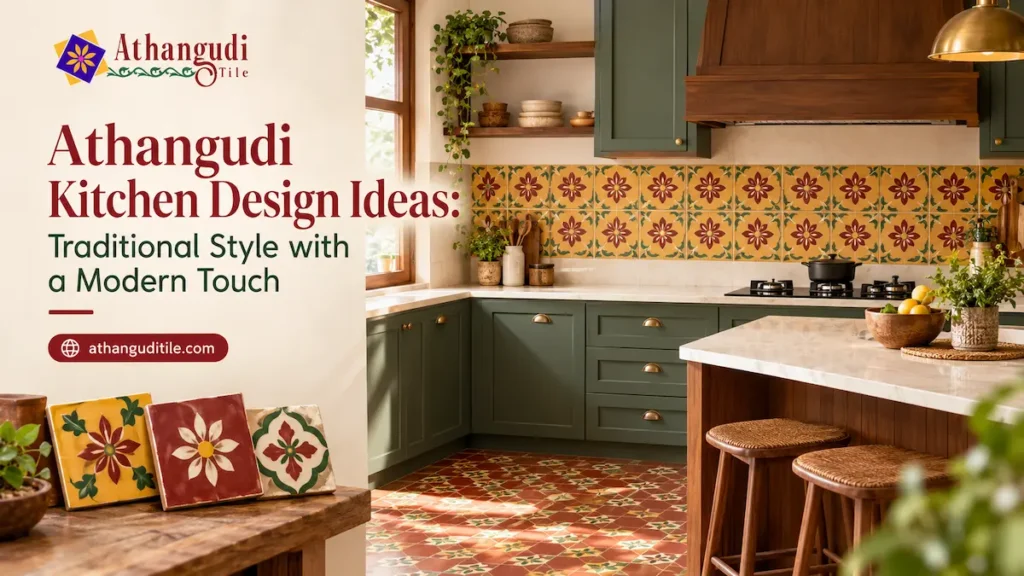
The kitchen is more than a place for preparing meals. It is one of the most active and important spaces in a home, where everyday routines, family conversations, and special moments often come together. Because of this, homeowners increasingly want kitchens that are practical but also have a strong visual identity.
This is where Athangudi tiles can make a beautiful difference. Their handcrafted patterns, rich colors, and traditional character can add warmth and personality to a kitchen without making it feel outdated. With thoughtful planning, these tiles can be paired with modern cabinets, simple furniture, contemporary lighting, and practical kitchen layouts.
If you are looking for Athangudi Kitchen Design Ideas, there are many creative ways to introduce these tiles. They can be used for flooring, backsplashes, selected walls, counters, or small decorative sections. The key is choosing the right pattern and placement according to your kitchen’s size, lighting, and overall style.
Start with the Kitchen Layout
Before selecting tiles, it is useful to understand the layout of the kitchen. A compact kitchen needs a different design approach from a large open plan kitchen.
For smaller kitchens, lighter colors and controlled patterns can help maintain a spacious appearance. Instead of covering every surface with decorative tiles, you can use them on one backsplash or a limited flooring area.
Larger kitchens provide more freedom. Homeowners can experiment with patterned flooring, colorful backsplashes, or decorative borders while keeping cabinets and countertops relatively simple.
A well planned layout also makes it easier to decide where the tiles will have the greatest visual impact.
Give the Backsplash a Decorative Role
The backsplash is one of the easiest areas where traditional tiles can become a focal point. It sits directly behind the cooking and preparation areas, making it naturally noticeable.
Athangudi kitchen backsplash designs can introduce handcrafted patterns without requiring major changes to the entire kitchen. A colorful pattern behind the stove can create a feature area, while a simpler design can be used across the remaining backsplash.
For a modern appearance, pair patterned tiles with plain cabinets. White, cream, beige, wooden, or muted colored cabinets can allow the tile pattern to stand out without creating too much visual activity.
Make the Floor Part of the Design
Kitchen flooring has to combine appearance with everyday practicality. Traditional patterned tiles can give the floor a distinctive character and make even a simple kitchen more interesting.
Athangudi tiles for kitchen flooring can be used throughout the room or within a selected area, depending on the desired effect. A central pattern can visually define the kitchen, while a more subtle design can create a consistent appearance.
When selecting flooring, homeowners should also consider cleaning, moisture, foot traffic, and the suitability of the tile surface for kitchen use.
Mix Traditional Patterns with Modern Cabinets
Traditional tiles do not require a completely traditional kitchen. In fact, combining handcrafted tile patterns with modern cabinetry can create a balanced and attractive interior.
Imagine simple handleless cabinets paired with a colorful tiled backsplash. The cabinets provide a clean contemporary appearance, while the tiles introduce pattern and craftsmanship.
This approach is useful for homeowners who appreciate traditional design but still want a modern kitchen layout.
Traditional kitchen tile designs can work particularly well when the rest of the kitchen uses simple shapes and limited decoration.
“A beautiful kitchen becomes memorable when traditional craftsmanship meets thoughtful modern design.”
Choose Colors That Complement the Space
Color plays a major role in how kitchen tiles affect the overall atmosphere. Athangudi tiles are available in a variety of decorative combinations, so the choice should be based on the existing kitchen palette.
If the cabinets are white, cream, or light wood, colorful tiles can add contrast. If the cabinets already have a strong color, a more balanced tile pattern may work better.
Colorful kitchen tiles can create an energetic and welcoming atmosphere, while earthy or muted shades can produce a calmer appearance.
It is also important to consider natural and artificial lighting. A design that looks balanced in a showroom may appear different in a darker kitchen.
Create a Small Feature Instead of Covering Everything
Sometimes, a small amount of decorative tile can have a greater impact than covering the entire kitchen.
For example, you can create a narrow patterned strip between the countertop and cabinets. Another option is a small decorative section behind the stove or sink.
Handcrafted kitchen tiles can also be used around a breakfast counter or a small open shelf. This gives the kitchen a personalized detail while keeping the overall design controlled.
This approach is especially useful for homeowners who want traditional character without making the kitchen visually busy.
Add Warmth with Wooden Elements
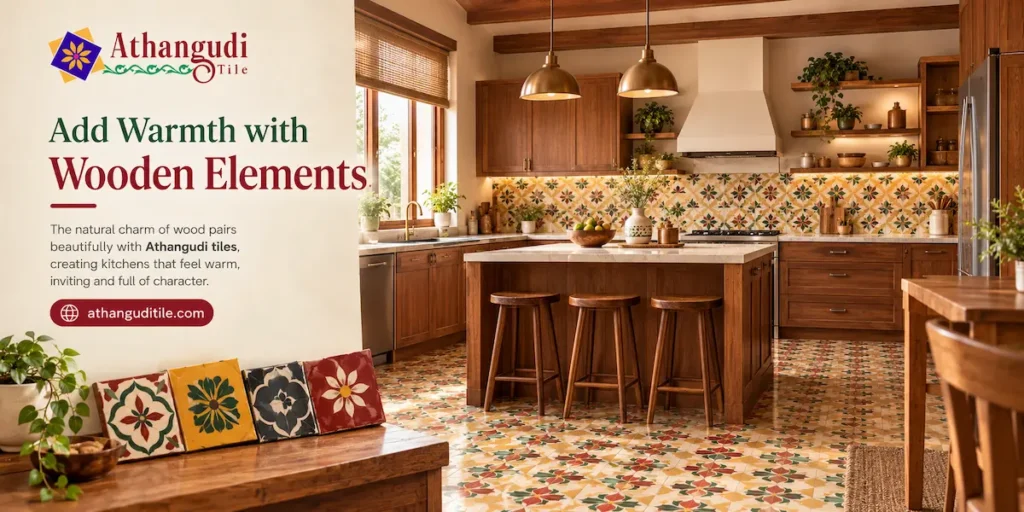
Wood and handcrafted tiles naturally complement each other. Wooden cabinets, shelves, stools, or open storage can soften the appearance of colorful tile patterns.
For a warm kitchen, consider combining traditional tiles with natural wood tones, simple lighting, and neutral countertops.
Athangudi tile kitchen designs can look especially attractive with wood because both materials bring a sense of craftsmanship and natural warmth into the space.
The combination does not have to look heavily traditional. Clean-lined wooden cabinets can create a modern foundation while the tiles provide the decorative detail.
Make Open Kitchens More Interesting
In an open plan home, the kitchen is often visible from the dining or living area. Because of this, its design needs to work with the surrounding interior.
A patterned backsplash can act as a visual connection between the kitchen and nearby spaces. Similarly, a decorative tiled floor can help define the kitchen area without requiring a physical partition.
Athangudi tiles for kitchen interiors can be particularly effective here because their traditional appearance adds character to an otherwise contemporary space.
Keeping nearby furniture and walls relatively simple can help the kitchen remain visually connected to the rest of the home.
Use Borders to Frame the Design
Tile borders are another way to introduce traditional detailing without overwhelming the room. A narrow border can frame a backsplash, separate two tile patterns, or create a decorative transition between different surfaces.
A border can also be used around a kitchen floor to visually define the cooking area.
For homeowners who prefer subtle decoration, this is a practical way to include traditional tiles for kitchen walls without covering every wall surface.
Consider a Heritage Inspired Kitchen Corner
If you want your kitchen to have a stronger traditional identity, create one dedicated feature area rather than making every element decorative.
A small breakfast corner with patterned flooring, wooden seating, and handcrafted tiles can become a beautiful focal point. You can also add open wooden shelves with simple kitchenware to complete the look.
This type of arrangement allows the traditional elements to feel intentional and connected rather than randomly added.
Keep Countertops Simple
When the tiles have detailed patterns, a simple countertop can help maintain balance. Stone, solid-color surfaces, or subtle textures can work well with decorative flooring and backsplashes.
If both the countertop and tiles have strong patterns, the kitchen may feel visually crowded. Choosing one main decorative element usually makes the design easier to manage.
For this reason, many Athangudi tiles kitchen ideas work best when the tile becomes the main visual feature and other surfaces remain comparatively simple.
Think About Cleaning and Daily Use
A kitchen is exposed to food splashes, water, oil, and regular foot traffic, so appearance should never be the only consideration.
Before choosing tiles, ask where they will be installed and how frequently that area will need cleaning. Backsplash tiles may have different requirements from flooring tiles.
It is also important to discuss installation requirements with an experienced professional. Correct preparation, spacing, and finishing can make a significant difference to the final appearance.
Keeping a few spare tiles after installation can also be useful if a replacement is ever needed.
Build a Kitchen That Reflects Your Style
The best kitchen design is one that works for the people using it every day. Some homeowners may prefer bold colors and elaborate patterns, while others may want a softer and more minimal look.
Athangudi tiles allow both approaches. You can use a vibrant pattern to create a dramatic focal point or choose a more restrained design for a subtle traditional touch.
The important thing is to consider the complete kitchen rather than selecting tiles separately. Cabinets, countertops, walls, lighting, flooring, hardware, and accessories should work together as one design.
“Traditional details do not have to dominate a space; sometimes one carefully chosen feature is enough to give a kitchen its identity.”
A Practical Way to Plan Your Tile Design
Before placing an order, make a simple plan for the kitchen. Decide which surfaces will receive tiles and which areas will remain plain.
Next, compare the tile colors with cabinet samples, countertop materials, and wall shades. Think about the amount of natural light and how the kitchen looks at different times of the day.
Finally, consider the size of the pattern in relation to the room. Large patterns may create a strong statement, while smaller patterns can provide detailed decoration.
This simple planning process can help avoid unnecessary changes during installation.
Final Thoughts
Athangudi tiles offer many possibilities for creating a kitchen that feels warm, artistic, and individual. From a statement backsplash and patterned flooring to small decorative borders and handcrafted feature areas, there are numerous ways to bring traditional craftsmanship into a modern kitchen.
The secret is balance. Pair detailed tiles with simple cabinets, coordinate colors with existing surfaces, and select materials according to the practical needs of the kitchen.
Whether your kitchen is compact, spacious, traditional, or contemporary, carefully selected tiles can give it a distinctive character while keeping the space comfortable for everyday use.
With the right combination of patterns, colors, materials, and placement, Athangudi Kitchen Design Ideas can help transform an ordinary cooking area into a welcoming part of the home.
Frequently Asked Questions
1. Are Athangudi tiles suitable for kitchen interiors?
Yes, Athangudi tiles can be incorporated into kitchen interiors in areas such as backsplashes, selected walls, and suitable flooring applications. The tile should be selected according to the specific surface and practical requirements of the space.
2. Can Athangudi tiles work with modern kitchen cabinets?
Yes. Traditional patterned tiles can be paired with modern cabinets to create an attractive contrast. Simple cabinets in neutral or natural shades can allow the handcrafted tile design to become the main feature.
3. Where can I use Athangudi tiles in a kitchen?
They can be considered for backsplashes, flooring, feature walls, decorative borders, breakfast areas, and selected sections around the kitchen. Strategic placement can create visual interest without making the entire room heavily patterned.
4. What colors work well with traditional kitchen tiles?
The best color depends on the cabinets, countertop, wall color, and lighting. Neutral cabinets can work with colorful patterns, while kitchens with stronger cabinet colors may benefit from more balanced tile designs.
5. How can I keep a traditional kitchen design looking modern?
Combine handcrafted tiles with clean-lined cabinets, simple countertops, contemporary lighting, and minimal accessories. Using traditional tiles as a focused feature rather than covering every surface can also create a more modern appearance.