
Jaipur is renowned for its exquisite use of color, ancient patterns, intricate craftsmanship, and royal architecture. These characteristics are also having an impact on contemporary house interiors, as homeowners are becoming more and more interested in surfaces that feel artistic rather than mundane. For those who like to add character, texture, and traditional charm to their homes without making the entire area appear old, handmade tiles in Jaipur are a sensible option.
Living rooms, kitchens, baths, entrances, balconies, courtyards, and even some outdoor spaces can all benefit greatly from the use of handmade tiles. Each area feels more unique because of their handcrafted appearance, and homeowners may design interiors that complement both classic and modern designs with a variety of colors, patterns, and layouts.
“A beautiful home is not only about the materials you choose; it is about how those materials make the space feel.”
The ideal tile is therefore more than just a flooring or wall covering material for Jaipur homes. It may develop into a significant component of the overall design narrative. Before selecting handmade tiles for a Jaipur home, this article describes the design possibilities, appropriate uses, purchasing considerations, maintenance requirements, and practical elements to take into account.
Why Handmade Tiles Suit Jaipur Homes
Jaipur’s handcrafted details, earthy hues, architectural patterns, and heritage style all have a powerful visual connection. These qualities are naturally complemented by handmade tiles.
Handcrafted tiles can have small differences in color, texture, edges, or pattern, in contrast to perfectly homogeneous factory-made surfaces. These minor variations frequently give a wall or floor additional apparent depth and authenticity.
Handmade tiles can also be used with natural wood, stone, brass accents, neutral walls, or conventional furniture to create a cozy interior for homeowners. Instead of covering every surface in a contemporary house, they might be employed as an accent.
Flexibility is an additional benefit. Handmade tiles are beneficial even if you don’t have a big space. With the correct tile layout, a kitchen backsplash, bathroom feature wall, entryway panel, or tiny patio can become a focus point.
Popular Handmade Tile Design Ideas
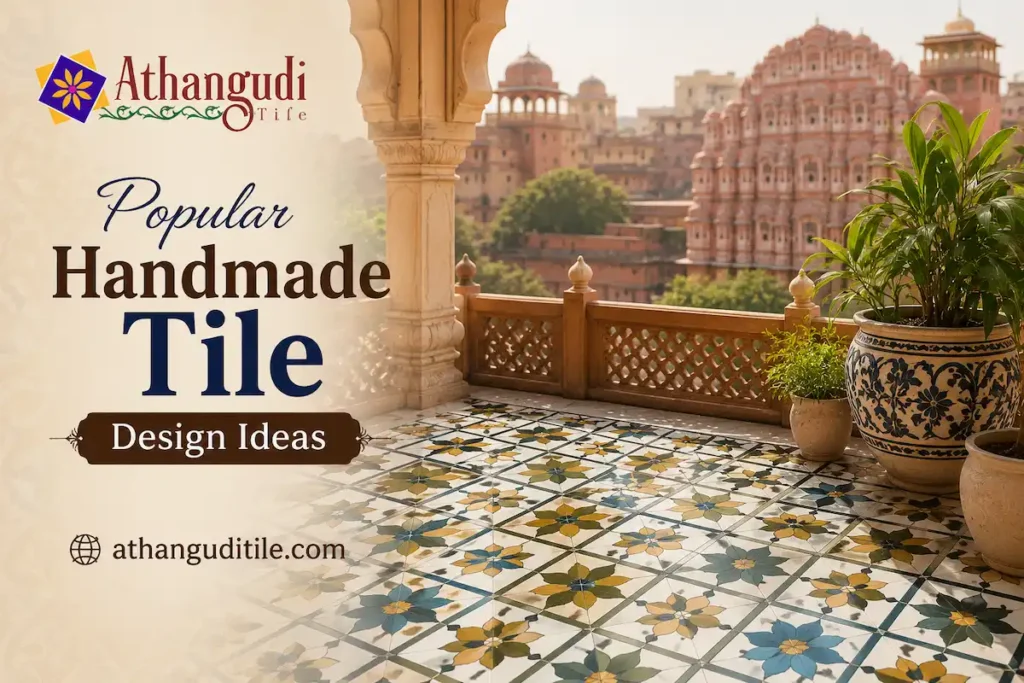
The design you select should complement the room rather than compete with everything around it. Jaipur homes can accommodate many different handmade tile styles, from subtle patterns to more decorative arrangements.
1. Heritage-Inspired Floor Patterns
Patterns with a traditional feel are appropriate for living spaces, doorways, hallways, and patios. A floor can have a unique personality thanks to balanced borders, repeated themes, and geometric layouts.
Use patterned tiles in a specific location and keep the surrounding walls and furniture basic for a classy look.
2. Colorful Kitchen Backsplashes
The kitchen is one of the easiest places to introduce handcrafted tiles. A backsplash behind the stove, sink, or countertop can add color without requiring a major renovation.
Soft blue, earthy red, muted green, cream, and terracotta-inspired shades can work particularly well with wooden or neutral kitchen cabinets.
3. Decorative Bathroom Walls
Bathrooms do not have to rely entirely on plain surfaces. A decorative tile wall behind the vanity or shower area can create a strong visual feature.
When using patterned tiles in bathrooms, balance them with plain tiles on the remaining walls. This keeps the room attractive without making it feel visually crowded.
4. Courtyard and Balcony Flooring
Because of Jaipur’s unique architectural style, balconies and courtyards are great places for custom designs. These semi-open areas can have a distinct identity and a historic feel thanks to patterned flooring.
Always take into account if the tile is appropriate for the anticipated levels of moisture, dust, sunlight, and foot traffic in these locations.
Choosing Tiles for Different Rooms
Choosing a tile solely for its esthetic appeal might not be sufficient because every space has varied functional needs.
Consider design, comfort, longevity, and furniture coordination while designing living rooms. Stain resistance and ease of cleaning become increasingly crucial for kitchens. Moisture and slip resistance are important considerations in bathrooms, especially when choosing flooring tiles.
There may be more foot activity in entrances and regularly utilized hallways. Before completing the design, homeowners should inquire about the tile’s compatibility for frequent use in such regions.
Due to their relatively limited exposure to damp, bedrooms typically offer more freedom. Here, calmer surroundings can be produced using softer patterns and warmer hues.
Handmade Tiles vs Uniform Factory Tiles
Visual consistency is one of the primary distinctions between tiles made by hand and those made by machines.
The dimensions, colors, and patterns of factory-made tiles are typically meant to be extremely consistent. Conversely, handmade tiles could have little differences that add to their unique personality.
This does not imply that one choice is superior to the other. The ideal option will depend on how you want your area to look and function.
If you want an extremely uniform, minimal appearance, a highly consistent manufactured tile may be suitable. If you prefer texture, individuality, and an artisanal appearance, handmade tiles can offer something different.
“Small variations are often what give handcrafted surfaces their natural personality.”
How to Select the Right Tile Color
The entire space should be considered when choosing a color scheme, not just the tile.
Earthy and warm colors can create an inviting atmosphere for traditional Jaipur-inspired interior design. Natural materials can complement terracotta, beige, cream, mellow red, and warm brown hues.
Homeowners might employ contrasting colors more cautiously for contemporary decor. One patterned tile wall in a neutral space can serve as a powerful focal point without overpowering the overall design.
While darker or richer tiles can make large areas feel cozier and more grounded, lighter tiles can help smaller spaces appear more open.
Always examine tangible samples in the room’s illumination before making a final decision. In both artificial and natural illumination, colors can appear differently.
Key Points to Check Before Buying
Buying handmade tiles requires attention to both appearance and practical performance. Before placing an order, consider the following:
✓ Check the actual tile sample instead of relying only on photographs.
✓ Confirm the recommended application, such as wall, floor, indoor, or outdoor use.
✓ Measure the area carefully and calculate the required quantity.
✓ Ask about suitable installation methods and recommended adhesives.
✓ Purchase a reasonable extra quantity for future repairs or replacements.
✓ Check whether the surface requires sealing or any special treatment.
✓ Confirm cleaning and maintenance recommendations before installation.
These steps can prevent common problems later and help you make a more informed purchase.
A Simple Tile Selection Guide
| Area | What to Prioritise | Design Direction |
| Living Room | Design & durability | Patterns or subtle textures |
| Kitchen | Easy maintenance | Decorative backsplash |
| Bathroom | Moisture & safety | Feature wall or balanced patterns |
| Entrance | Foot traffic | Heritage-inspired motifs |
| Balcony | Application suitability | Earthy and traditional tones |
The table provides a starting point, but the final selection should always depend on the specific product’s properties and the conditions of the installation area.
Planning the Quantity and Budget
Calculating tiles without taking waste into account is one of the most frequent errors made by homeowners. Because cutting around corners, doorways, drains, pillars, or unique areas might alter the final quantity, handmade creations could need extra parts.
Discuss the computation with your tile supplier or installer after measuring the installation area’s length and width. After installation, it becomes sense to save some excess tiles, particularly if a certain handmade design or color might be difficult to match later.
The budget ought to cover more than the cost of the tiles. Transportation, glue, grout, labor for installation, surface preparation, sealing if necessary, and waste should all be taken into account.
A slightly higher initial cost can sometimes be worthwhile if the selected tile provides the desired appearance and performs well in the intended location.
Installation Matters as Much as Design
If a tile is badly laid, even a lovely handcrafted tile can lose its punch. Prior to installation, the surface should be adequately prepped, and the installer should be knowledgeable about the specific tile being used.
The installer may need to carefully plan the placement because handcrafted tiles can have small variances. When working with patterns or numerous colors, it is helpful to arrange the tiles before firmly fixing them.
The color of the grout also merits consideration. While a same tint can produce a more continuous impression, a contrasting grout can draw attention to certain shapes.
Accurate alignment is crucial for decorative patterns because even a minor error can show up throughout the entire design.
Maintenance and Everyday Care
With the right maintenance, handmade tiles can last for many years. However, the material, finish, location, and manufacturer’s recommendations all affect the precise maintenance schedule.
Regular cleaning techniques should be used to get rid of dust and filth. Unless they are especially advised for the tile surface, stay away from using strong cleaning agents.
Spills in bathrooms and kitchens: tiles should be cleaned up as soon as possible. Instead of applying materials at random, adhere to the suggested maintenance schedule if the tiles need to be sealed.
Keeping the original product information after installation is also beneficial. This facilitates upkeep, replacements, and repairs in the future.
Where to Find Handmade Tiles in Jaipur
Homeowners should examine more than simply pricing while searching for handmade tiles in Jaipur. A trustworthy supplier should be able to describe the tile’s composition, suggested use, accessible designs, installation specifications, upkeep requirements, and anticipated variance.
Whenever feasible, request physical samples. Before making a larger purchase, this enables you to verify the true texture, color, finish, thickness, and pattern.
Talking with the supplier about your room sizes and intended uses is especially beneficial if you are working on a whole home makeover. Estimating quantities and choosing appropriate designs may become simpler as a result.
Creating a Jaipur-Inspired Modern Interior
It’s not necessary to use traditional components in every room to create a Jaipur-inspired design. Combining contemporary simplicity with handcrafted embellishments is frequently a better strategy.
For instance, a patterned tile panel can be used as a feature in a modern living room with little furniture. Simple cabinetry can be combined with a handcrafted backsplash to create a modern kitchen. In a similar vein, a single handcrafted wall can add warmth and personality to a neutral bathroom.
Because of this harmony, the tiles can play a significant role in the design without overpowering the house.
Final Buying Checklist
Before finalizing your handmade tiles, ask yourself:
- Does the design suit the room?
- Is the tile appropriate for the intended application?
- Have I checked a physical sample?
- Have I calculated the quantity and possible wastage?
- Is the installation surface properly prepared?
- Do I know the recommended cleaning method?
- Should the surface be sealed?
- Have I considered extra tiles for future repairs?
- Does the grout color complement the pattern?
- Have I included installation and other additional costs in my budget?
If these questions are answered before purchasing, the selection process becomes much easier, and the chances of costly changes later are reduced.
FAQs About Handmade Tiles in Jaipur
Are handmade tiles suitable for Jaipur homes?
Yes. Handmade tiles can work well in Jaipur homes when the selected product is appropriate for the intended application. They can be used for decorative walls, backsplashes, selected flooring areas, entrances, balconies, and other suitable spaces.
Can handmade tiles be used in kitchens?
Yes, depending on the tile and its finish. They are particularly popular for backsplashes and decorative sections. Before installation, confirm the product’s suitability for heat, moisture, stains, and regular cleaning.
Are handmade tiles suitable for bathrooms?
They can be suitable for certain bathroom applications, particularly walls, provided the specific tile is designed for that environment. For bathroom flooring, moisture resistance and slip-related considerations should be checked carefully.
Do handmade tiles have color variations?
Some handcrafted tiles can show natural variations in shade, texture, or dimensions. These variations are part of their handmade appearance, but buyers should understand the expected level of variation before ordering.
How should handmade tiles be cleaned?
Cleaning depends on the tile material and finish. In general, use the cleaning method recommended for the specific product and avoid harsh chemicals that may damage the surface.
How many extra tiles should I purchase?
The required extra quantity depends on the layout, cutting requirements, installation area, and tile type. Your installer or supplier can help calculate a suitable allowance for wastage and future repairs.
Conclusion
Athangudi tiles in Jaipur offer homeowners an opportunity to bring craftsmanship, color, texture, and individuality into their interiors. From a patterned kitchen backsplash to a heritage-inspired entrance or a carefully designed courtyard, these tiles can be adapted to many different spaces.
The key is not simply choosing the most decorative design. Consider the room, expected usage, color scheme, installation requirements, maintenance, quantity, and overall budget before making the final decision.
With thoughtful planning and the right combination of patterns and materials, handmade tiles can become a distinctive part of a Jaipur home while maintaining a comfortable balance between traditional character and modern design.